
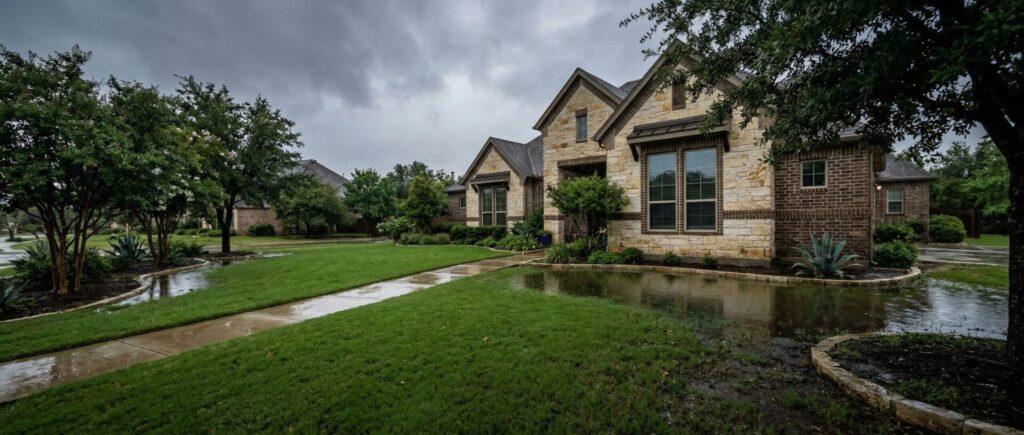
Those puddles are telling you something
Why Standing Water Is Dangerous for Lawns & Foundations in San Antonio
If water sits for days after every storm, it’s more than just an eyesore. In San Antonio’s clay soils, standing water can kill grass, stress plants, invite mosquitoes, and contribute to foundation and retaining wall problems if it’s left alone year after year.
Request Your Free EstimatePuddles are a symptom, not the whole problem
What makes standing water such a big deal?
When water sits on top of the lawn or against the house instead of moving through the soil, it changes how that part of the yard behaves. Grass roots lose oxygen, soil stays soft and muddy, and clay near the slab edge swells more than the rest of the yard. Over time, that can mean thin turf, bare dirt, and unnecessary stress on your foundation and hardscape.In San Antonio, we also deal with intense storms followed by heat. That combination turns shallow puddles into mosquito breeding areas, pushes mulch and rock out of beds, and can leave low spots unusable. Fixing standing water isn’t about making the yard look pretty—it’s about managing how your property handles rain so the lawn, plants, and structures hold up over the long haul.
- Standing water starves grass roots of oxygen and encourages disease
- Puddles near the house can increase soil movement around your foundation
- Low, soggy areas often get worse over time as soil erodes or compacts
- Mosquitoes, odors, and washed-out beds are common side effects
- Correct grading and Drainage Installation work together to move water to better locations
Look at where water starts, sits, and finally leaves
How Standing Water Damages Lawns and Foundations Over Time
We rarely get called about “drainage” on the first visit. Homeowners usually call about muddy spots, dying grass, or erosion. Once we walk the yard during or after a rain, standing water almost always tells the real story. Here’s how we break down the risks and the fixes. For help turning the advice into a real project, review our drainage solutions service page.
1. What standing water does to your lawn
Healthy lawns need water, air, and space around the roots. When an area stays saturated, the water pushes air out of the soil. Roots sit in cold, wet, low-oxygen conditions and start to decline.
- Root suffocation: Grass can tolerate short wet periods, but days of standing water lead to shallow or rotten roots.
- Disease and fungus: Constant moisture encourages fungus, algae, and other problems that thin out turf and leave mud behind.
- Uneven growth: Parts of the yard may look great while low spots stay patchy, yellow, or bare.
That’s why simply re-sodding a wet area usually doesn’t last. Until drainage and grading are corrected with proper Yard grading / resloping and targeted Drainage Installation, new Sod Installation is being asked to grow in the same bad conditions.
2. How standing water affects foundations and retaining walls
The same water that kills grass can also create uneven moisture around your slab or behind walls. In San Antonio’s expansive clay soils, that matters.
- Wet vs. dry soil zones: When some areas around the slab stay wetter than others, those sections of soil swell and stay soft longer.
- Hydrostatic pressure: Water trapped behind a Retaining Wall Installation or in a confined low area can push on structures and cause movement over time.
- Erosion at edges: Standing water that overflows in the same place can scour soil away from slab edges, steps, and patios.
Good drainage won’t replace structural foundation repairs, but it is a key part of reducing unnecessary stress on your home and hardscape.
For drainage material planning, compare channel drain system with the water issue described above.
3. Common standing water patterns we see in San Antonio yards
Most problem areas fall into a few repeat patterns. Spotting which one you have guides the solution.
- Low pockets in the lawn: Often created by previous digging, tree removal, or settling after construction; these can usually be corrected with Yard grading / resloping and, in some cases, a small surface drain.
- Side yards that never dry: Roof runoff and neighbor drainage can turn narrow strips into mud. These areas often need a combination of French drains, Surface drains & catch basins, and better Downspout drainage.
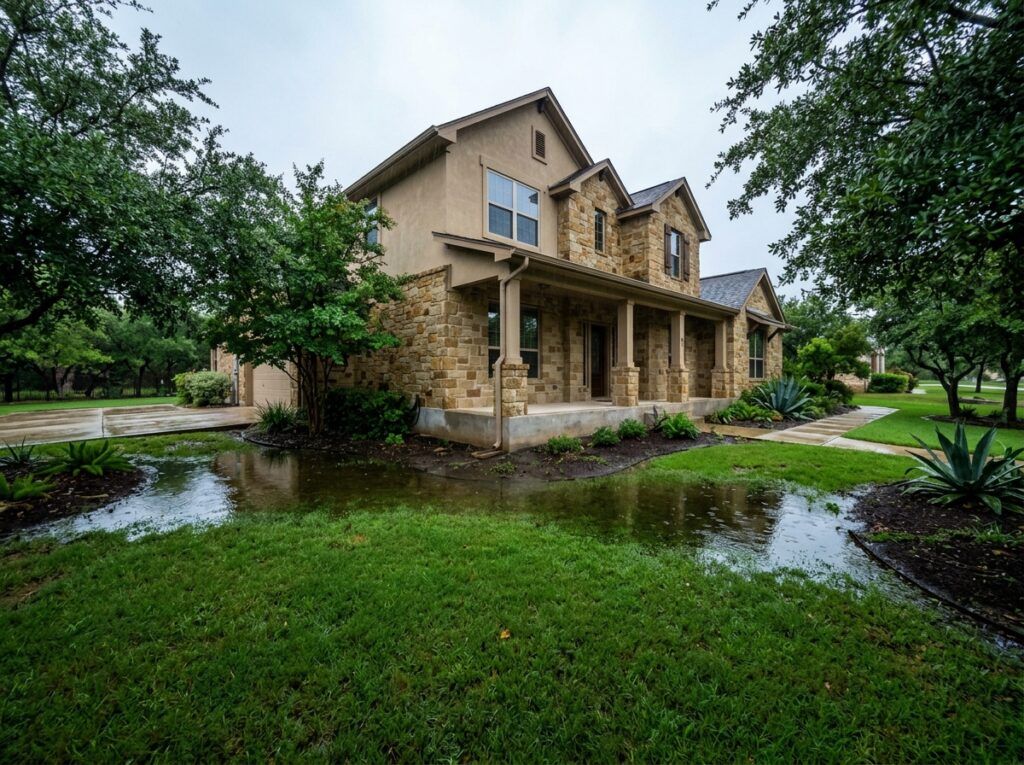
- Beds that hold water against the house: Thick mulch, stacked stone, and short downspouts can trap water right up against the foundation and plant roots.
- Water collecting behind walls or at the base of slopes: Missing or clogged wall drains and lack of outlet are common here—and they deserve attention before damage shows up.
During a drainage visit, we map these patterns, watch where water naturally wants to go, and then design ways to help it get there without harming the lawn or structures.
For a related next step, read Yard Drainage Cost Guide.
For a related next step, read French Drain vs Surface Drain: What’s the Difference?.
For a related next step, read Signs Your Yard Has Drainage Problems.
4. Turning standing water into a manageable drainage plan
The goal is not to make water disappear—it’s to give it a reliable path away from the house and main traffic areas.
- Start with grading: We correct major low spots and adjust slopes so water has a clear direction of travel.
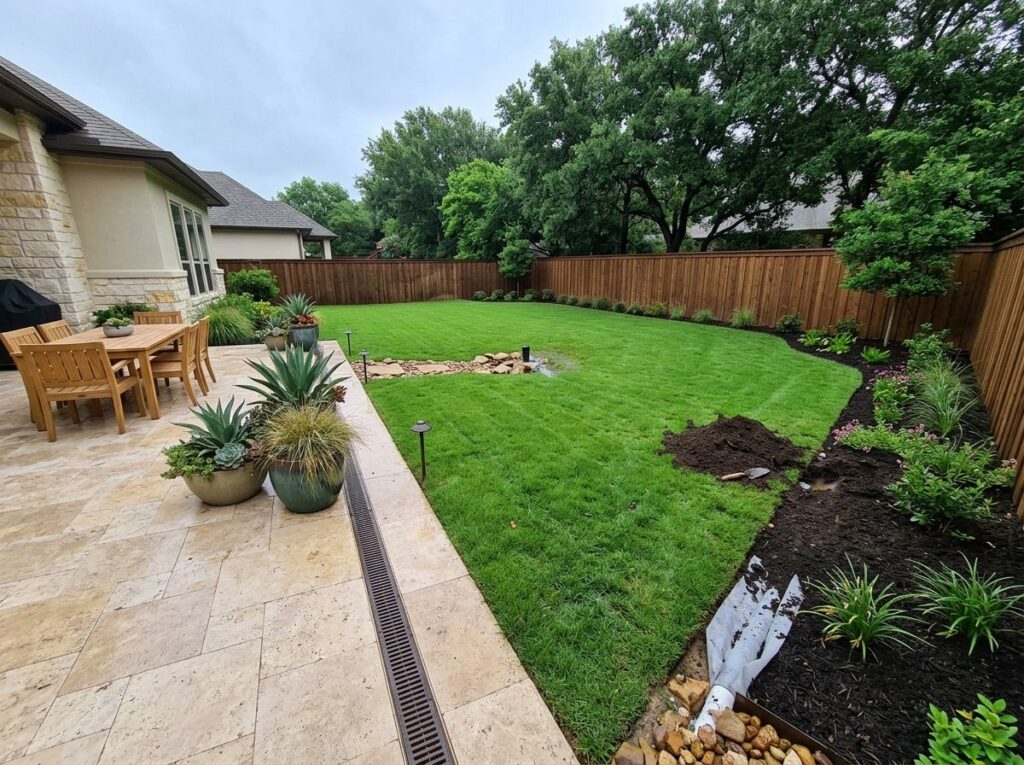
- Add collection where needed: In stubborn low areas, we use Surface drains & catch basins or French drains to collect and move water.
- Reroute roof runoff: We upgrade Downspout drainage so the roof isn’t feeding the same wet areas you’re trying to fix.
- Restore the landscape: Once drainage is right, we rebuild with fresh Sod Installation, refreshed Landscape Bed Installation, and, if needed, a Seasonal Yard Cleanup to reset the yard.
Done correctly, you end up with a yard that handles storms better, dries out faster, and supports healthier lawns and foundations over the long term.
Here goes your text ... Select any part of your text to access the formatting toolbar.
Common Standing Water Scenarios and Their Risks
| Standing Water Situation | Typical Cause | Short-Term Impact | Long-Term Risk to Lawn | Long-Term Risk to Foundation / Structures |
|---|---|---|---|---|
| Puddles along the foundation after every rain | Poor grading, short downspouts, or no drainage outlet | Soft, muddy soil next to the slab | Grass thins or dies, bare soil exposed to erosion | Increased soil movement, potential slab settlement or heaving over time |
| Low spots holding water in the middle of the yard | Improper grading, compacted clay, or prior construction disturbance | Muddy spots that stay wet days after storms | Root rot, disease, and thin patchy turf in wet zones | Usually low structural risk, but can push water toward house if area overflows |
| Water pooling at the bottom of a slope or behind a wall | Runoff with no defined outlet or missing drain behind retaining wall | Persistent soggy strip, slippery soil, algae or moss growth | Chronic turf loss and unusable yard space | Hydrostatic pressure on walls and structures, potential wall bowing or failure |
| Standing water in landscape beds against the house | Downspouts dumping into beds, heavy mulch, or blocked surface flow | Mulch washouts, plant stress, and mosquito breeding | Plant loss, fungus, and root issues | Wet backfill against foundation, increased moisture at slab edge |
| Water that lingers on walkways and patios | Flat concrete with no slope or blocked joints/drains | Slippery surfaces and early surface staining | Not applicable to turf | Water working back toward expansion joints and slab, accelerated concrete wear |
Why addressing standing water is worth it
Pros and Cons of Fixing Standing Water Problems
PROS
- Protects lawn health by keeping roots from sitting in oxygen-starved, saturated soil
- Reduces foundation stress by managing how much water stays near slab edges
- Helps prevent hydrostatic pressure behind retaining walls and hardscape
- Makes more of the yard usable after storms instead of dodging muddy areas
- Cuts down on mosquito breeding areas and standing water odors
CONS
- Requires an upfront investment in grading and drainage improvements
- Some solutions involve digging up existing sod, beds, or hardscape for access
- Poorly planned fixes can simply move standing water to a different problem area
- Undersized drains or pipes may still hold water or back up during big storms
- Ignoring the underlying causes can lead to repeated band-aid repairs
Think beyond a single puddle
Here goes your text ... Select any part of your text to access the formatting toolbar.
How We Approach the Cost Side of Standing Water Fixes
Standing water is a symptom, so pricing is based on what it takes to correct the cause, not just to fill a hole. Some yards only need targeted grading around a couple of low spots. Others benefit from a combined approach that includes re-sloping, drains, and downspout adjustments. We design drainage work so it solves the root issue once, instead of repeating patch jobs after every rainy season. Before scheduling work, review our drainage expectations so the project expectations are clear.
- Addressing standing water usually combines several elements: grading, drains, and downspout routing—cost depends on how many of those are needed in each area.
- Simple surface corrections around one or two low spots are usually less involved than designing a full-yard drainage system with multiple collection and discharge points.
- Tying solutions together—such as combining French drains, surface drains & catch basins, and downspout drainage in one trench—can be more efficient than separate projects.
- Projects that require working around roots, utilities, or existing patios and walls will typically fall at the higher end of typical yard drainage budgets.
- Leaving standing water issues unresolved can lead to repeat lawn replacements, plant loss, and potential foundation or retaining wall repairs that far exceed the cost of a correct drainage solution.
Questions homeowners ask when they see recurring puddles
Standing Water, Lawns, and Foundations FAQs
These answers focus on what standing water is telling you and how to decide when it’s time to bring in a drainage professional.
See All Frequently Asked Questions- Near your foundation or flowing toward the home
- In high-traffic areas where mud forms or you can’t use the space
- In spots that repeatedly kill grass or stay soggy for days
- Creating mosquito-friendly standing water
- Grading issues (the yard isn’t sloped to move water away)
- Soil that doesn’t absorb well (common in heavy clay)
- Compaction (water can’t soak in)
- Drainage gaps (no clear path for water to exit)
It’s a good time to call when you see the same areas holding water every storm, when it affects how you use the yard, or when puddles are near the house, walls, or expensive landscaping.
A drainage evaluation can help you understand what’s causing the issue and what level of solution makes sense for your property.
Related: Signs Your Yard Has Drainage Problems, Contact Us, Faqs/#When Should I Call A Professional About Standing Water
French drains are a great tool for certain situations, especially along fences and in narrow side yards, but they are not the answer to every drainage issue. Sometimes simple re-grading and improved Downspout drainage do more for less. In other cases, adding Surface drains & catch basins in specific low spots is the better fit. We design systems around your actual site, not a single product.
Related: Signs Your Yard Has Drainage Problems, How Downspout Drainage Protects Your Foundation, Does Yard Grading Fix Drainage?
New sod can survive short periods of saturation, but it will struggle and thin out in areas that stay wet for days at a time. We recommend addressing drainage and grading first, then installing new Sod Installation so you’re not paying twice for the same area.
Related: How to Prepare Your Yard for Sod Installation, Signs Your Yard Has Drainage Problems, Sod Installation
Not always. Low spots in the middle of the yard are typically more of a lawn and usability issue than a structural one. We pay closer attention when standing water shows up along slab edges, near downspouts, or behind Retaining Wall Installation. That’s where better Drainage Installation can help reduce long-term stress.
Related: Signs Your Yard Has Drainage Problems, Retaining Wall Installation, Retaining Wall Drainage: Why It Matters
Adding soil or mulch can temporarily hide standing water, but it rarely solves the underlying problem. In some cases it simply pushes the water to a new weak spot or creates a dam against the house. We prefer to correct slopes with proper Yard grading / resloping and, where needed, install Surface drains & catch basins or French drains so water actually has somewhere to go.
Related: Signs Your Yard Has Drainage Problems, Landscape Bed Installation Cost Guide, Does Yard Grading Fix Drainage?
In most yards, visible standing water should start to disappear within about 24 hours.
It’s normal for low spots to stay damp for a short time, especially after a heavier rain.
But if you still see obvious puddles 24–48 hours after a typical storm (and it happens in the same spots over and over), that’s usually a sign the area is holding more water than it should.
It’s more urgent to address if the puddles are:
What this usually points to:
If you’re unsure, a good next step is to take 2–3 photos of the puddles right after the rain and again 24 hours later .
If the water is still pooled, we can help you look at grading and drainage options that fit your yard.
Related: Why Standing Water Is Dangerous for Lawns & Foundations, Faqs/#How Long Should Water Sit In My Yard After It Rains
Turn problem puddles into a workable plan
Ready to Get Rid of Persistent Standing Water?
We’ll walk the yard, watch how it drains, and design a practical combination of grading and drainage improvements to protect your lawn and foundation.