
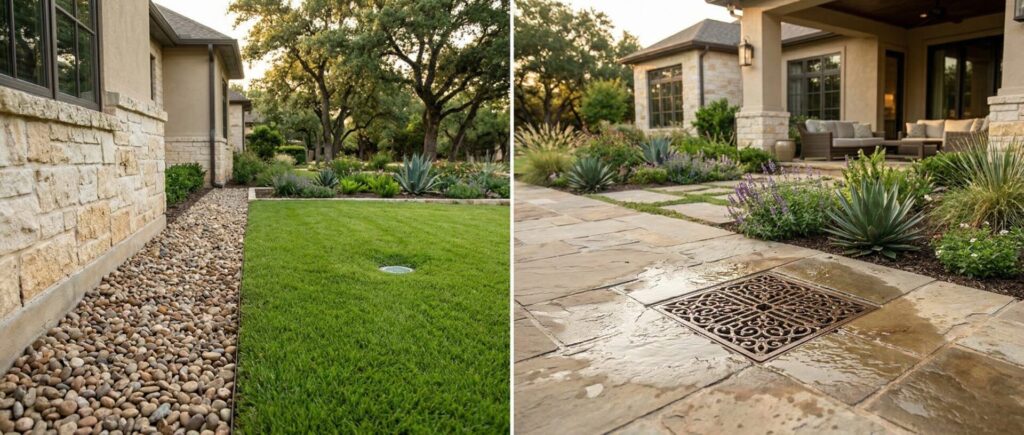
Stop guessing which drain you need
French Drain vs Surface Drain: What’s the Difference in San Antonio?
Both systems move water off your property, but they solve different problems. This guide explains when a French drain makes sense, when a surface drain is smarter, and how we combine them so you don’t overspend on the wrong fix.
Request Your Free EstimateMatch the drain to the water problem
Do I need a French drain or surface drains?
In San Antonio, surface drains and catch basins are usually the right starting point when you see water sitting on top of the lawn, in swales, or along patios after a storm. They collect visible water at low points and move it out through solid pipe.French drains are better when water is moving through the soil, keeping certain areas wet long after the surface looks dry or pushing moisture toward foundations and retaining walls. Many yards benefit from a combination: downspout drainage to move roof water, surface drains for ponding, and targeted French drains for persistent seepage.
- Surface drains handle visible standing water; French drains focus on subsurface water
- Downspout drainage should often be corrected before adding long French drains
- Yard grading / resloping can reduce how much piping you need of either type
- The best systems often blend French drains, surface drains, and grading—not just one solution
- Choosing the wrong system can move the problem, not solve it
Start with the water, not the product name
How We Decide Between French Drains and Surface Drains
The question isn’t “Which system is better?” It’s “Which system matches how water actually behaves in your yard?” We look at roof runoff, soil type, slope, and where water is trying to escape. From there, we decide whether a French drain, surface drains, or a combination with downspout drainage and Yard grading / resloping is the most practical fix. For help turning the advice into a real project, review our drainage solutions service page.
1. Read the symptoms before prescribing the system
Every drainage call starts with a simple field diagnosis:
- Surface ponding: Water sits in visible puddles after storms, especially in flat areas or low spots by patios, gates, and walks.
- Soggy strips that never dry: Narrow areas along fences, house edges, or between properties that stay soft even when the rest of the yard is usable.
- Water against the foundation: Mulch washing away from the house, damp slabs, or moisture in flower beds under gutters.
- Washouts and erosion: Rock, mulch, or soil moving off slope beds and around downspouts.
We map these symptoms to causes: roof runoff, soil saturation, poor slope, or a combination. That determines whether surface drains, French drains, or better Drainage Installation design is the priority.
2. What a French drain really does
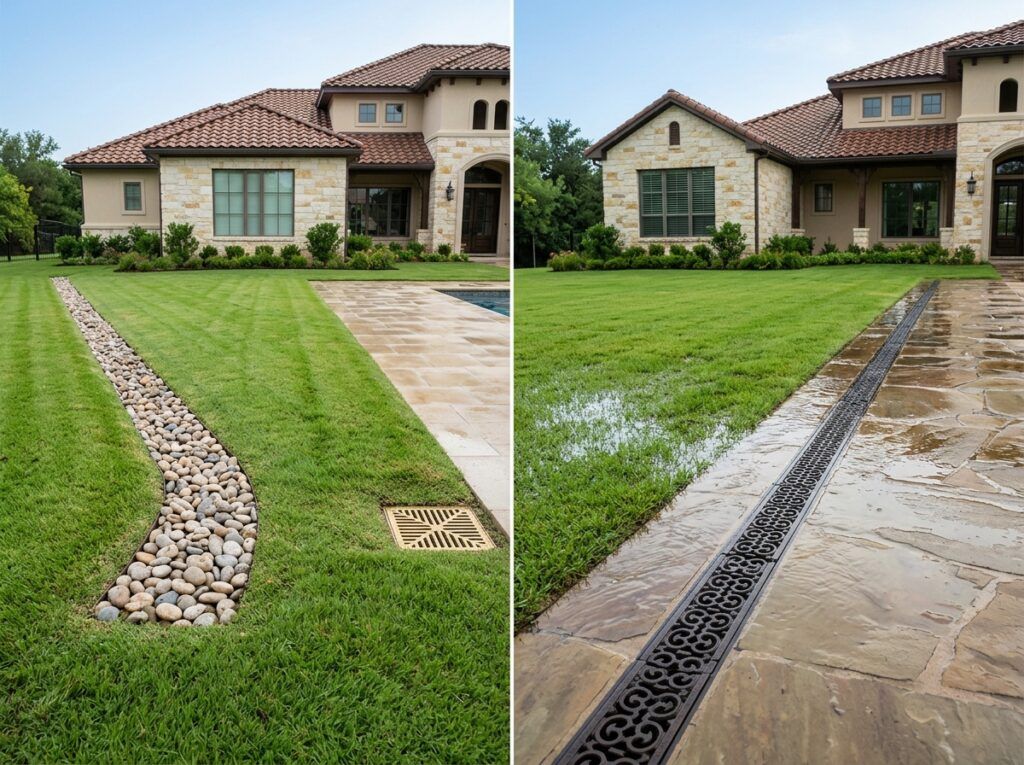
A French drain is a gravel trench with perforated pipe wrapped in fabric. It doesn’t magically “dry out” every yard—it collects water moving through the soil and redirects it to a safe discharge point.
- Best uses: Soggy fence lines, seepage along foundations, wet zones behind Retaining Wall Installation, and low areas where water migrates under the surface.
- Key requirements: Enough fall to move water, clean rock, quality fabric, a real discharge point, and proper backfill.
- Common mistake: Installing a shallow pipe with little rock and no fabric just below the grass. That usually clogs and fails, even though it was sold as a “French drain.”
When designed correctly, a French drain is a powerful tool—but it’s often over-prescribed for problems that a surface drain or downspout reroute could solve more efficiently.
3. What surface drains and catch basins really do
Surface drains and catch basins sit where you can see the water. They collect runoff at low points and hardscape edges, then move it through solid pipe to a lower, safe area.
- Best uses: “Bird baths” in the middle of the lawn, water trapped between houses, puddles at gates, and low corners of patios or driveways.
- Key requirements: Proper slope leading to each basin, solid pipe sized for the flow, and a discharge point that won’t create a new problem.
- Common mistake: Dropping a basin into a flat spot without adjusting the surrounding grade. Water never finds its way to the drain, so the area still holds water.
In many San Antonio yards, a few well-placed basins combined with better grading give more benefit for the cost than running a French drain everywhere.
For a related next step, read Signs Your Yard Has Drainage Problems.
For a related next step, read Does Yard Grading Fix Drainage?.
For a related next step, read How Downspout Drainage Protects Your Foundation.
4. How we design hybrid systems for San Antonio yards
Most properties don’t fit neatly into “French drain only” or “surface drain only.” We often combine tools:
- Downspout drainage to get roof water safely away from the foundation first.
- Surface drains and catch basins at low points where water visibly collects.
- Targeted French drains only where subsurface seepage continues after addressing the obvious issues.
- Yard grading / resloping to fine-tune how water moves so everything works with gravity.
After trenching, we restore or upgrade your lawn and beds with services like Sod Installation and Landscape Bed Installation so the yard looks finished—not like a project that was dug up and forgotten.
Here goes your text ... Select any part of your text to access the formatting toolbar.
French Drain vs Surface Drain vs Other Key Drainage Tools
| System Type | What It Handles Best | Where It’s Installed | How It’s Often Priced | Best Use in San Antonio |
|---|---|---|---|---|
| French Drain | Subsurface water moving through soil and along fence lines or slopes | Below grade in a gravel trench with perforated pipe and fabric | Typically per linear foot, adjusted for depth, rock volume, and discharge details | Constantly soggy strips, seepage along foundations, or behind retaining walls where water moves underground. |
| Surface Drain & Catch Basin | Visible standing water and “bird baths” after rains | At low points in the yard, sidewalks, and hardscape edges, tied to solid pipe | Often per basin or drain box plus the connecting pipe runs | Flat or lightly sloped yards where water collects in a few predictable locations. |
| Downspout Drainage | Roof runoff concentrated at corners and around the foundation | Buried lines from downspouts to a safe discharge point | Per downspout connection plus linear footage to discharge | Homes where gutters are dumping water into beds, walkways, and lawn close to the house. |
| Yard Grading / Resloping | Overall flow so water has a clear path away from structures | Across open lawn and planting areas, shaping swales and drainage paths | Usually per project or area, not just per foot | Backyards that drain toward the house or fence instead of toward the street, alley, or easement. |
Choose the right tool for the job
Pros and Cons of French Drains and Surface Drains
PROS
- French drains can relieve subsurface water that surface drains will never touch
- Surface drains and catch basins are effective for obvious puddles and low spots
- Downspout drainage usually reduces the load on both systems
- Combining systems often gives better performance without oversizing any one component
- Thoughtful grading can reduce how much pipe and structure you need overall
CONS
- French drains are more material- and labor-intensive, so they cost more per foot
- Shallow or poorly built French drains clog easily and provide little benefit
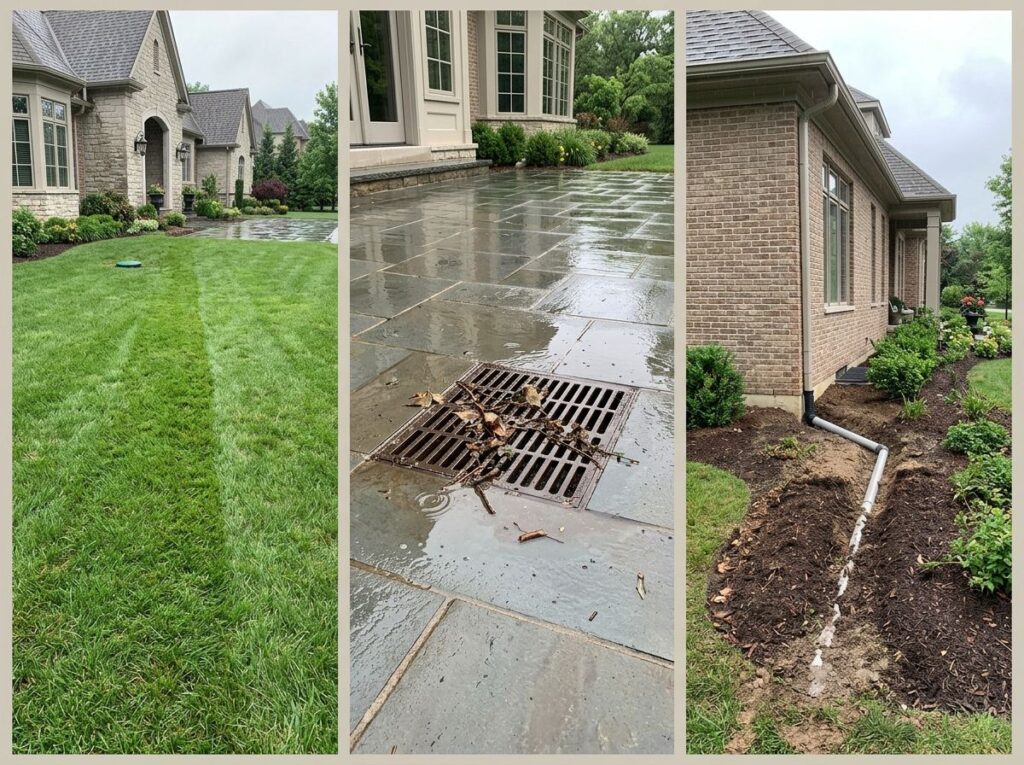
- Surface drains can clog with leaves and debris if they’re not accessible and maintained
- Relying only on surface drains may not fix seepage or saturation deeper in the soil
- Installing the wrong system first can waste budget and still leave problem areas
Cost follows depth, footage, and structures
Here goes your text ... Select any part of your text to access the formatting toolbar.
Cost Patterns: French Drain vs Surface Drain Systems
French drains, surface drains, and downspout systems are all priced differently because the work behind each system is different. French drains require deeper excavation, rock, and fabric. Surface drains rely on well-placed basins and solid pipe. Downspout drainage focuses on tying into gutters and routing water away from the house. Grading is usually priced by area and complexity rather than per foot. Before scheduling work, review our drainage expectations so the project expectations are clear.
- French drains are commonly estimated per linear foot, with depth, rock volume, and discharge conditions heavily influencing the final number.
- Surface drains and catch basins are often priced per basin or drain box plus the connecting pipe footage.
- Downspout drainage typically uses a per-connection cost plus footage to the discharge point or daylight outlet.
- Yard grading / resloping, and drainage behind Retaining Wall Installation, are usually priced by project or square footage rather than per foot of pipe.
- Any quote should show how much restoration is included—such as new Sod Installation, bed rebuilding, or hardscape touch-ups—after the drainage work is complete.
Real homeowner questions about drains
French Drain vs Surface Drain FAQs
These are the questions we hear most often when homeowners are deciding between drainage systems in the San Antonio area.
See All Frequently Asked QuestionsDrainage requires trenching, so there is temporary disruption. We plan routes to minimize impact and include restoration—such as new Sod Installation and Landscape Bed Installation touch-ups—in the scope so the yard recovers cleanly. The goal is to solve the water problem and leave the landscape looking finished, not patched.
Related: How to Prepare Your Yard for Sod Installation, Signs Your Yard Has Drainage Problems, Landscape Bed Installation Cost Guide
Yes.
Many San Antonio properties benefit from a combination. For example, we might use downspout drainage and surface basins to handle roof runoff and visible ponding, then install a short French drain along a problem fence line or behind a retaining wall where water is moving underground.
Related: Signs Your Yard Has Drainage Problems, When Do You Need a Retaining Wall?, How Downspout Drainage Protects Your Foundation
Any surface opening can collect debris, but good design minimizes that risk. We place basins where they can be accessed, use grates that balance flow with protection, and encourage homeowners to check them during routine Seasonal Yard Cleanups. In many yards, a quick visual check after big storms is all that’s needed.
Related: Seasonal Yard Clean-Ups, Seasonal Yard Clean-Up Cost Guide, How to Design a Clean, Modern Front Yard
On a per-foot basis, French drains usually cost more because they require deeper excavation, washed rock, fabric, and careful construction.
However, if your main problem is subsurface water, trying to fix it with more and more surface drains can waste budget without solving the issue. The right system—not simply the cheaper one—tends to be the most cost-effective long term.
Related: Landscape Bed Installation Cost Guide, Faqs/#Are French Drains Always More Expensive Than Surface Drains
If water is standing on top of the lawn after rain, surface drains and catch basins are usually the first solution, often combined with light grading.
If certain areas stay soggy long after the surface looks dry, or if moisture pushes toward the foundation or a retaining wall, a French drain may be appropriate. An on-site evaluation looks at both surface and subsurface patterns before we recommend anything.
Related: Signs Your Yard Has Drainage Problems, Faqs/#I Know If My Yard Needs A French Drain Or Surface Drains
Surface drains can handle a surprising amount of water when the grade directs runoff to each basin, but they can’t fix deeper seepage moving through the soil.
In some yards, improving downspout drainage and adding surface drains is enough. In others, we still need targeted French drains where saturation remains below the surface.
Related: Signs Your Yard Has Drainage Problems, How Downspout Drainage Protects Your Foundation, Faqs/#Can Surface Drains Replace A French Drain In Most Cases
One visit, clear direction
Not Sure Which Drain Your Yard Needs?
We’ll walk the property, trace how water moves, and lay out a practical plan that explains where French drains, surface drains, grading, or downspout work make the most sense.