
Purpose and how to use this page
Drainage work is about setting realistic expectations. This page explains what drainage solutions can reasonably do and what they cannot.
Definitions and notice timing rules used across policies are available at policies. We do not restate them here.
What “improvement” means
The goal of drainage work is to improve conditions where feasible, such as:
- Reducing recurring pooling or soggy areas
- Reducing washouts and erosion patterns
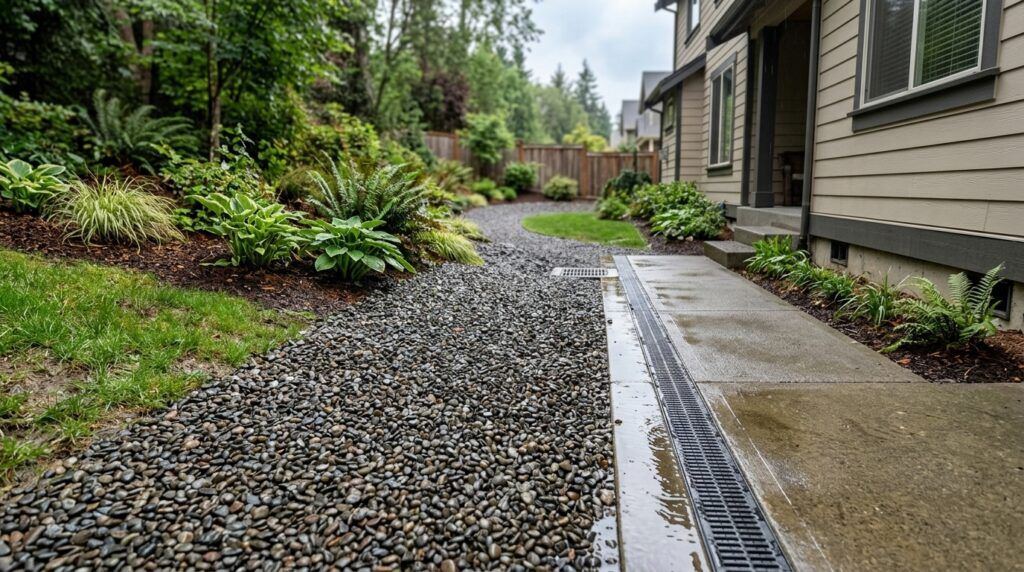
- Helping water move away from problem areas (like near foundations) when the site allows
Results depend on property-specific factors like slope, soil type, discharge options, and rainfall intensity.
Plain examples (not promises): you may see less standing water, faster dry-out, or better routing away from a problem area after a typical rain event.
Limits and constraints
Drainage work has real limits. These are the most common ones:
Discharge limitations
- Some yards lack a viable discharge point.
- Some properties have restrictions or site conditions that limit tie-ins.
Drainage tie-in limitations are a common hidden condition discovered after work begins. If this happens, we may need to propose options and get written approval before moving forward. See Change Orders & Scope Policy.
Soil and heavy clay reality
Heavy clay drains slowly and can stay saturated longer than other soils. Compaction and grade also affect how quickly an area dries out.
Extreme storms and acts of nature
Unusual rainfall intensity can overwhelm drainage systems or create new flow paths. We do not guarantee “no flooding” in extreme storms or acts of nature.
Weather/acts of nature are not workmanship defects. See Damage, Risk & Liability Policy for risk boundaries.
Runoff from neighboring properties
Some water can originate from adjacent properties or shared grading patterns. We stay neutral and focus on practical solutions within the property boundaries and site constraints.
What you can do to help the results
Simple homeowner steps can help drainage systems perform better:
- Keep any surface drains, inlets, and edges clear of debris (when applicable).
- Avoid blocking drain outlets or changing grades after installation.
- Report new or recurring issues early with photos.
Evaluation and scope (why it’s site-specific)
Drainage is site-specific. The right solution depends on what is happening on your property and what discharge options exist.
We often ask questions first and may request photos before an on-site visit. This helps us understand the symptoms and plan the right evaluation.
If hidden conditions are discovered during work, we may need to pause, document them, propose options, and obtain written approval before proceeding. See Change Orders & Scope Policy.
Post-install expectations
After installation, minor settling, soil movement, or small surface adjustments can occur after the first rain cycles.
We do not promise free regrading or free adjustments unless it is confirmed as a workmanship issue under warranty terms. See the Warranties Policy for the claim framework.
How to report a drainage concern
If you have a concern after installation, report it as soon as possible with photos:
- Take a wide photo (show the whole area) and a close-up photo (show the detail).
- Note the rainfall context (recent rain, where pooling occurs, and how long it lasted).
- Send via text or email.
Notice timing rules: Policies. Written notices sent outside business hours are treated as received at 8:00 AM CT on the next business day. Please confirm receipt.
Warranty claim framework: Warranties
What this policy does not cover
This page explains drainage expectations and site realities. It does not replace other policies:
- Warranties Policy
- Damage, Risk & Liability Policy
- Change Orders & Scope Policy
- Project Guidelines Policy
- Deposits & Payments Policy and Cancellations & Rescheduling Policy
For definitions and notice timing, see our policies page.