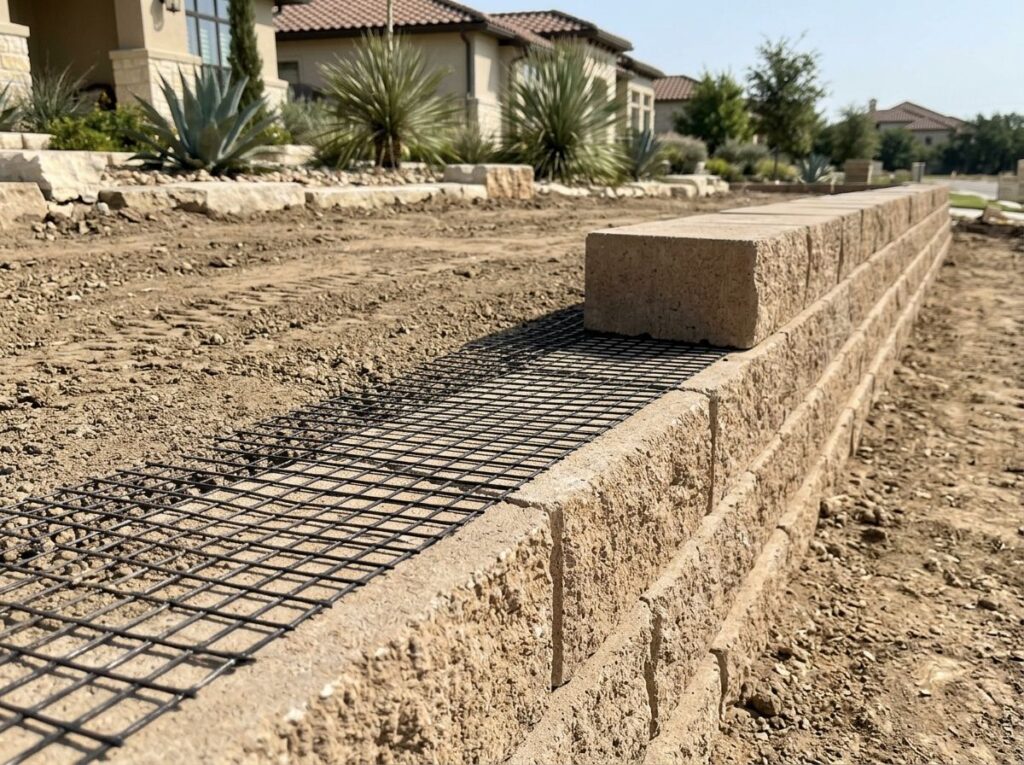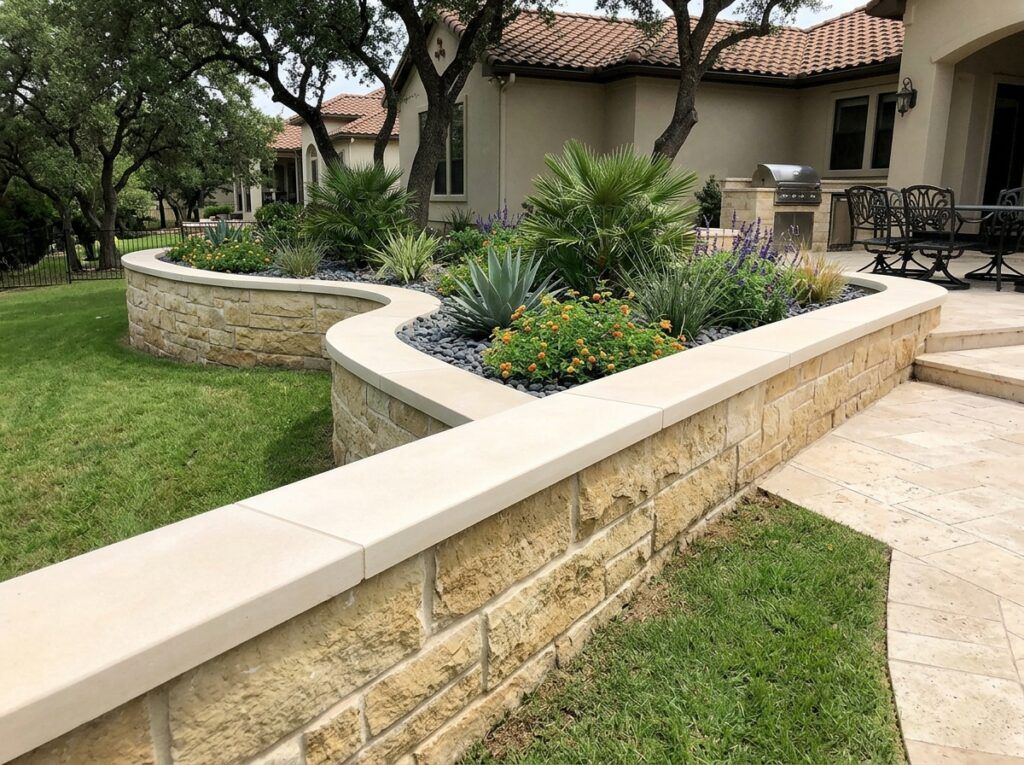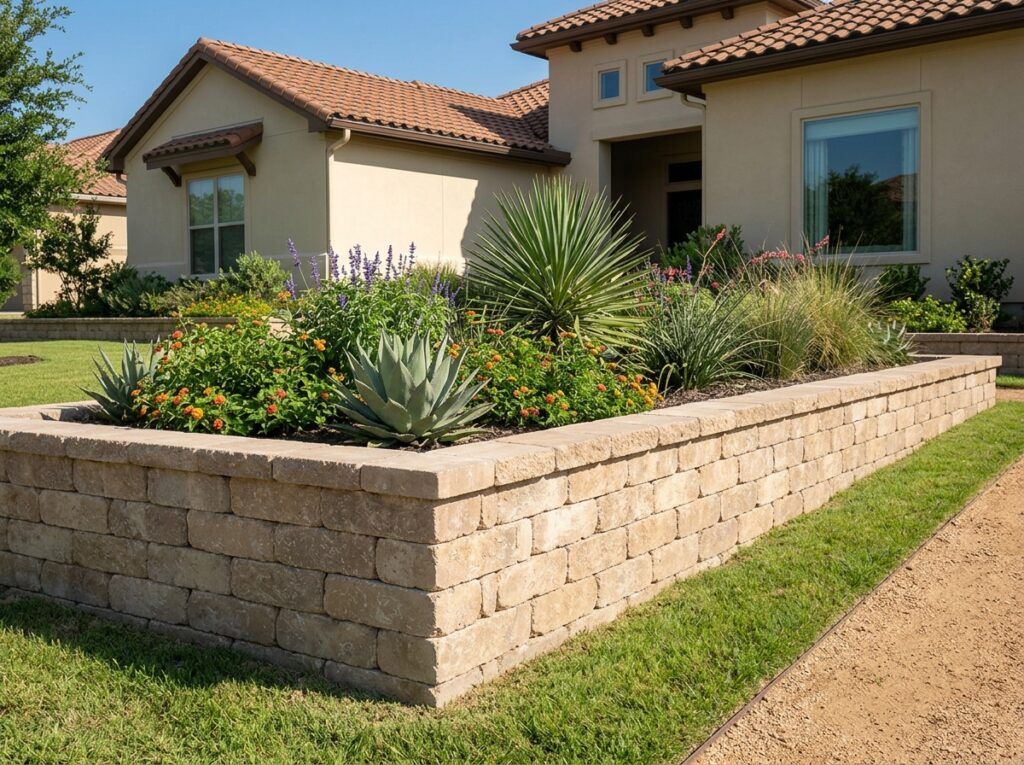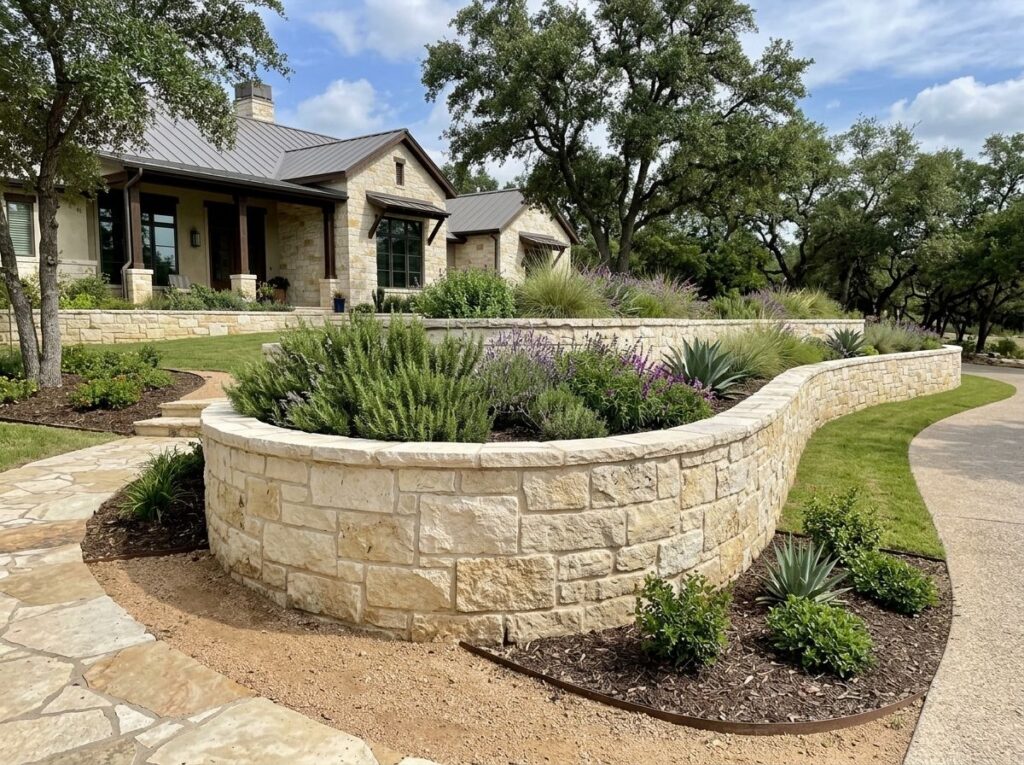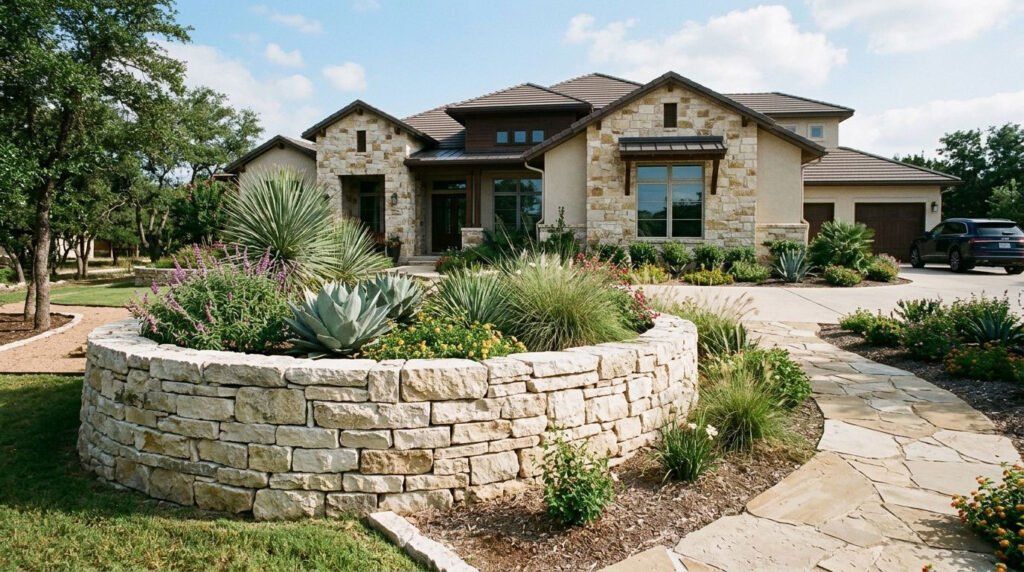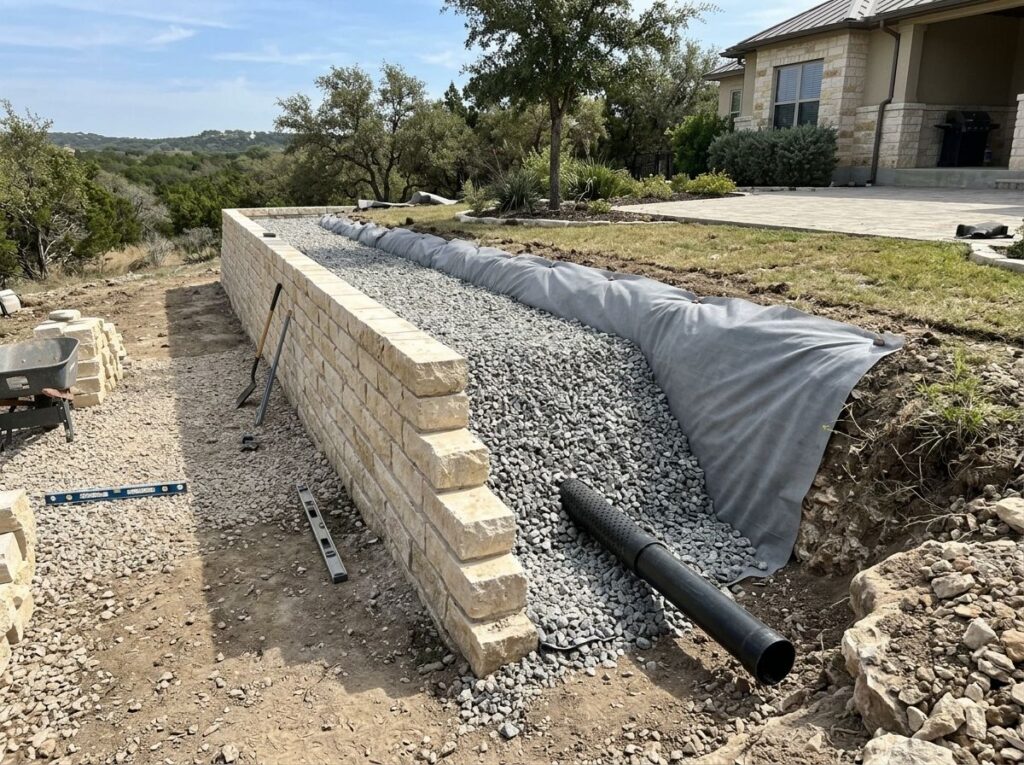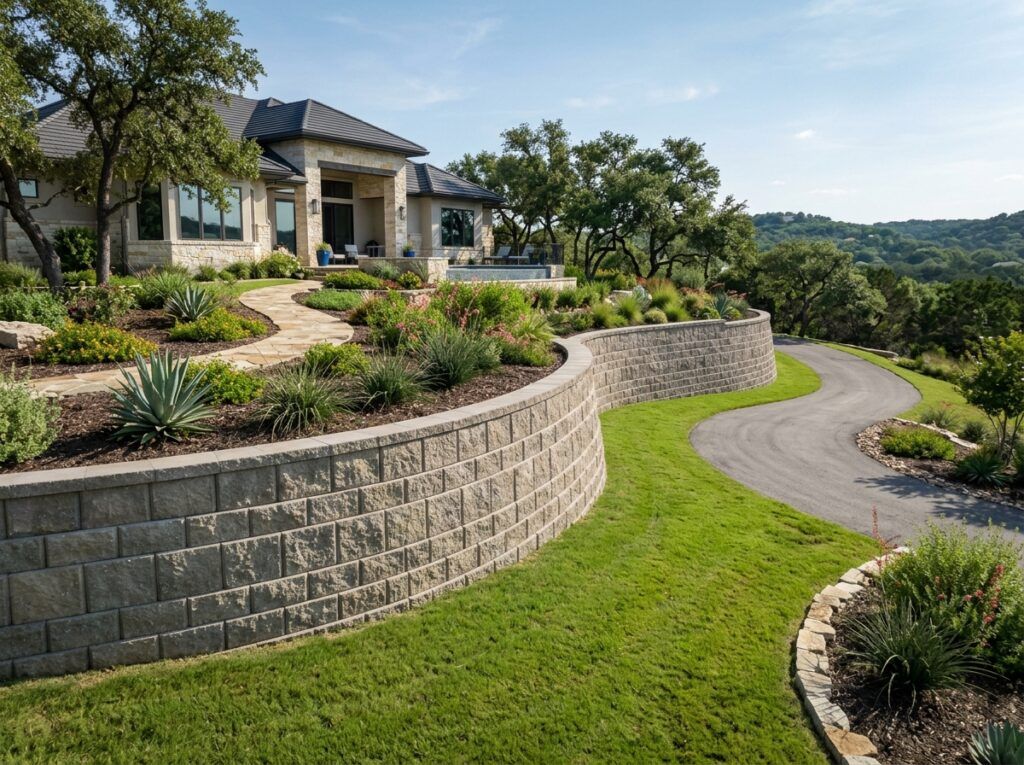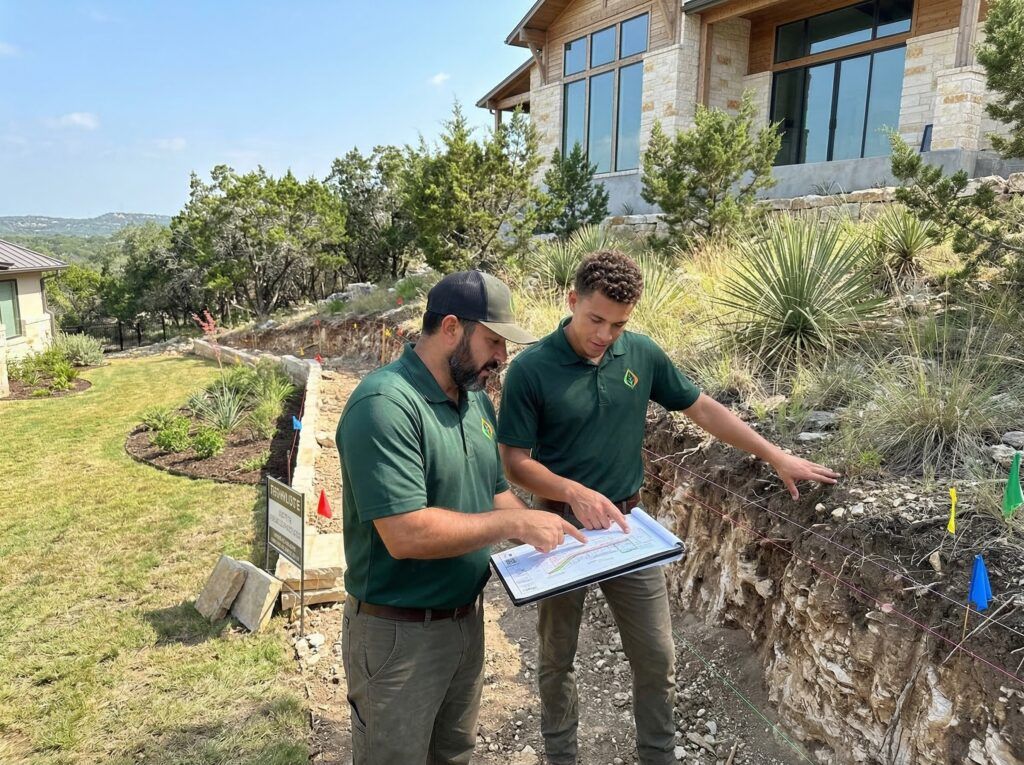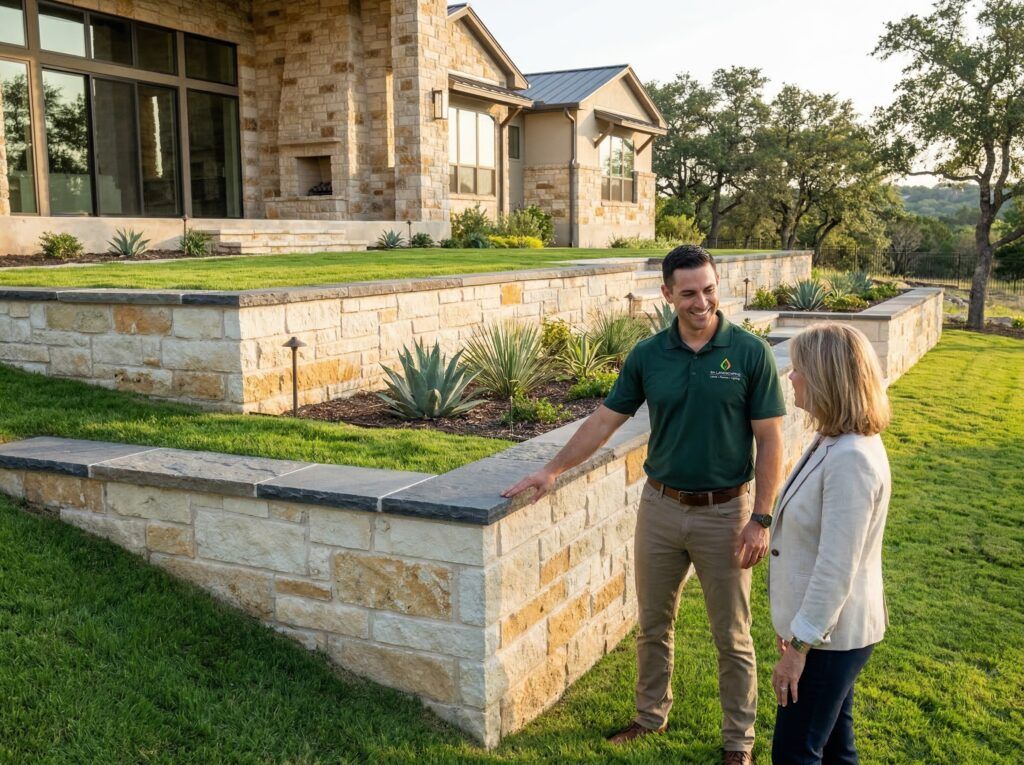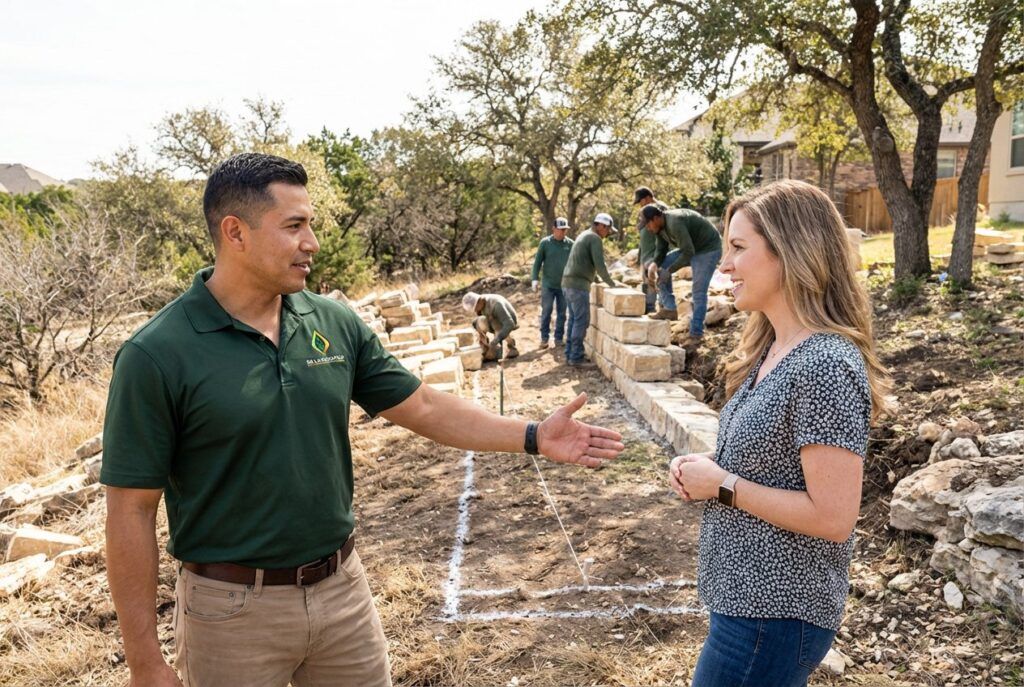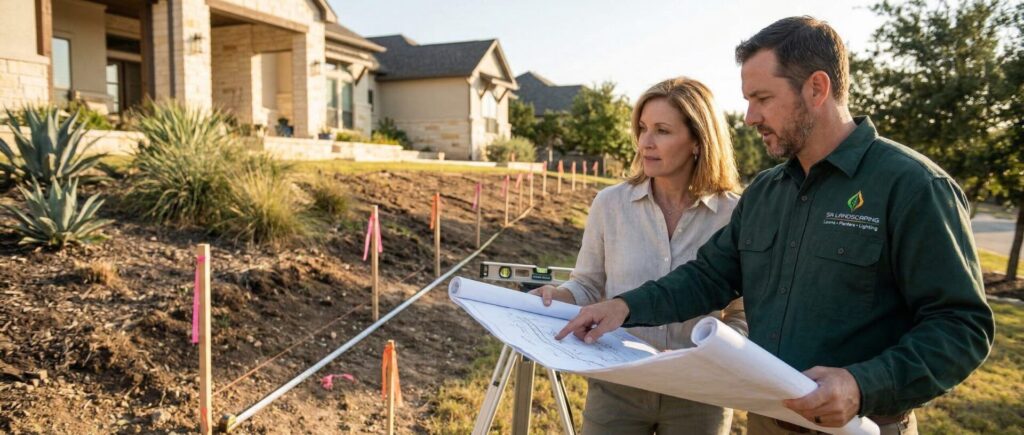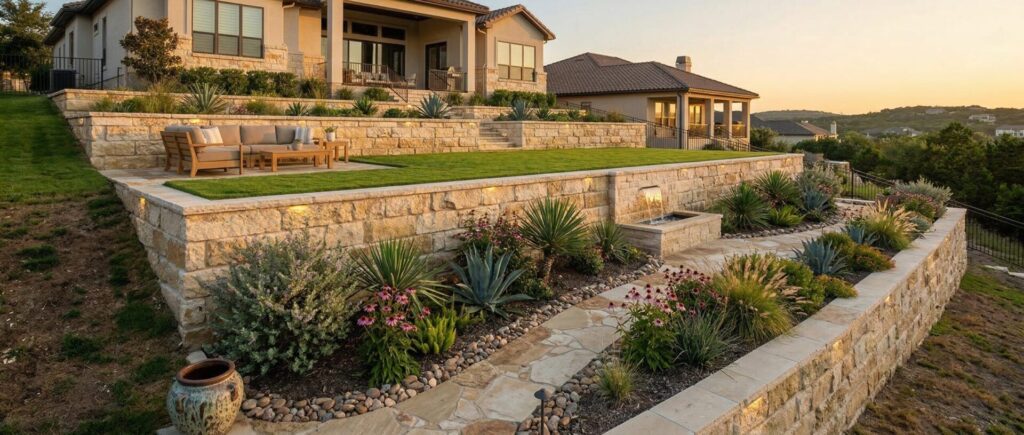
Retaining wall installation enhancing a San Antonio residential landscap

Retaining Wall Installation in San Antonio

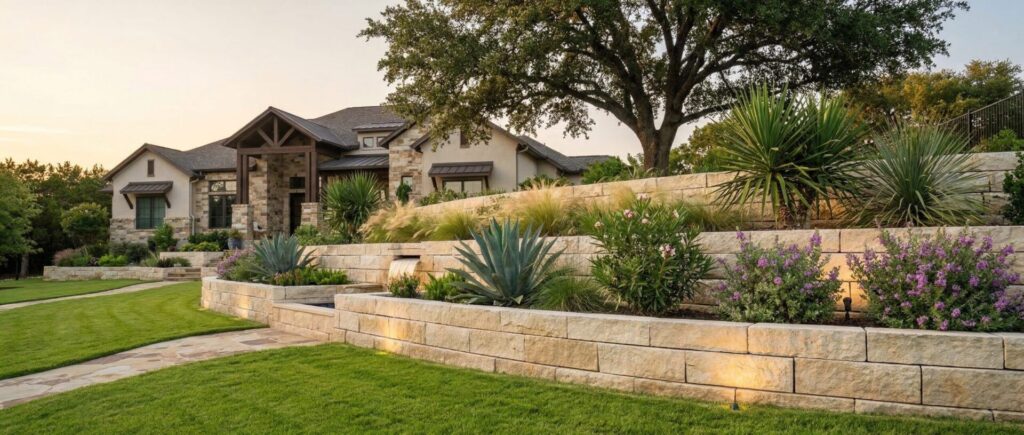
Retaining walls do two jobs at once: hold back soil safely and upgrade the look of your property.
We build walls that match the site conditions—drainage, height, soil pressure, and material—so they stay straight, drain properly, and look sharp for years.

Get Your Free Quote

Functional + decorative

What a Retaining Wall Should Accomplish

A retaining wall is not just stacked material—it’s a system.The right base, compaction, drainage behind the wall, and proper construction method are what prevent bulging, leaning, and early failure.

  • Stabilize slopes and reduce erosion on problem grades
  • Create usable flat areas for lawns, patios, and landscape beds
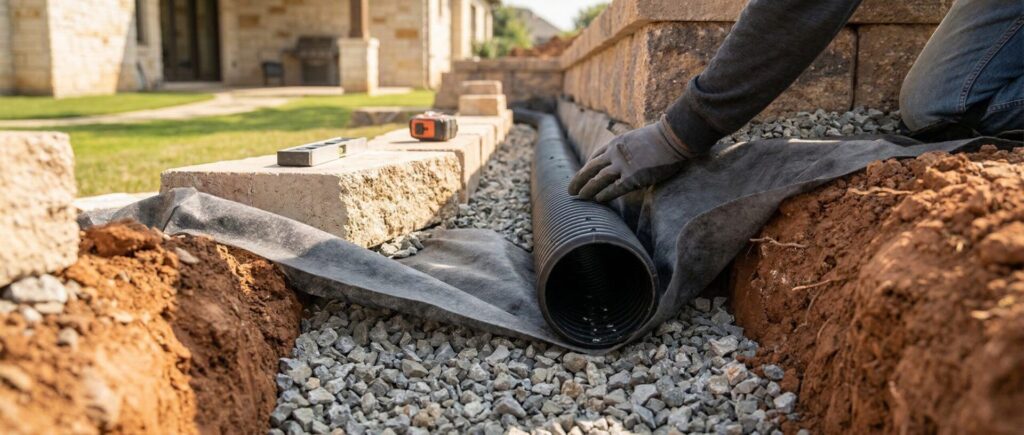
  • Manage water behind the wall with proper retaining wall drainage and backfill
  • Support elevation changes without washouts or soil movement
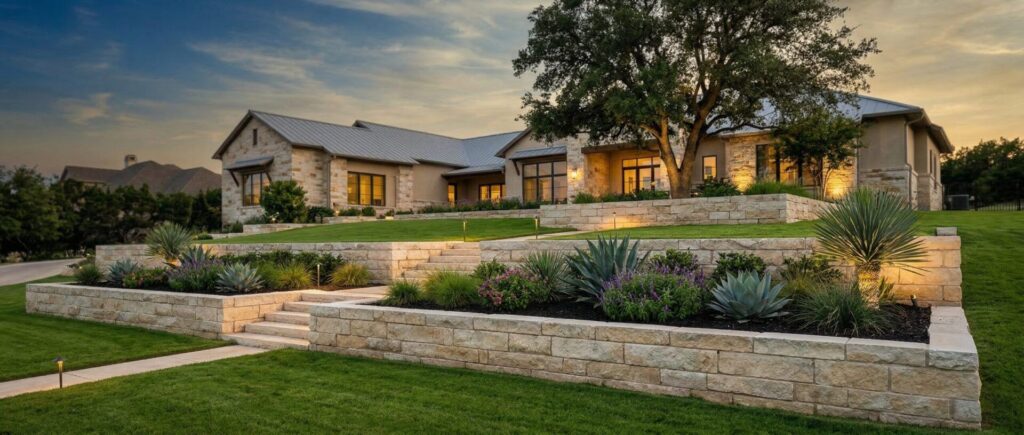
  • Upgrade curb appeal with clean lines and premium materials
  • Integrate with landscape beds, steps, lighting, and drainage when needed
  • Stay straight and stable through heavy rain and heat cycles

Engineered in the field

Our 10-Step Retaining Wall Build Process

Every wall starts with site conditions—height, soil, and water.Then we choose the correct wall type and build it with a stable base and drainage so it performs long-term in San Antonio-area weather.

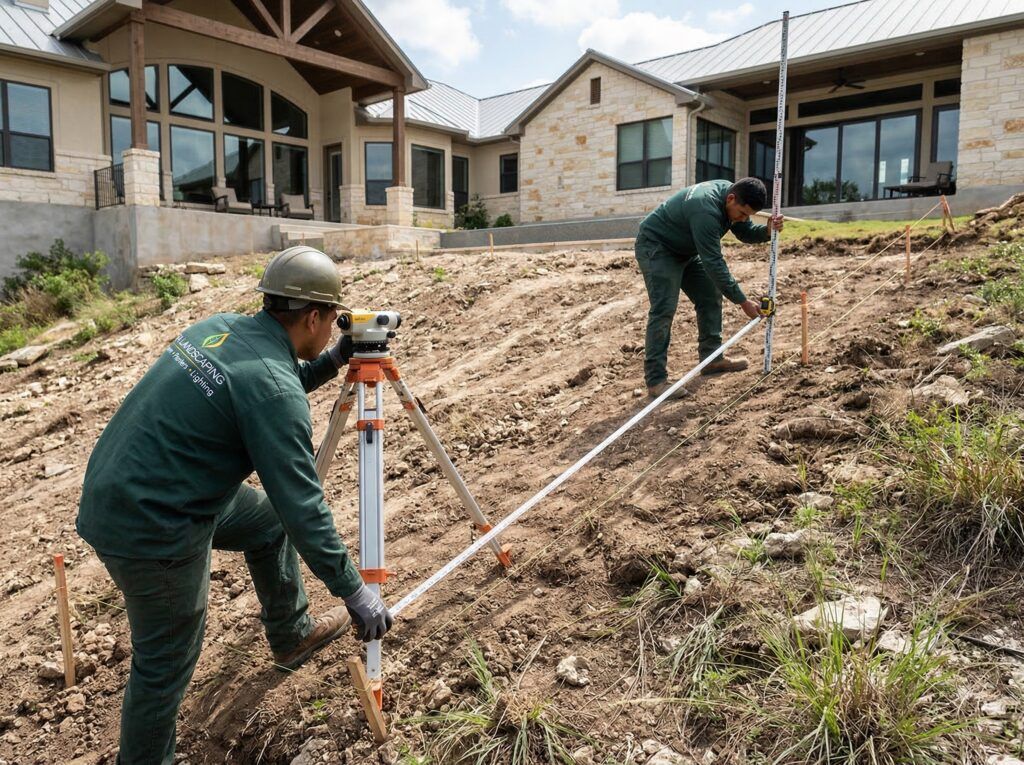
  • Landscapers reviewing grade changes for landscape retaining wall to support planter beds and drainage.

    Site Review + Wall Purpose

    We confirm what the wall needs to do: hold grade, create flat space, protect beds, or act as a decorative border with light retention.
  • Landscapers measuring elevation change for landscape retaining wall layout and planter bed grading

    Measure Height + Run

    We measure the wall face area and the elevation change. Height matters for construction method, reinforcement needs, and drainage design.
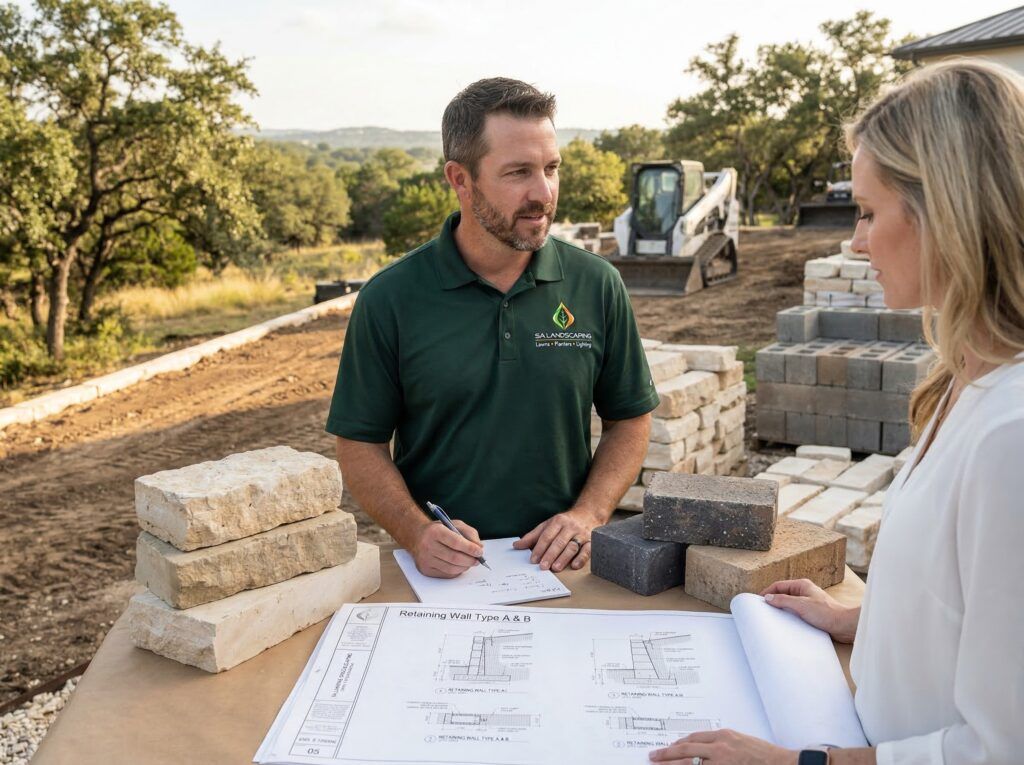
  • Landscape pro reviewing landscape retaining walls materials with homeowner for garden beds, drought-tolerant landscaping

    Select Wall Type

    We match the wall type to the project: gravity, segmental block, mortared masonry, dry-stack stone, or terraced for taller transitions.
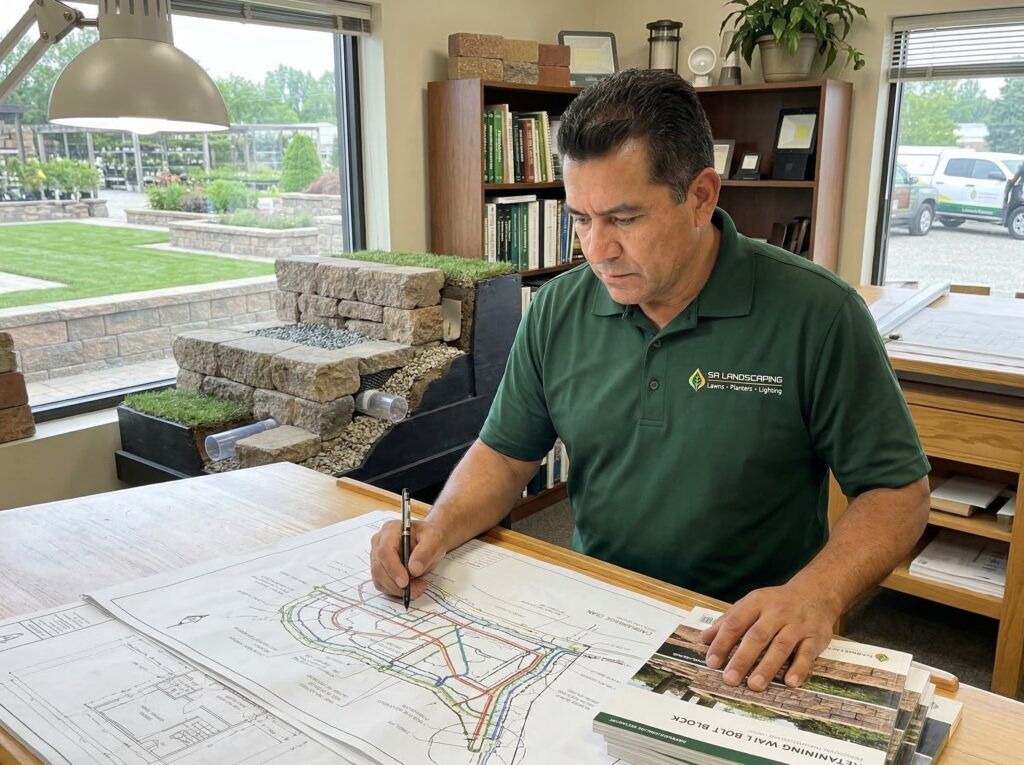
  • Landscaper planning drainage for new landscape retaining wall to support planter beds and garden beds in drought-tolerant yard

    Drainage Plan Behind the Wall

    We plan how water will be relieved behind the wall using proper backfill and drainage components so pressure doesn’t build up.
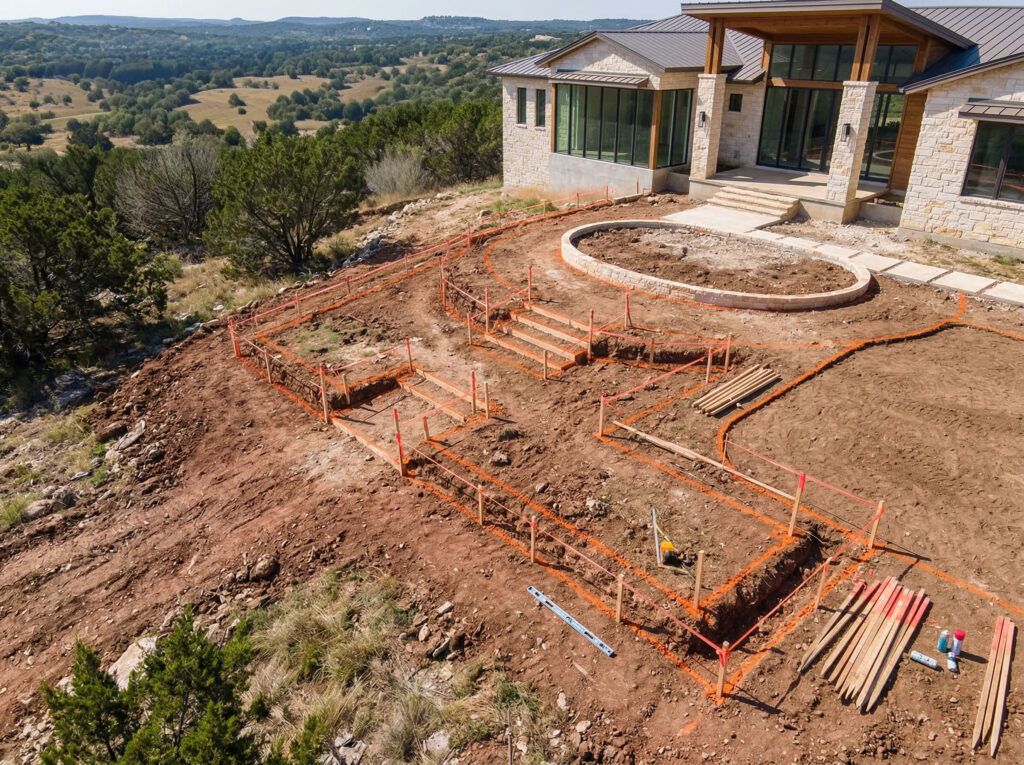
  • Marked layout for landscape retaining walls with paint and stakes showing alignment, corners, steps, transitions

    Layout + Material Plan

    We finalize alignment, corners, steps/returns, cap details, and transitions into beds or hardscape so the wall looks intentional—not added later.
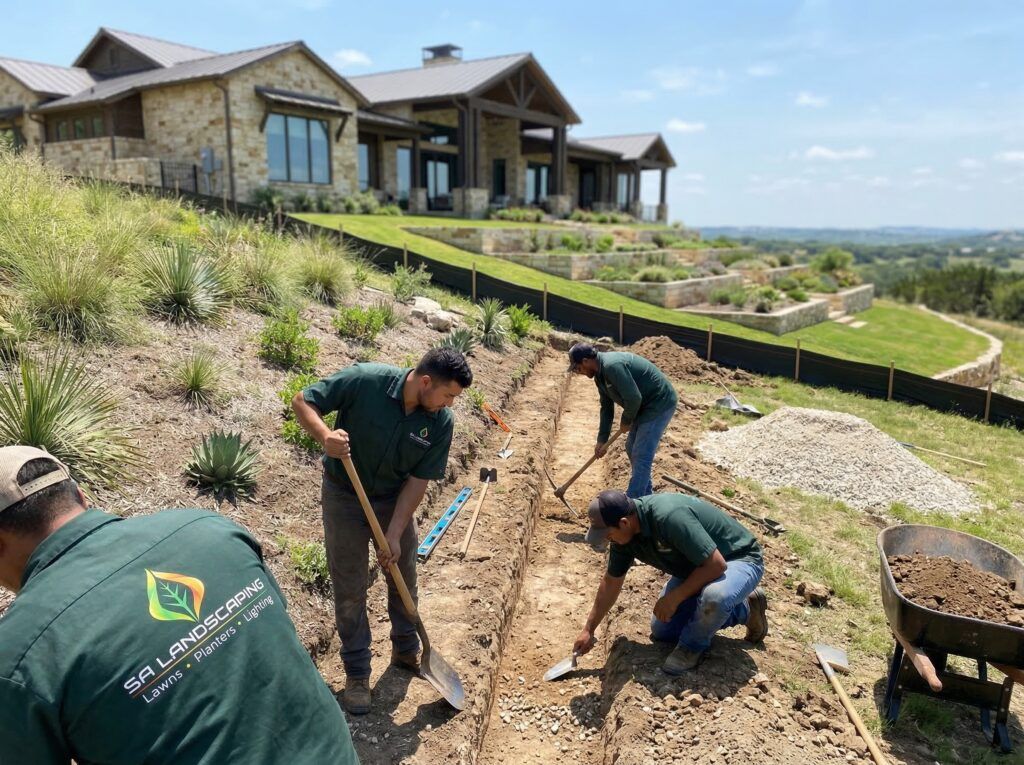
  • Landscapers excavating trench to subgrade for landscape retaining wall base near planter beds and garden beds

    Excavation to Subgrade

    We excavate to the proper depth for base material and block/stone placement. This step is critical for preventing settlement and wave.
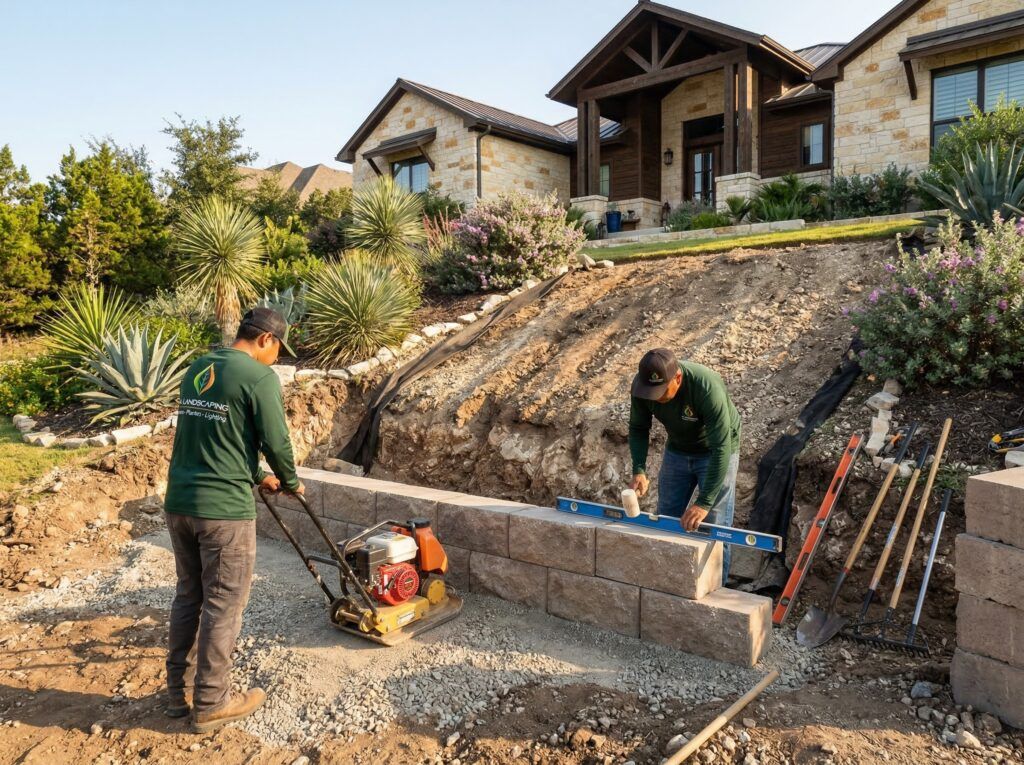
  • Landscaper compacting base and setting first course of landscape retaining wall blocks for garden beds

    Compact Base + Set First Course

    We install and compact a stable base, then set the first course perfectly level. A wall is only as straight as its first row.
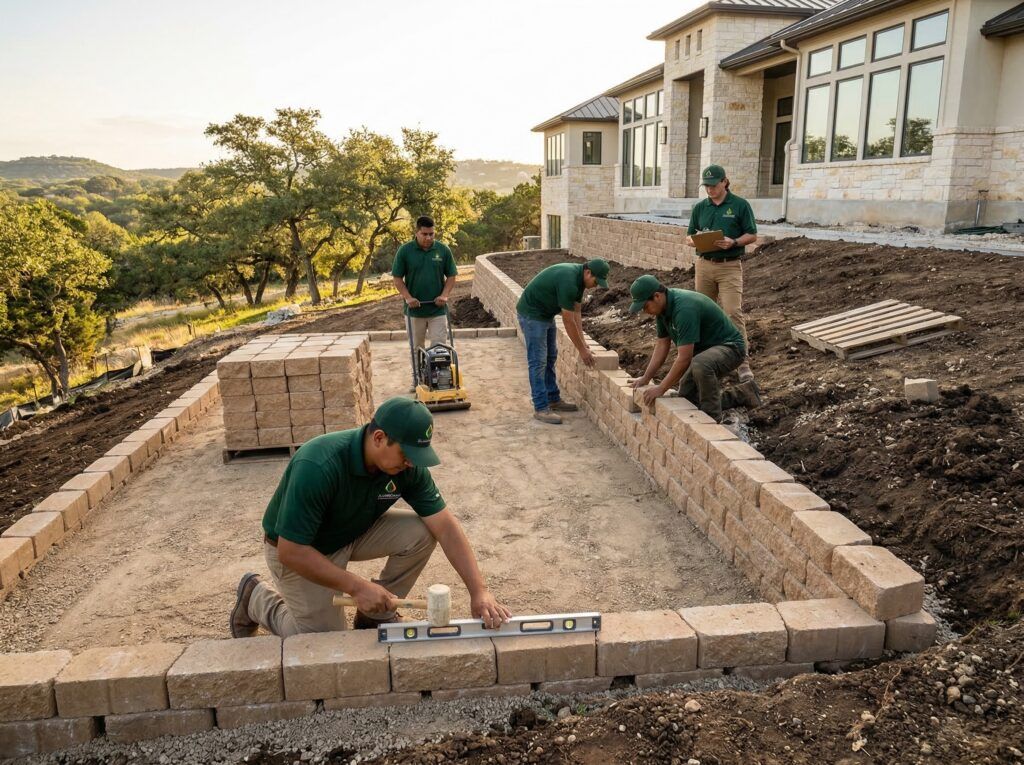
  • Garden block landscape retaining wall being stacked with controlled alignment for planter and garden beds landscaping

    Build Courses + Alignment Control

    We build upward while controlling alignment and batter (as required by the system). This prevents leaning and keeps faces crisp.
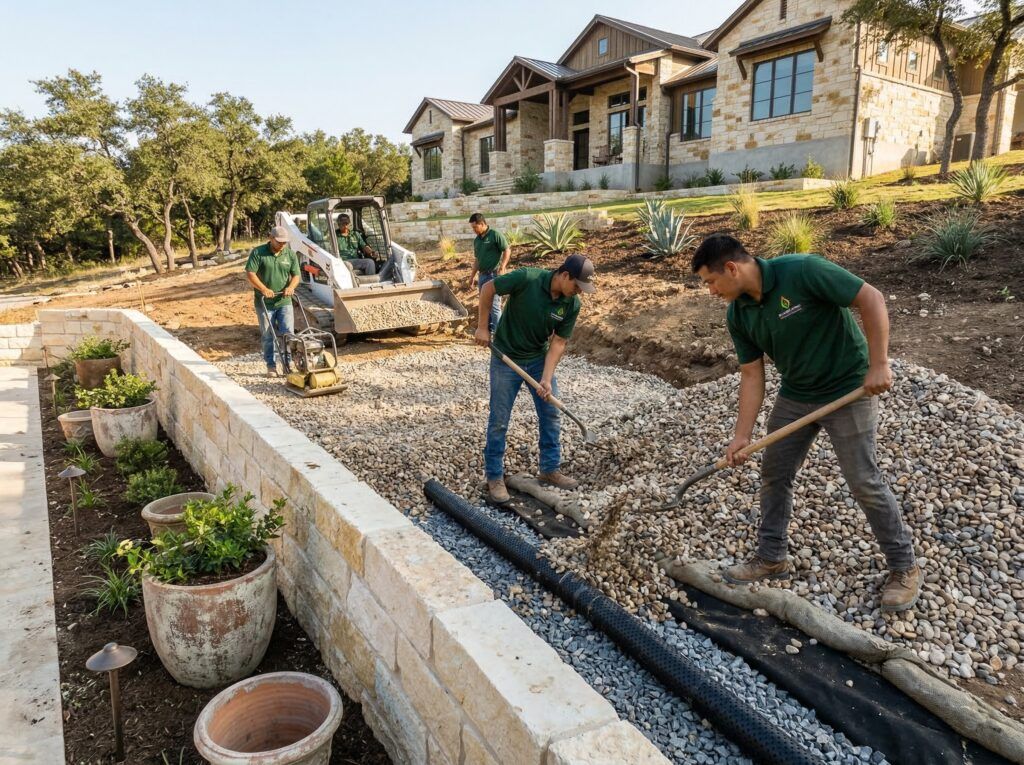
  • Landscapers backfilling behind landscape retaining wall, forming planter beds for drought-tolerant landscaping

    Backfill + Drainage Integration

    We backfill in lifts with the correct materials and integrate drainage behind the wall so water can escape instead of pushing the wall.
  • Completed landscape retaining wall with capstones, restored walkway and planter beds in drought-tolerant yard

    Cap, Finish, and Site Restoration

    We install cap/top details, clean edges, and restore surrounding areas. Then we walkthrough the wall features and care expectations.

Priced by wall face area

Retaining Wall Pricing in San Antonio

Retaining walls are typically priced per square foot of wall face.Your price is driven by wall type, height, base requirements, drainage behind the wall, and access for material handling; our retaining wall cost guide breaks down the main cost drivers.

TYPICAL STARTING RANGES (PER SQ FT OF WALL FACE, INSTALLED)

  • Segmental block retaining wall: $55–$110 / sq ft
  • Dry-stack stone retaining wall: $75–$150 / sq ft
  • Mortared masonry retaining wall: $110–$220 / sq ft

TYPICAL PROJECT EXAMPLES (TOTALS)

  • Small planter / short border wall: $2,500–$7,500
  • Mid-size yard retaining wall (functional): $6,000–$18,000
  • Large or terraced wall systems: $15,000–$45,000+
  • Segmental Blocks
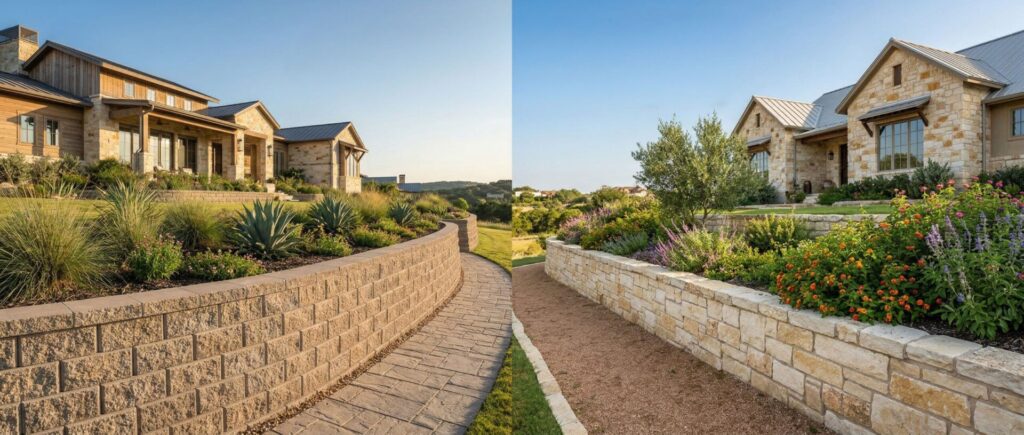
    Segmental Block Walls (SRW Systems) - Modular concrete block systems designed for strength, clean lines, and consistent results. Great for most residential and light commercial retaining needs.

    Common brands/styles: Keystone / Belgard-style systems Best for: clean modern lines, long straight runs, tiered designs Built with: interlocking blocks + compacted base + proper backfill Finish options: multiple colors/textures + matching caps

  • Mortared Masonry

    A premium, built-in-place look using masonry methods. Ideal when aesthetics are the priority and the wall is part of a larger hardscape design.

    Best for: luxury landscapes, formal entries, architectural hardscape Material options: stone veneer, masonry units, custom finishes Requires: correct foundation prep and drainage design behind the wall Great for: planters, seat walls, and highly visible areas

  • Mortared Masonry Variations

  • Dry-Stack Stone Walls

    A natural, timeless look with stacked stone. Great for decorative retaining and landscape-grade transitions when designed with proper base and drainage.

    Best for: Hill Country aesthetics, garden borders, natural beds Material options: native limestone blocks/boulders and select stone Visual priority: organic texture and color variation Can be paired with: terracing for taller elevation changes

  • Dry-Stack Stone Variations

  • Gravity Terraced

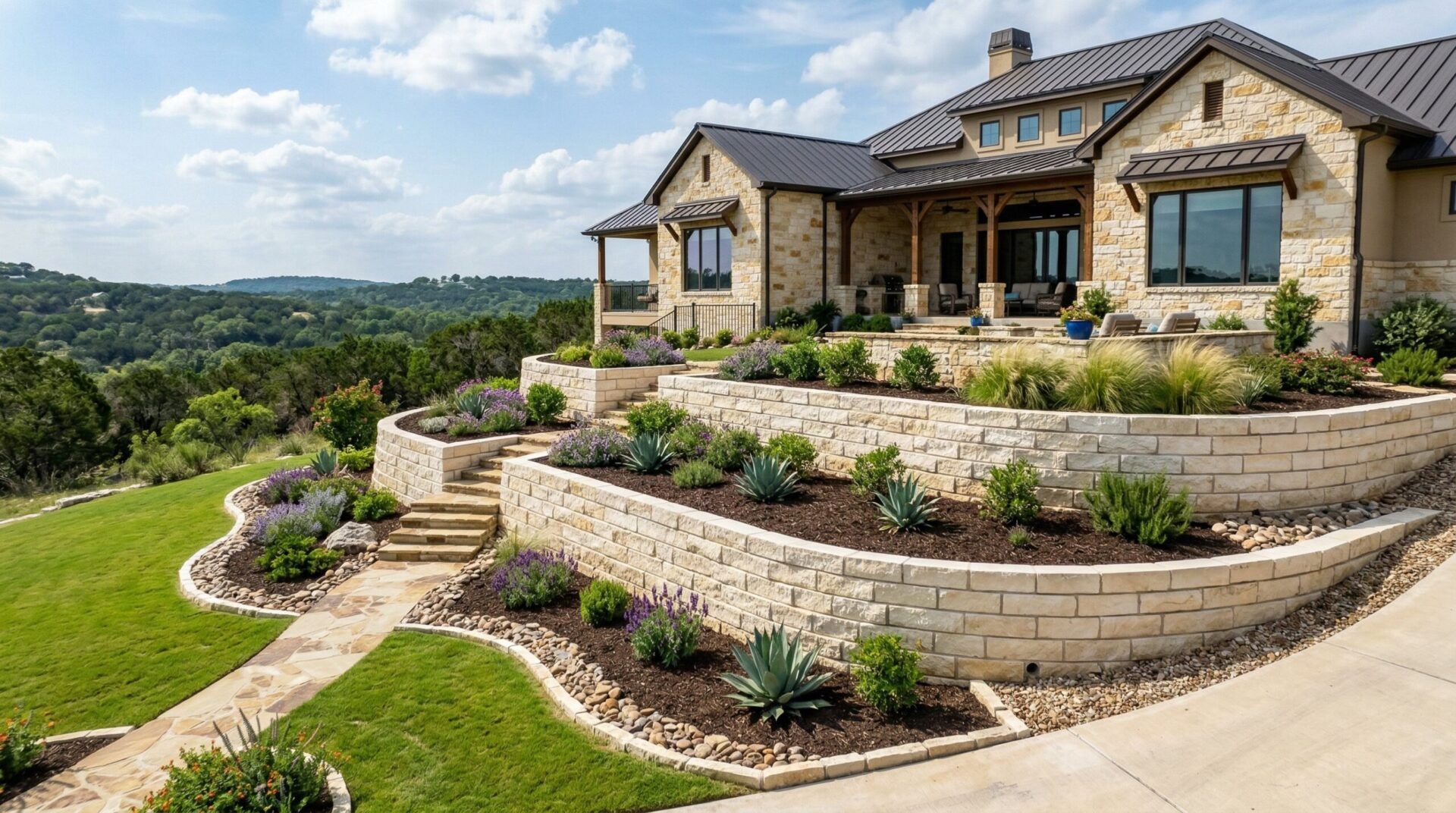
    Gravity + Terraced Wall Solutions - For slopes and bigger elevation transitions, we use gravity principles and terracing to spread load, improve stability, and create a layered landscape design.

    Gravity walls: rely on mass and geometry to resist soil pressure Terraced walls: multiple shorter walls with flat benches between Great for: large slopes, erosion control, and usable yard creation Can incorporate: steps, planting pockets, and drainage pathways

Why wall price varies

What Affects Retaining Wall Cost

Two walls can be the same length but priced very differently.
Height, site prep, and drainage behind the wall are usually the biggest drivers.

  • Wall height and total square footage of the wall face
  • Wall type: segmental, mortared masonry, dry-stack stone, terraced
  • Base depth requirements and excavation complexity
  • Drainage behind the wall (backfill, relief, discharge routing)
  • Soil conditions and potential soil pressure issues
  • Material choice: limestone blocks/boulders vs concrete systems vs masonry finishes
  • Corners, curves, returns, steps, and tiered layouts
  • Access constraints (tight side yards vs open equipment access)
  • Removal of existing walls or contaminated/unstable soils
  • Finish restoration around the wall (beds, sod, edging)

Service Why Us Tagline

Why Homeowners Choose Us for Retaining Walls

A retaining wall should look clean on day one and still look clean years later.
We focus on stable foundations, proper drainage, and materials that fit the property—not quick stacks that shift after the first wet season.

  • Drainage-first construction to reduce hydrostatic pressure behind the wall
  • Stable base prep and alignment control for straight, professional faces
  • Material options that match San Antonio and Hill Country architecture
  • Design-build mindset: wall placement, transitions, and finished look matter
  • Clean jobsite and detailed restoration so the project feels “complete”
  • Guidance on wall type selection based on performance—not just aesthetics
On‑site retaining wall installation review in San Antonio, Texas.
  • Years of Local Experience

    0+
  • Homeowners Served

    0+
  • Projects Completed

    0k+

Testimonials Tagline

Testimonials H2

Testimonials H2

  • "Needed a retaining wall in Fair Oaks Ranch to help with erosion and improve the look of the backyard. The finished wall looks professional and ties in nicely with the rest of the landscaping. Very pleased with the work."
    Melissa F.
    Fair Oaks Ranch
  • "We hired San Antonio Landscaping Services for retaining wall installation in Helotes, and the wall came out great. It looks strong, clean, and really helped define the slope in our yard. The whole area feels much more usable now."
    Eduardo A.
    Helotes
  • "Very happy with our new retaining wall in San Antonio. The work was done neatly, the site was cleaned up, and the final result improved both drainage and appearance. Woudl recommend based on our experience."
    Kimberly W.
    Helotes
  • "We wanted a stronger and better-looking solution for a sloped section of yard in Alamo Ranch. The retaining wall installation turned out really nice, and the finished area looks much more stable. I’d use them again."
    Armando D.
    Alamo Ranch

Clear answers before you build

Retaining Wall Installation FAQs

Share your approximate wall length and a photo of the slope.
We’ll confirm the best wall type and what drives cost on your property.

View All of Our FAQs

    Wall height and site conditions determine that.
    During evaluation we’ll confirm what construction method is appropriate for your grade, soil, and the wall’s purpose.

    Helpful next step: Learn more about retaining wall permits and retaining wall expectations.

    Absolutely.
    Many projects use short retaining walls as raised planters, bed borders, or visual hardscape features—especially when paired with lighting and planting.

    Helpful next step: Learn more about landscape bed installation and wall cap hardscape light.

    Yes.
    We can build with native limestone blocks or boulders for a natural Hill Country look, or use concrete segmental systems for cleaner lines and consistent patterns.

    Helpful next step: Learn more about chopped limestone wall stone and concrete block vs. limestone retaining walls.

    When designed correctly, yes.
    Retaining walls stabilize soil, reduce washouts, and allow drainage to move where it should instead of cutting channels down the slope.

    Helpful next step: Learn more about retaining wall drainage and drainage solutions.

    Yes.
    Terracing is often the smartest way to manage bigger slopes. Multiple shorter walls reduce pressure, improve stability, and create usable flat areas between tiers.

    Helpful next step: Learn more about when you need a retaining wall and structural retaining wall blocks.

    It depends on the site conditions and the look you want.
    Segmental block walls are a strong all-around option. Dry-stack stone provides a natural look. Mortared masonry is a premium architectural finish.

    Helpful next step: Learn more about concrete block vs. limestone retaining walls and natural stone wall products.

    Yes, in most cases.
    Water pressure behind a wall is one of the main causes of bulging and failure. Proper drainage and backfill help the wall stay stable long-term.

    Helpful next step: Learn more about retaining wall drainage and retaining wall drainage system.

    Most retaining walls are priced per square foot of wall face.
    The final price depends on wall height, wall type, site access, and the drainage/backfill required behind the wall.

    Helpful next step: Learn more about retaining wall cost guide and geogrid reinforcement.

How do you price retaining walls?

Related Guides H2

Relatedf Guides Subheading Goes Here

  • Homeowner and contractor reviewing landscape design plans for retaining wall in sloped yard, drought-tolerant

    Do I Need a Permit for a Retaining Wall?

    Learn when a retaining wall in your San Antonio yard may warrant permits or professional review, using a simple risk-based framework instead of guessing at code numbers.
    Learn more
  • Luxury Texas residential landscaping with retaining wall, flat lawn, and drought-tolerant planting space

    When Do You Need a Retaining Wall?

    Learn how to tell when you really need a retaining wall in San Antonio—and when grading, drainage, or planting can solve the problem without masonry.
    Learn more
  • Retaining wall drainage installation with gravel backfill, perforated drain pipe and filter fabric for landscaping

    Retaining Wall Drainage: Why It Matters

    Learn why retaining wall drainage matters in San Antonio, how it protects your wall, and how to tie it into French drains, surface drains, and downspout drainage for a complete solution.
    Learn more
  • Retaining wall and mature landscaping stabilizing a sloped Texas yard, drought-tolerant landscape design

    How Long Do Retaining Walls Last?

    Learn how long retaining walls typically last in San Antonio, what really shortens their lifespan, and how to decide between repair and replacement for your yard.
    Learn more
  • Concrete block vs limestone retaining wall collage for Hill Country luxury home landscaping and landscape design

    Concrete Block vs Limestone Retaining Walls

    Compare concrete block and limestone retaining walls for San Antonio yards with a clear, field-tested framework that looks at height, slope, drainage, appearance, and budget.
    Learn more
  • Luxury Texas home with retaining wall landscaping and drought-tolerant landscape design

    Retaining Wall Cost Guide

    Learn how retaining wall cost really works in San Antonio—from low garden walls to functional slope-retaining systems that protect patios, driveways, and foundations.
    Learn more

Build it once

Get a Retaining Wall Designed for Your Property

Send a photo of the slope and the approximate length you want to retain. We’ll recommend the right wall type, confirm drainage needs, and provide a clear quote for your San Antonio-area home.

(210) 625-6438