
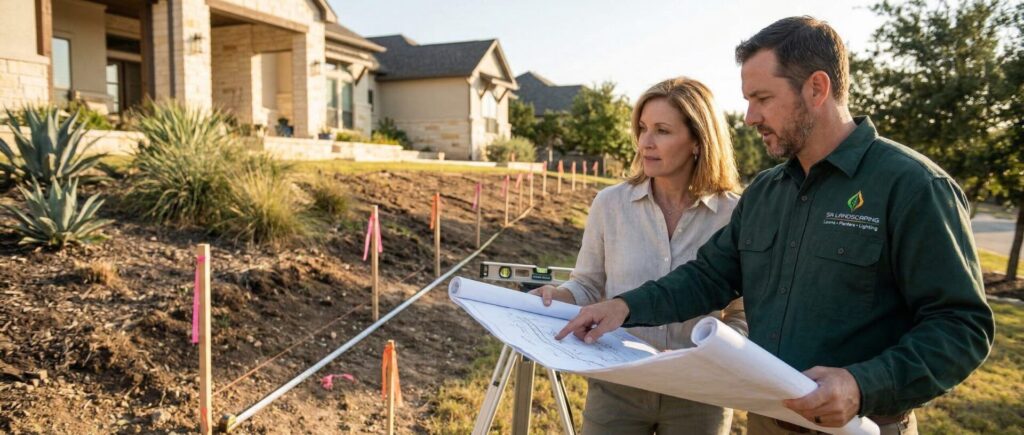
Treat retaining walls like small structures
Do I Need a Permit for a Retaining Wall?
Retaining walls are more than just stacked blocks or stone. They hold back soil, influence drainage, and sit near foundations, driveways, and property lines. Because of that, many projects benefit from a quick check with your city or county before you build. This guide gives you a practical framework for when to ask questions and who to call—without guessing at code.
Request Your Free EstimateWhen in doubt, assume it deserves a closer look
When should you assume a retaining wall may need a permit?
There is no single rule that fits every yard, because requirements vary by city, county, and sometimes even by neighborhood. In general, the more soil a wall is holding back—and the closer it sits to structures, driveways, or property lines—the more important it is to slow down and ask questions before building.Short, decorative garden walls that act more like edging are usually treated differently than taller walls that truly retain slopes. Once you start cutting into a hillside, stacking multiple courses, or building near a slab or pool, you are in the territory where a call to the local building department is a smart move, not an extra chore.
- Decorative edging walls and low garden borders are usually lower-risk, but you should still build them correctly
- Walls that hold back visible slopes, sit near driveways, or support loads deserve a conversation about permitting and design
- Local building departments and HOAs set the rules—your contractor can help you ask better questions, but cannot override them
- Checking requirements early is almost always easier than fixing a wall after someone raises a concern
Use risk and location to guide your next steps
How to Think About Permits for Retaining Walls
Instead of hunting for a single height number online, it’s more useful to look at what the wall is actually doing in your yard. A conservative, safety-first approach asks: what happens if this wall moves, leans, or fails? Who or what does it affect? That mindset will point you toward when to keep things simple and when to bring in your city, HOA, or a structural professional.
1. Start with what the wall is supporting
Retaining walls in San Antonio fall into a few broad categories:
- Edging and garden walls: Low walls along Landscape Bed Installation, walks, or patios. They mainly separate materials like mulch, rock, and sod. They still need solid footing and good drainage, but they are not usually carrying large soil loads.
- Yard-retaining walls: Walls that hold back a noticeable change in grade so you can have level areas for Sod Installation, play, or outdoor living. These walls are doing more work and need a more careful design.
- Walls near structures and hardscape: Walls that interact with foundations, driveways, parking pads, or pools. Movement here can affect concrete, fences, and even neighboring properties.
As you move from simple edging toward true slope retention, it becomes more important to treat the wall like a structural element rather than a purely decorative feature.
2. Risk factors that should trigger more questions
You do not have to be an engineer to spot situations where a wall deserves extra attention. Some common red flags include:
- Noticeable height and stacked tiers: Taller walls and multi-level systems concentrate more force and rely heavily on proper base and drainage.
- Walls close to the home or neighbors: A wall that changes how water and soil move near a house, fence, or property line can affect more than one yard.
- Driveways, parking, or heavy loads above the wall: Vehicles and structures placed near the top of a wall add load that should not be guessed at.
- Walls built in drainage paths: If the area currently moves a lot of stormwater, adding a wall without a coordinated Drainage Installation or Yard grading / resloping plan can create new problems.
When one or more of these factors are present, a conservative approach is to assume permits or professional review might be needed and to confirm that before work begins.
For wall material planning, compare structural retaining wall blocks with the slope and soil conditions discussed above.
For wall material planning, compare geogrid reinforcement with the slope and soil conditions discussed above.
3. Who to check with before building a retaining wall
Because requirements vary, the safest path is to go directly to the people who set and enforce the rules where you live. In most cases that means:
- Your city or county building department: They can tell you how they classify retaining walls, what thresholds they use, and whether they require engineered drawings for certain situations.
- Your HOA or architectural review committee (if applicable): Many neighborhoods have rules about visible walls, materials, and locations that apply even if the city does not require a permit.
- Utility location services: Before digging, always arrange to have underground utilities marked so your wall footing, drainage, and Downspout drainage tie-ins avoid buried lines.
As a contractor, we can help you describe the project clearly and think through how the wall ties into Retaining Wall Installation, grading, and drainage. Final approval, however, rests with the local authorities and governing bodies.
For a related next step, read Concrete Block vs Limestone Retaining Walls.
For a related next step, read How Long Do Retaining Walls Last?.
For a related next step, read Retaining Wall Drainage: Why It Matters.
4. How we approach permitting conversations with homeowners
When we look at a potential retaining wall project, we treat it as part of the overall stability and drainage of your yard. During a site visit we will:
- Walk the slope, look at how water moves, and note any nearby structures, fences, or hardscape.
- Identify whether the wall is primarily decorative, primarily structural, or both.
- Discuss how the wall could interact with Yard grading / resloping, French drains, Surface drains & catch basins, and Downspout drainage.
- Point out situations where it is especially wise to talk with the building department or HOA before proceeding.
The goal is not to scare you away from improvements, but to make sure anything we build is appropriate for the load, location, and long-term use of the space.
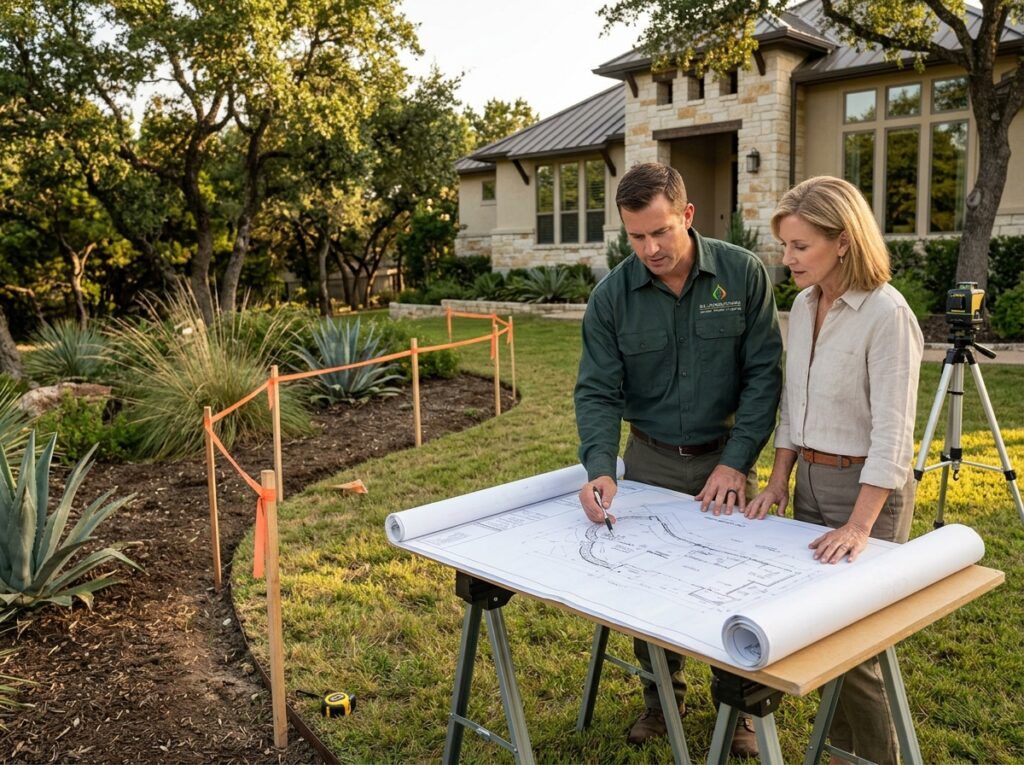
Here goes your text ... Select any part of your text to access the formatting toolbar.
Common Retaining Wall Situations and When to Slow Down
| Wall Scenario | Location & Use | Risk Level | Permit / Engineering Consideration |
|---|---|---|---|
| Low garden or edging wall under roughly 18–24 inches | Purely decorative, not holding a noticeable slope | Lower structural risk | Often treated more like landscape edging, but still wise to ask your contractor and check local guidelines. |
| 2–4 ft wall holding a visible slope | Terracing a yard, holding soil near patios or walkways | Moderate structural risk | Good time to speak with your city or county building department about permit thresholds and any design requirements. |
| Wall near a driveway, parking area, or heavy loads | Supports vehicles, hardscape, or stacked soil above pavement | Higher structural risk | Strongly consider involving a structural professional and confirming permit needs before work begins. |
| Tiered or multi-level retaining walls | Multiple walls stepping down a slope | Higher structural and drainage complexity | Should be reviewed more carefully; local authorities may treat tiers cumulatively when determining requirements. |
| Wall close to a house foundation, pool, or property line | Influences how water and soil move near structures and neighbors | Higher structural and liability risk | Always worth a call to the building department and, where applicable, the HOA or architectural committee. |
Permits and reviews as protection, not paperwork
Pros and Cons of Treating Your Retaining Wall as a Permitted Structure
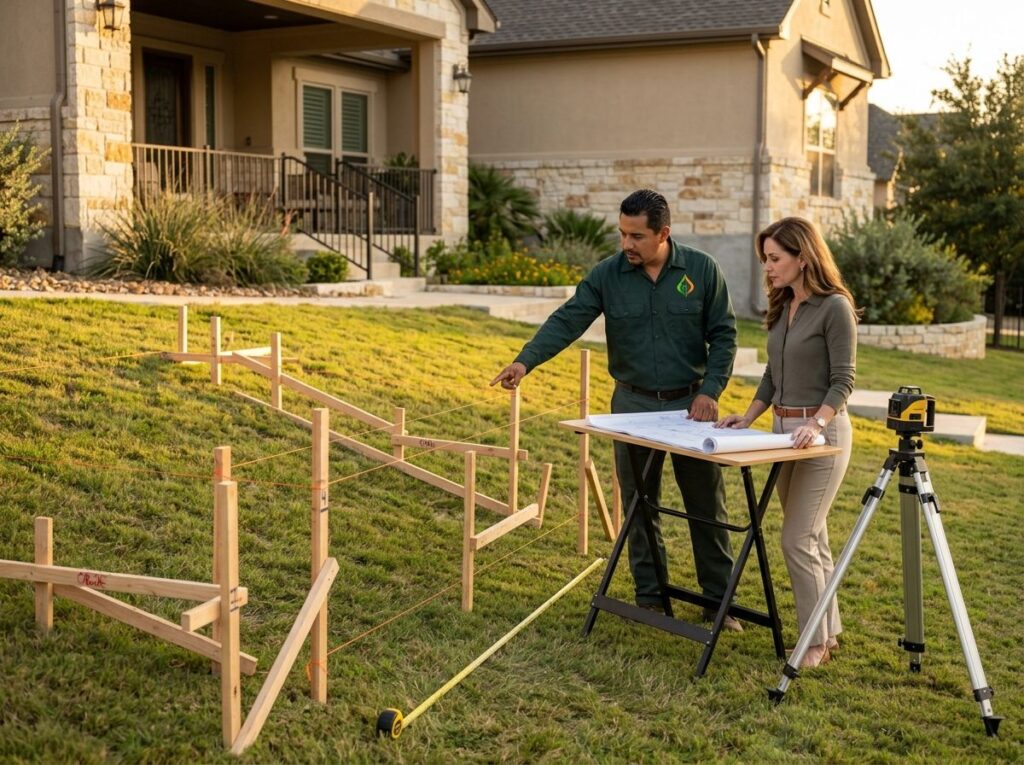
PROS
- Helps ensure your retaining wall is sized and built for the loads it will actually carry
- Reduces the risk of movement, cracking, or failure that can damage nearby structures or hardscapes
- Creates a paper trail for future buyers, appraisers, and inspectors when you sell the home
- Clarifies what is allowed near property lines, easements, and drainage paths
- Gives you a chance to coordinate retaining wall design with grading and drainage improvements
CONS
- Adds time to the project while you gather information, submit paperwork, and wait on approvals
- May introduce design constraints about height, setbacks, or materials
- Typically adds soft costs for professional plans or engineering when needed
- Can feel unnecessary for small projects, even when the long-term benefits outweigh the inconvenience
Plan for design and review in your budget
Here goes your text ... Select any part of your text to access the formatting toolbar.
How Permits and Professional Review Affect Retaining Wall Cost
Permits, engineering, and design work are rarely the largest line items on a retaining wall project, but they are important. Most of your investment still goes into excavation, base, drainage, materials, and labor. When a wall warrants review, the additional soft costs are there to help make sure everything built on site is appropriate for the soil, slope, and loads involved. Before scheduling work, review our retaining wall expectations so the project expectations are clear.
- Permitting and engineering, when required, are usually a smaller portion of the overall retaining wall budget compared to materials and labor.
- Treat permit and design costs as part of the investment in the wall’s lifespan and safety, not as an optional add-on.
- It is often more cost-effective to involve the right professionals upfront than to correct or rebuild a wall that was installed without proper review.
- Ask your contractor to clearly separate any design, engineering, or permitting assistance fees from construction so you understand how your budget is allocated.
Answer the big questions before you start digging
Retaining Wall Permit FAQs
These answers are intentionally conservative. Always verify details with your local building department and HOA, but use this as a starting point for the right conversations.
See All Frequently Asked QuestionsMany contractors will help you think through the right questions to ask and how the wall interacts with Retaining Wall Installation, Yard grading / resloping, and drainage work. Some homeowners prefer to handle permit applications themselves, while others ask the contractor to assist. The most important step is to make sure someone contacts the authorities who make the final decision.
Related: Signs Your Yard Has Drainage Problems, Retaining Wall Installation, When Do You Need a Retaining Wall?
As early as possible.
A quick phone call or email before design begins can prevent you from investing time and energy into a layout that does not align with local expectations. It also gives you a clearer target for wall height, location, and materials.
Related: Contact Us, Retaining Wall Expectations Policy, Retaining Wall Installation
Even when you are replacing a failing wall, it is wise to ask how your local building department views the project.
They may treat a simple like-for-like replacement differently than a taller wall, a wall built closer to structures, or a wall that changes how water moves across the property.
Related: When Do You Need a Retaining Wall?, Retaining Wall Installation, Retaining Wall Expectations Policy
Skipping the conversation can create problems later if a wall fails, a neighbor raises a concern, or a future buyer’s inspector asks for documentation.
In some cases, walls built without required review may need to be modified or rebuilt. Taking time to check expectations up front is usually far easier than correcting issues after the fact.
Related: When Do You Need a Retaining Wall?, Retaining Wall Expectations Policy, Retaining Wall Installation
Your local building authority and, where applicable, your HOA or architectural committee set the requirements for your property.
Contractors can share field experience and help you describe the project, but only the governing bodies can give definitive guidance on permits, engineered plans, and inspections.
Related: Retaining Wall Installation, When Do You Need a Retaining Wall?, Retaining Wall Expectations Policy
Not every retaining wall triggers the same level of review.
Very small, decorative walls that act like edging are often treated differently than taller walls that hold back noticeable slopes. Because rules vary, the safest approach is to ask your local building department how they classify the kind of wall you are planning in your yard.
Related: When Do You Need a Retaining Wall?, Retaining Wall Installation, Retaining Wall Expectations Policy
Talk through the wall before you move any soil
Want a Second Set of Eyes on Your Retaining Wall Plan?
We can walk the site with you, look at slopes and drainage, and help you understand which questions to ask your city or HOA before you commit to a design.