

Plan your wall as a long-term structure, not a weekend project
How Long Do Retaining Walls Last in San Antonio?
A well-built retaining wall in San Antonio can serve your yard for decades—but only if the base, drainage, and design match the load it needs to hold. This guide explains typical lifespans, what shortens them, and how to make a smart long-term decision for your property.
Request Your Free EstimateLifespan depends more on what’s behind the wall than what you see
Realistic Lifespan Expectations for Retaining Walls
In our San Antonio market, properly designed segmental concrete block and stone retaining walls often provide several decades of service when they are built on a compacted base, have adequate gravel backfill, and include drainage piping where needed.Walls that were installed quickly—without enough base depth, without drainage stone, or with water constantly running against them—tend to move, bow, or lean much sooner, regardless of what the face material is made of.Timber and railroad tie walls, which you still see in older neighborhoods, typically have shorter lifespans because wood breaks down over time in our heat and moisture. Many of those walls are at or past their intended service life today.
- Segmental concrete block and stone retaining walls can often last 30+ years when base, drainage, and design are handled correctly
- Timber and tie walls usually have much shorter lifespans, often in the 10–20 year range depending on exposure
- Poor drainage, shallow footing, and unmanaged surface water shorten the life of any wall, regardless of material
- The safest way to estimate lifespan is to evaluate the specific wall height, soil, drainage, and loads on your property
Look past the face material and focus on structure and water movement
What Really Controls Retaining Wall Lifespan
Two walls can look similar from the front but behave very differently over time. The difference usually isn’t the color or pattern—it’s what is happening under and behind the wall. When we talk about lifespan, we are really talking about how the wall, soil, and water interact over years of Texas weather.
1. Base preparation: how the wall meets the ground
A retaining wall starts with the base. In San Antonio, that typically means excavating down to firm subgrade, placing compacted base material, and leveling the first course of block or stone carefully.
- Too shallow: A wall set on thin or un-compacted base is more likely to settle unevenly and lean.
- Proper depth: Enough buried block or stone plus compacted base helps lock the wall in place.
- Tied to grading: Good base prep works hand-in-hand with Yard grading / resloping so water does not undermine the footing.
When the base is treated as part of the structure, the wall has a much better chance of performing for decades instead of just a few years.
2. Drainage: keeping water from pushing on the wall
Water is one of the biggest threats to retaining wall life. Trapped water behind the wall builds hydrostatic pressure, which tries to push the wall forward. Over time, that pressure can cause bulging, cracking, or complete failure.
- Gravel backfill and filter fabric help water move freely instead of holding moisture against the wall.
- Perforated drain pipe at the base of the wall gives water a controlled path out.
- Tying in downspout drainage or adding French drains or surface drains & catch basins keeps roof and surface water from constantly loading the wall.
When drainage is handled well, both segmental block walls and limestone walls tend to last much longer in our clay and rock soils.
For wall material planning, compare retaining wall drainage system with the slope and soil conditions discussed above.
For wall material planning, compare retaining wall caps and coping with the slope and soil conditions discussed above.
3. Wall height, loads, and material choice
The higher the wall and the closer it is to drives, patios, or structures, the more important engineering and material selection become.
- Segmental concrete block walls are often the best choice for taller walls because they work with geogrid reinforcement and have clear design guidance.
- Limestone and chopped stone walls perform very well at low to medium heights when they are laid on a solid footing with drainage.
- Timber walls are more sensitive to moisture and are better viewed as a temporary or mid-term solution rather than a multi-decade structure.
Matching the wall system to the height and loads you actually have is one of the strongest predictors of how long the wall will realistically last.
For a related next step, read Retaining Wall Drainage: Why It Matters.
For a related next step, read When Do You Need a Retaining Wall?.
For a related next step, read Retaining Wall Cost Guide.
4. Signs a retaining wall is near the end of its life
Even well-built walls eventually show age. The key is knowing which signs are cosmetic and which point to deeper problems:
- Slight face staining or minor chipping is often cosmetic and expected over time.
- Noticeable bulging, leaning, or bowing usually means soil or water is pushing harder than the wall was designed for.
- Repeated washouts, sinkholes, or gaps opening behind the wall can signal drainage problems or base movement.
In many cases, early intervention—improving drainage, relieving pressure, or rebuilding a section—can extend the useful life of the wall. When movement is advanced, it may be safer and more cost-effective to replace the wall with a new design that addresses today’s loads, drainage, and how your yard is being used.
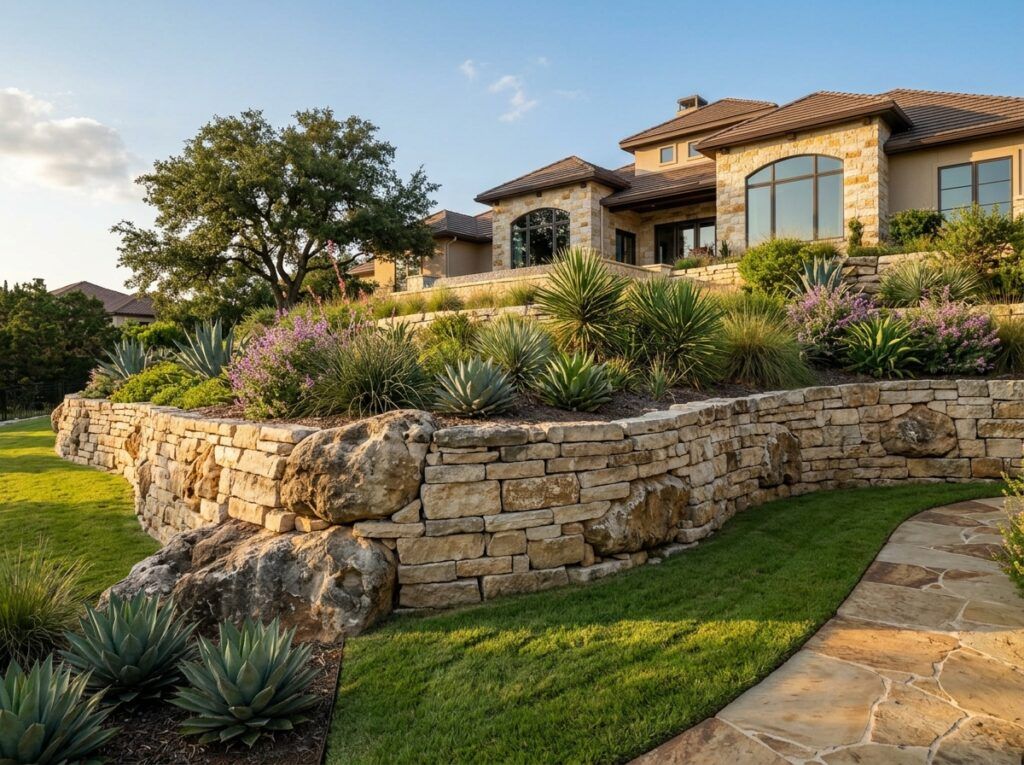
Here goes your text ... Select any part of your text to access the formatting toolbar.
Retaining Wall Lifespan Comparison by System Type
| Wall Type | Typical Use in San Antonio | General Lifespan Expectation* | Main Things That Shorten Life |
|---|---|---|---|
| Segmental concrete block retaining wall | Structural walls on slopes, grade changes near drives and patios | Often 30+ years when built with proper base, drainage stone, and geogrid where needed | Poor drainage, shallow base, missing geogrid on taller walls, tree roots, heavy surface water against the wall |
| Limestone / chopped stone retaining wall | Visible walls, planters, seat walls, low to medium-height grade changes | Decades of service when built on a solid footing with adequate drainage | Trapped water behind the wall, soft or settling base, walls built too tall for the way they are stacked |
| Poured concrete retaining wall | Special situations where a solid concrete mass is specified | Long service life when drainage and reinforcement are handled correctly | Cracking from movement, hydrostatic pressure from water, lack of control joints |
| Timber / railroad tie walls | Older installations and budget projects (less common for new premium work) | Frequently 10–20 years before significant deterioration in our climate | Rot, termite activity, constant moisture, and direct soil contact without drainage |
*These are general expectations, not guarantees. Actual lifespan depends on site conditions, design, and workmanship.
Plan for lifespan at the design stage, not after issues show up
Pros and Cons of Focusing on Lifespan When Planning Your Wall
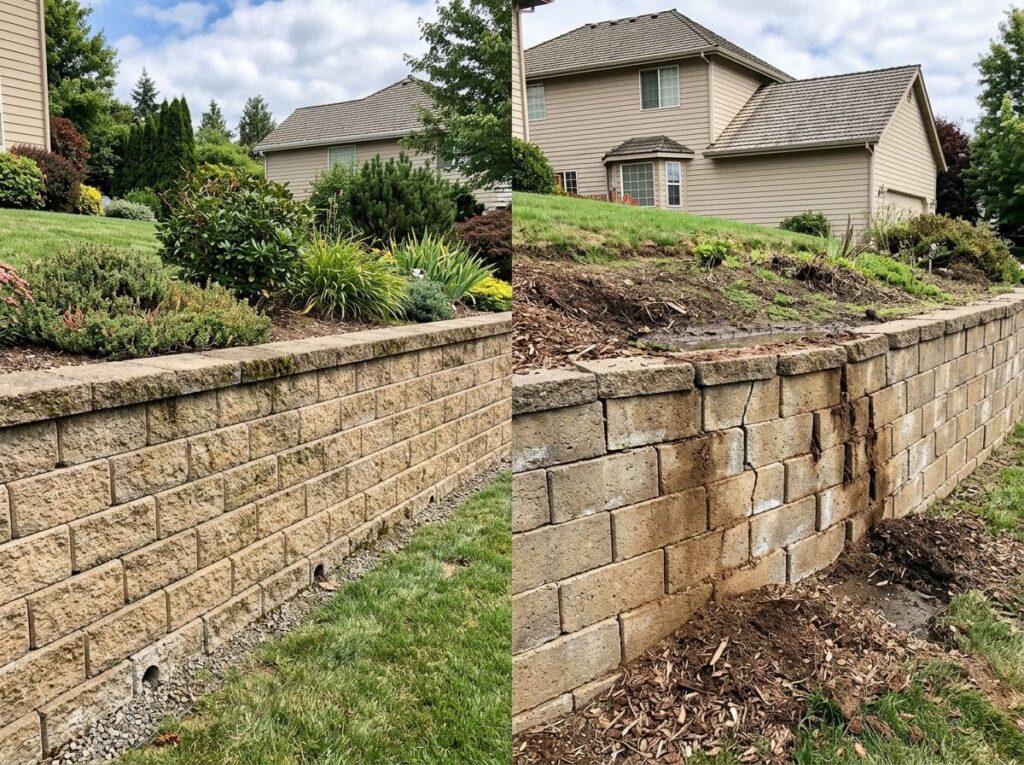
PROS
- Understanding how long different retaining wall systems typically last helps you budget for long-term value instead of just lowest upfront price
- Planning for drainage, base, and realistic wall height up front can add years of service to almost any wall type
- Knowing the warning signs of movement or distress lets you address small issues before they turn into full rebuilds
- You can match materials to how visible, structural, or future-proof you need the wall to be on your property
CONS
- There is no honest way to promise a fixed number of years for every wall because soil, water, and loads vary from yard to yard
- Cheap installs that skip base prep or drainage often look fine at first but can shorten wall life dramatically
- Ignoring early warning signs such as bowing, cracking, or washouts can turn a manageable repair into a full replacement
Think in terms of total cost over the life of the wall
Here goes your text ... Select any part of your text to access the formatting toolbar.
How Lifespan Affects Retaining Wall Budgeting
While this guide focuses on lifespan rather than exact pricing, it is helpful to think in terms of long-term value. A wall that costs a bit more up front but is detailed with proper base and drainage often ends up cheaper over its life than a low-cost install that needs major repairs or full replacement years earlier than expected. Before scheduling work, review our retaining wall expectations so the project expectations are clear.
- Retaining wall lifespan is strongly influenced by how much of the budget is allocated to excavation, base, and drainage versus just the visible face material.
- Higher-quality materials and systems can justify their cost over time if they reduce the risk of early failure or major repairs.
- Adding drainage improvements, downspout tie-ins, or yard grading during a wall project often protects the wall and nearby structures for years.
- A site-specific evaluation is the only reliable way to estimate how long a proposed wall design is likely to perform in your yard.
Plan for decades, not just the first season
Retaining Wall Lifespan FAQs
These questions focus on real-world performance in San Antonio yards so you can set realistic expectations before you invest in a new wall.
See All Frequently Asked QuestionsYes.
If you plan to build patios, outdoor kitchens, pools, or major landscape beds near an existing wall, it is smart to evaluate the wall first. That way you can decide whether it is ready to support more use, needs reinforcement, or should be replaced before you invest in new improvements around it.
Related: Retaining Wall Installation, When Do You Need a Retaining Wall?, Retaining Wall Expectations Policy
Keep surface water directed away from the wall, avoid heavy new loads near the top of the wall that were not part of the original design, and watch for early signs of movement or erosion.
Address drainage problems quickly and consult a professional if you notice leaning, cracking, or repeated washouts.
Related: Signs Your Yard Has Drainage Problems, Retaining Wall Installation, When Do You Need a Retaining Wall?
Manufacturer and workmanship warranties are typically shorter than the full potential lifespan of a well-built wall.
They are designed to cover early issues, not every possible problem over decades. It is best to view warranties as one layer of protection and good design and installation as the foundation of long-term performance.
Related: Warranties Policy, Retaining Wall Installation, When Do You Need a Retaining Wall?
If issues are minor and localized, targeted repairs and drainage improvements can extend the life of an existing wall.
When there is significant leaning, bulging, or repeated washouts, it is often safer and more cost-effective long term to replace the wall with a new design that accounts for current loads and drainage.
Related: Signs Your Yard Has Drainage Problems, Retaining Wall Drainage: Why It Matters, Retaining Wall Cost Guide
Early failures are usually tied to missing drainage, shallow base preparation, or walls built taller than what the system or layout can comfortably support.
Constant roof runoff, heavy irrigation, or uncontrolled surface water running toward the wall can also shorten its life, even if the face material is strong.
Related: Signs Your Yard Has Drainage Problems, Concrete Block vs Limestone Retaining Walls, Retaining Wall Drainage: Why It Matters
Yes.
Segmental concrete block and well-detailed stone walls can often provide several decades of service when they are built with sufficient base depth, proper gravel backfill, and drainage piping where needed. The key is matching the wall design to the slope, soil, and loads on your specific property.
Related: Signs Your Yard Has Drainage Problems, Concrete Block vs Limestone Retaining Walls, Retaining Wall Installation
Get clear about how long your wall can reasonably serve your yard
Want a Lifespan Reality Check for Your Retaining Wall?
We can walk the site, look at your slopes, soils, and drainage, and give you a straightforward opinion on whether repair, reinforcement, or full replacement makes the most sense for your property.