
Gravity Terraced Retaining Wall Drainage System
Foundation Protection
High Volume Capacity
Improves Drainage
Long-Lasting
Prevents Erosion
Reduces Standing Water
Sloped Yard Friendly
Recommended Use: Recommended for nearly any retaining wall that holds soil, especially on sloped yards, clay-heavy sites, irrigated beds, or areas where runoff collects behind the wall.
The Hidden System That Protects the Wall
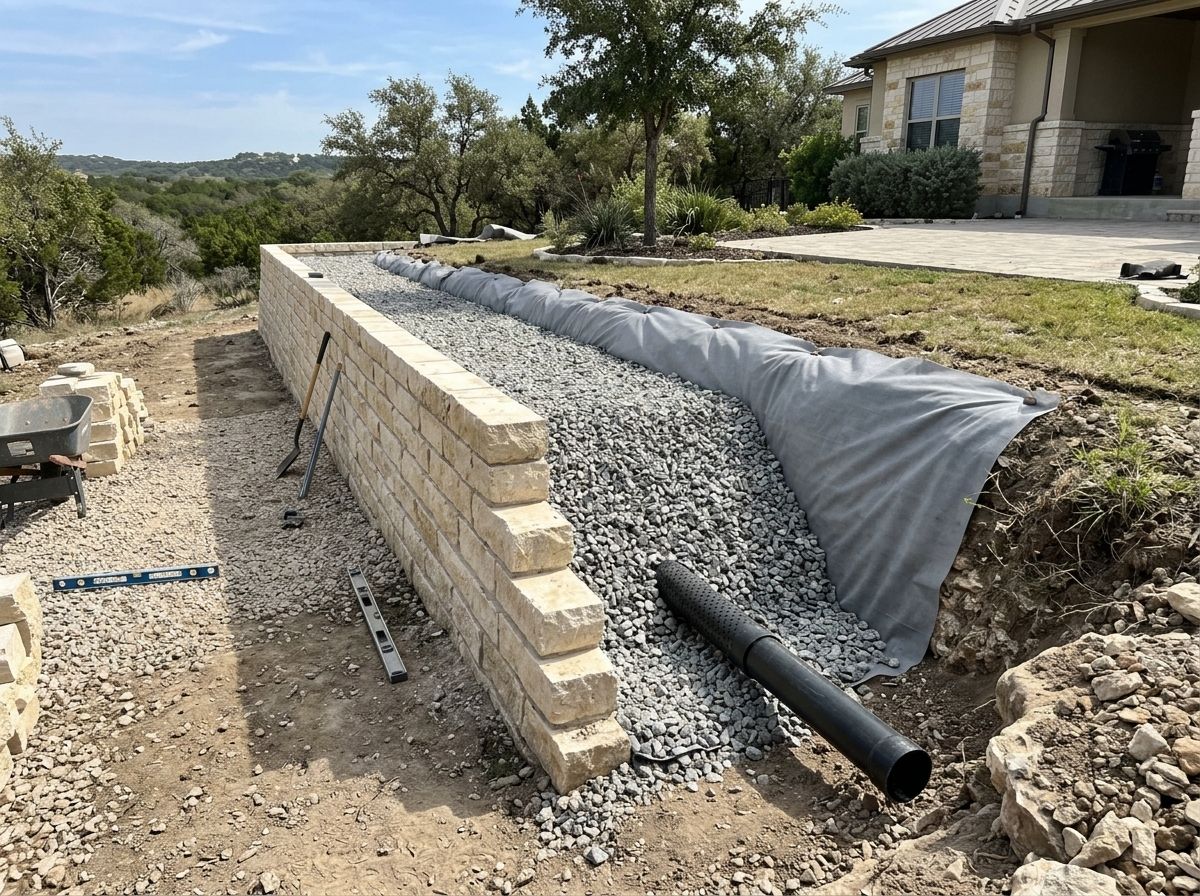
A Retaining Wall Drainage System is one of the most important parts of a wall, even though most of it is hidden after installation. Its job is to help water move away from the back of the wall so pressure does not build up and push the wall forward.
What Homeowners Need to Know
Most retaining wall failures are not caused by the visible block or stone alone. They often happen because water collects behind the wall, saturates the soil, and increases pressure. Drainage should be treated as part of the wall system, not an optional afterthought.
Quick Facts
- Helps relieve water pressure behind retaining walls
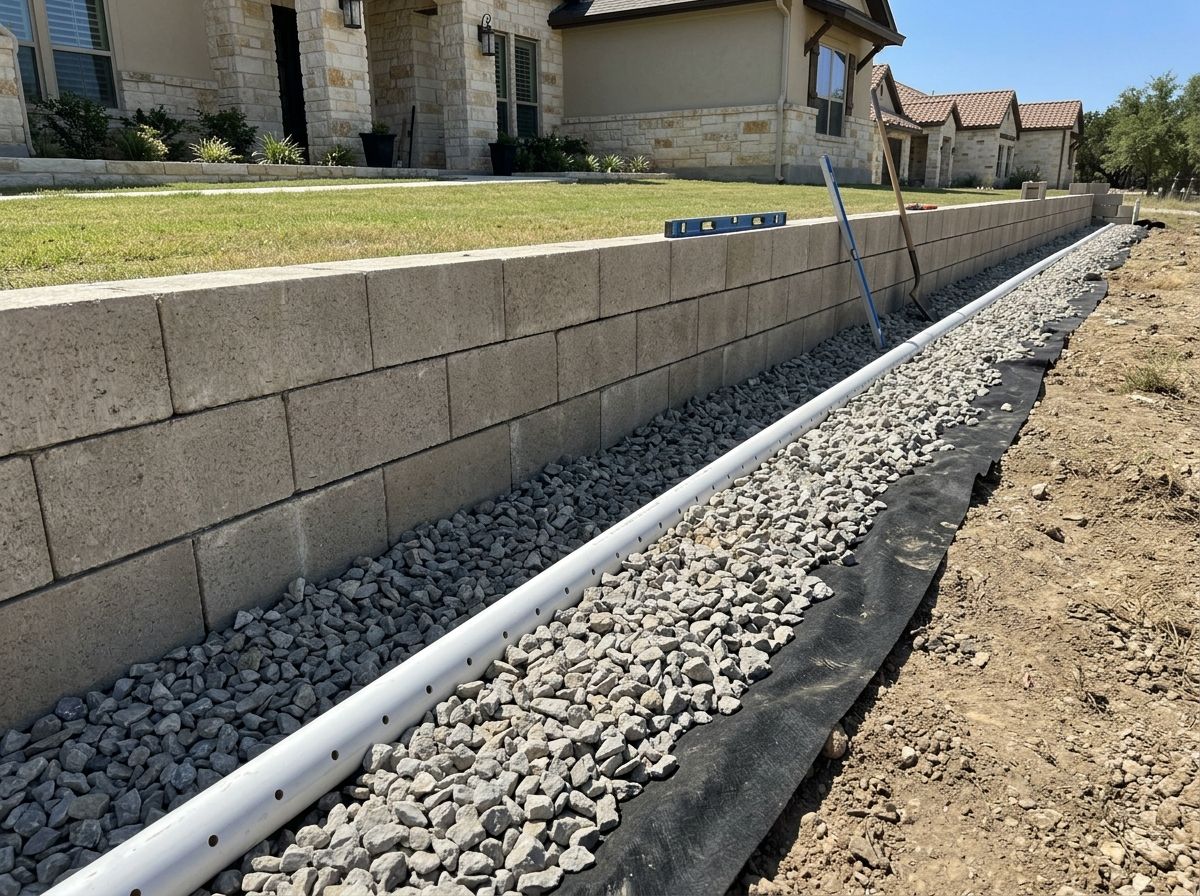
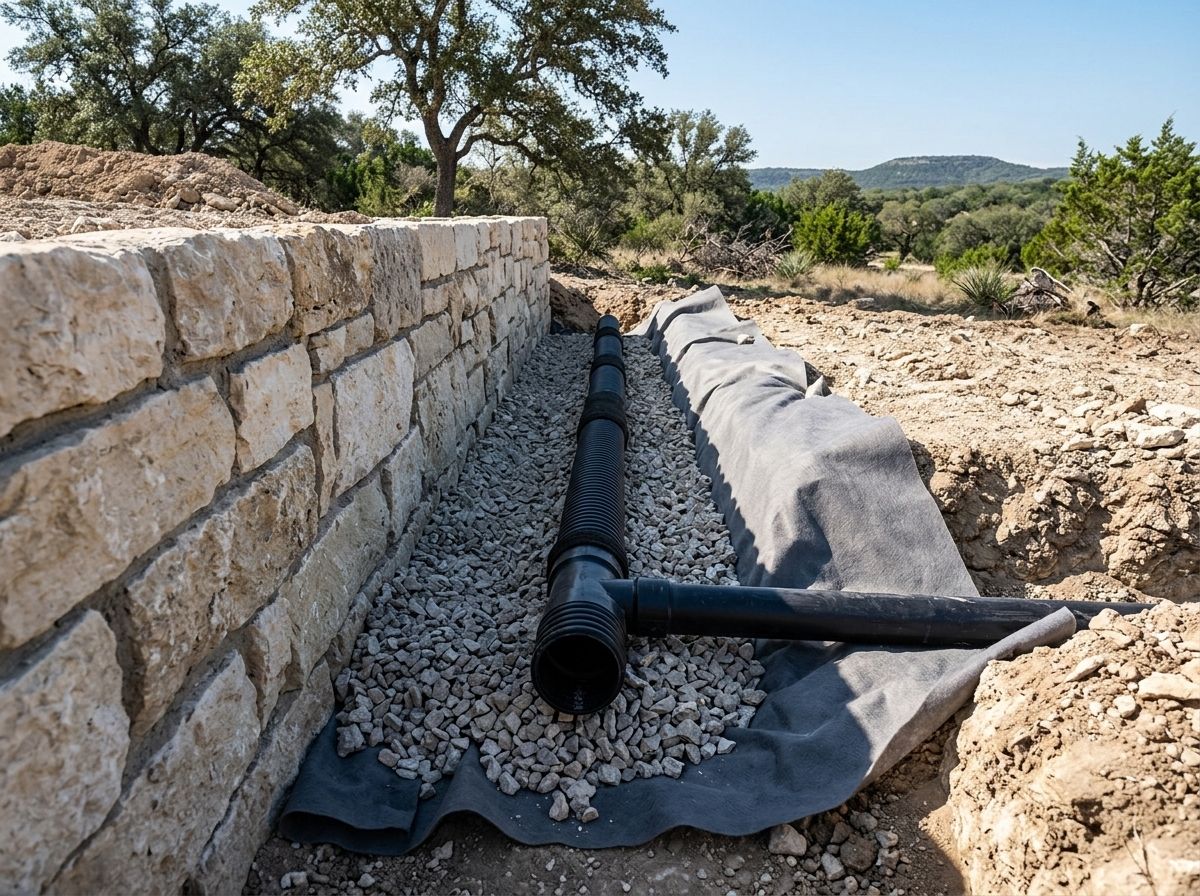
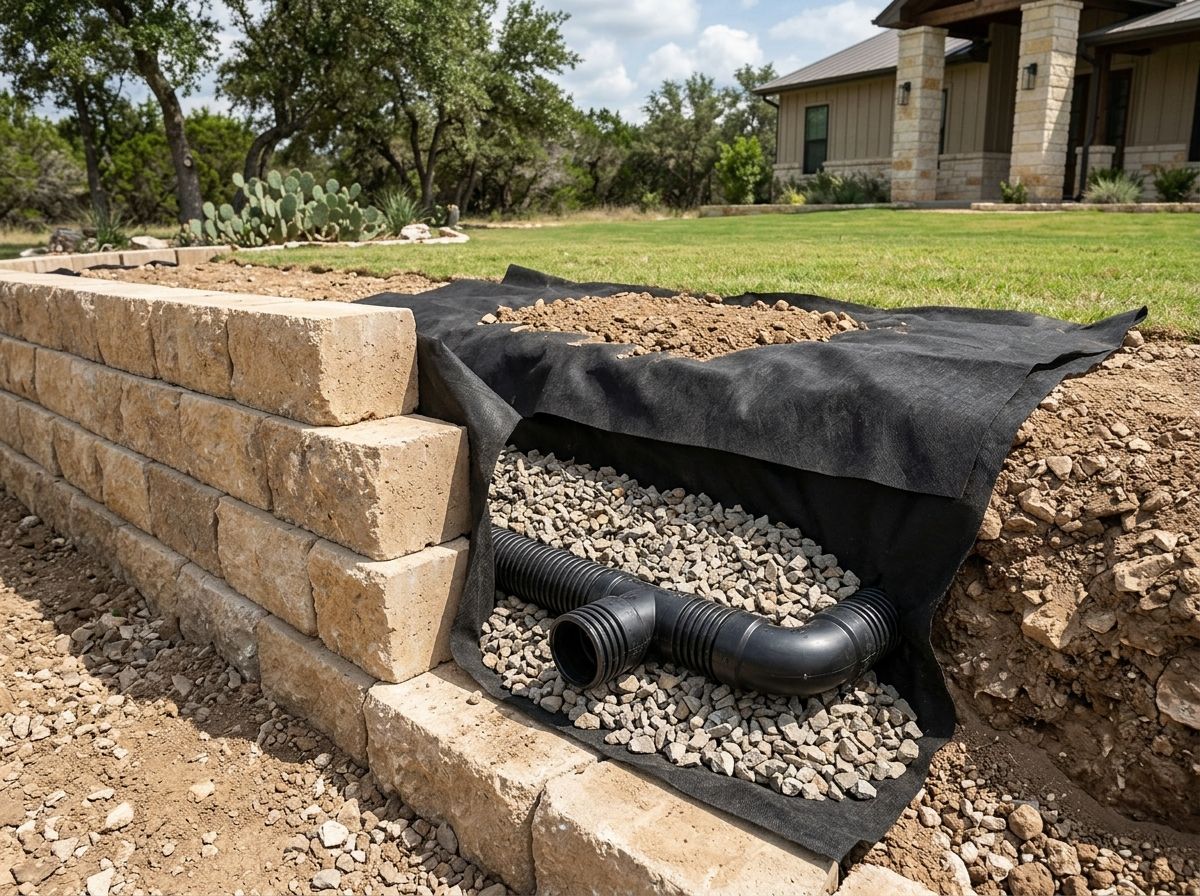
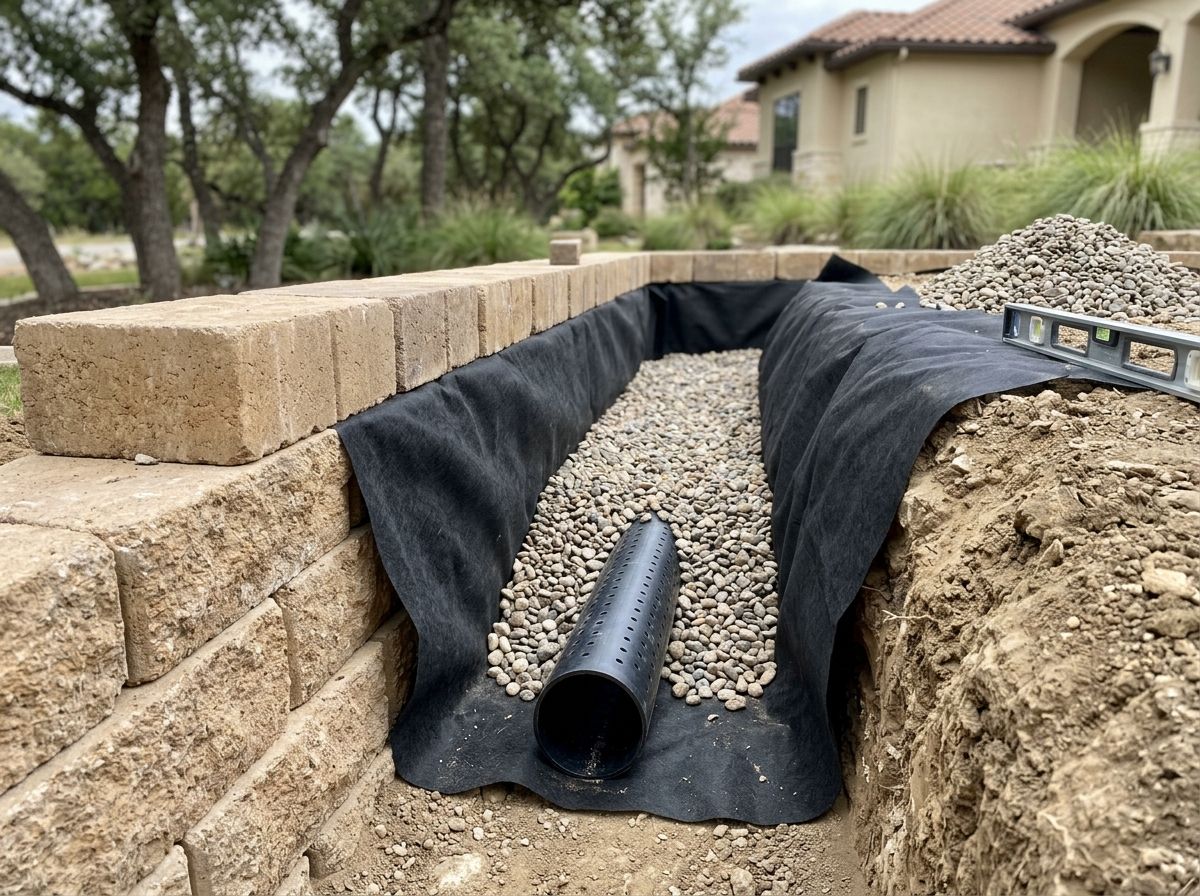
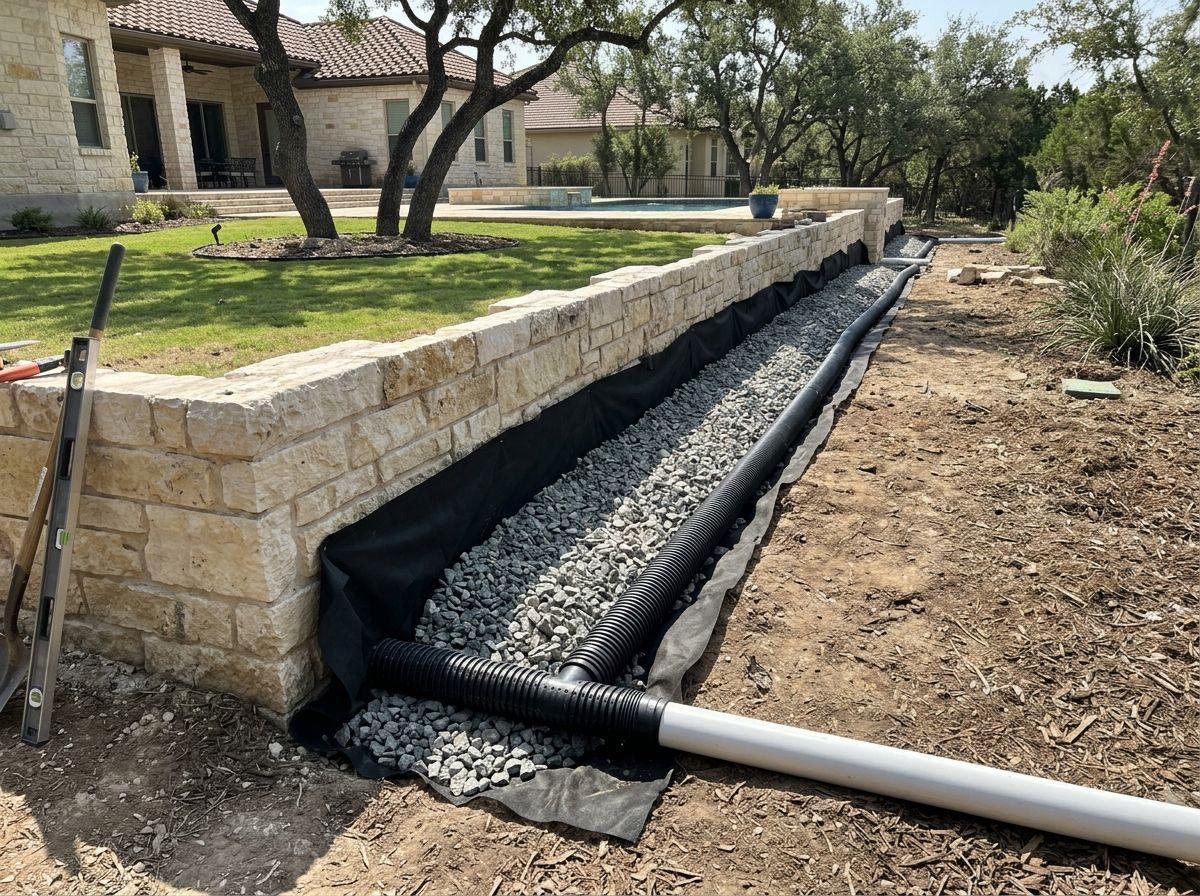
- Typically includes clean drainage rock, perforated pipe, fabric, fittings, and an outlet
- Especially important in sloped yards and heavy runoff areas
- Can help reduce leaning, bulging, washouts, and early wall movement
- Should be planned before the wall is built, not added after problems appear
Typical Components
- Drainage aggregate: Clean gravel or crushed rock installed behind the wall to let water move freely.
- Perforated pipe: A drain line placed low behind the wall to collect and move water away.
- Geotextile fabric: Fabric that helps separate soil from drainage gravel so fines do not clog the system.
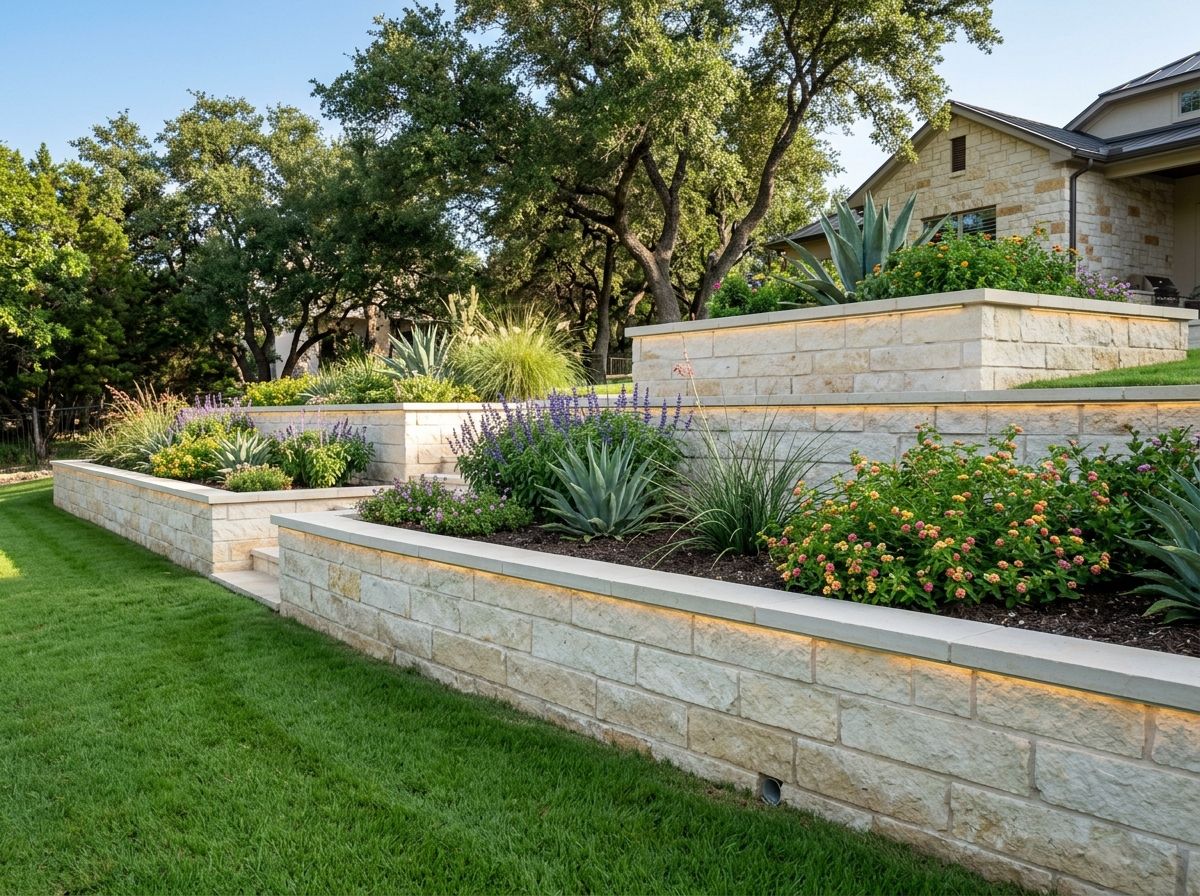
- Outlet planning: Water needs a safe place to drain, such as daylight, a dry creek, or another approved drainage path.
Best Applications
- Retaining walls on sloped yards
- Walls below irrigated beds or turf areas
- Walls where rainwater drains toward the back side
- Replacement walls where the old wall leaned, bulged, or washed out
- Walls near patios, foundations, walkways, or other areas where drainage matters
Drainage Design Tips
- Start low: Drainage should be planned near the base of the wall where water pressure collects.
- Use clean rock: Dirty fill or compacted soil behind the wall does not drain like clean aggregate.
- Separate soil and rock: Fabric helps keep soil from migrating into the drainage zone.
- Plan the outlet: A drain system only works if water has somewhere reliable to go.
When This Product Matters Most
- Use it when the wall holds back soil, receives runoff, or sits below a planted or irrigated area.
- Use it when the goal is not just a better-looking wall, but a wall that performs longer in San Antonio rain and heat cycles.


Want this product installed? Check out our Retaining Wall Installation page to view pricing and other details.
Ready When You Are
Get a Clear Plan for Your Yard
Tell us what you’d like to improve. We’ll ask a few questions, review your project, and let you know the best next step — no pressure and no guesswork. Fill out the form for a free quote.