
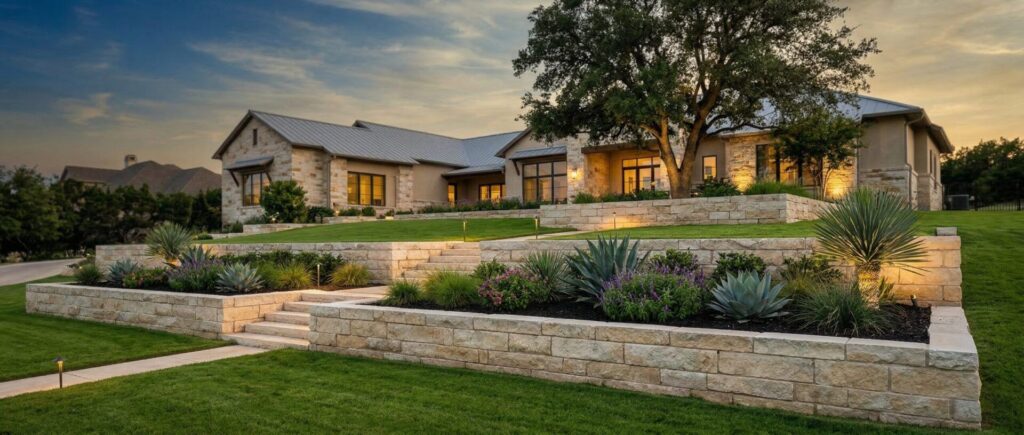
Build walls that actually hold
Retaining Wall Cost Guide for San Antonio Yards
Retaining walls do more than look nice—they hold back soil, protect patios and driveways, and make steep yards usable. In San Antonio, cost depends on wall height, materials, drainage design, and how much excavation and access work is required. This guide explains what you’re really paying for so you can compare options with confidence.
Request Your Free EstimateThink in square feet of wall face, not just “per foot”
How much does a retaining wall cost in San Antonio?
Most residential retaining walls in San Antonio fall into broad ranges based on the type of wall and the site conditions. Simple, low garden walls and planters are on the lower end because they hold back less soil and require less base and drainage. Taller walls that actually retain a slope, or walls close to driveways and foundations, require more engineering, heavier construction, and a proper drainage system behind the wall.Instead of looking for a single “price per foot,” it’s more accurate to think in terms of wall face area (length × average height), plus factors like material choice, stairs, curves, and how difficult it is to get equipment and materials into the space. Two walls the same length can be very different in cost if one is 18 inches tall and the other is 4 feet with drainage and steps.
- Retaining wall pricing is usually based on square feet of wall face, not just linear footage
- Height, material, drainage design, and access have a bigger impact on cost than most homeowners expect
- Decorative garden walls are less expensive than structural walls that actually hold back a slope
- Proper drainage behind the wall is part of the cost if you want it to last
- A site visit is the only honest way to put your yard in the right budget range
Start with what the wall needs to do, then pick a way to build it
What Drives Retaining Wall Cost in San Antonio
We see everything from small planter walls that only need to hold a few inches of soil, to multi-level terraces that keep entire slopes off patios and driveways. The cost conversation always starts with one question: is this wall mostly for looks, mostly for function, or both? Once that’s clear, we look at height, material, drainage, and access to build a realistic budget.
1. What counts as a “retaining wall” in your yard?
Not every wall that looks like a retaining wall is actually doing heavy work. We break them into rough categories:
- Decorative garden and bed walls (under 18–24 inches): These frame Landscape Bed Installation, define edges along walks and drives, or raise soil slightly. They still need a base and smart drainage, but they’re not holding back large amounts of soil.
- Functional yard-retaining walls (2–4 feet): These hold back slopes, protect patios and driveways, and create level spaces for Sod Installation or outdoor living areas.
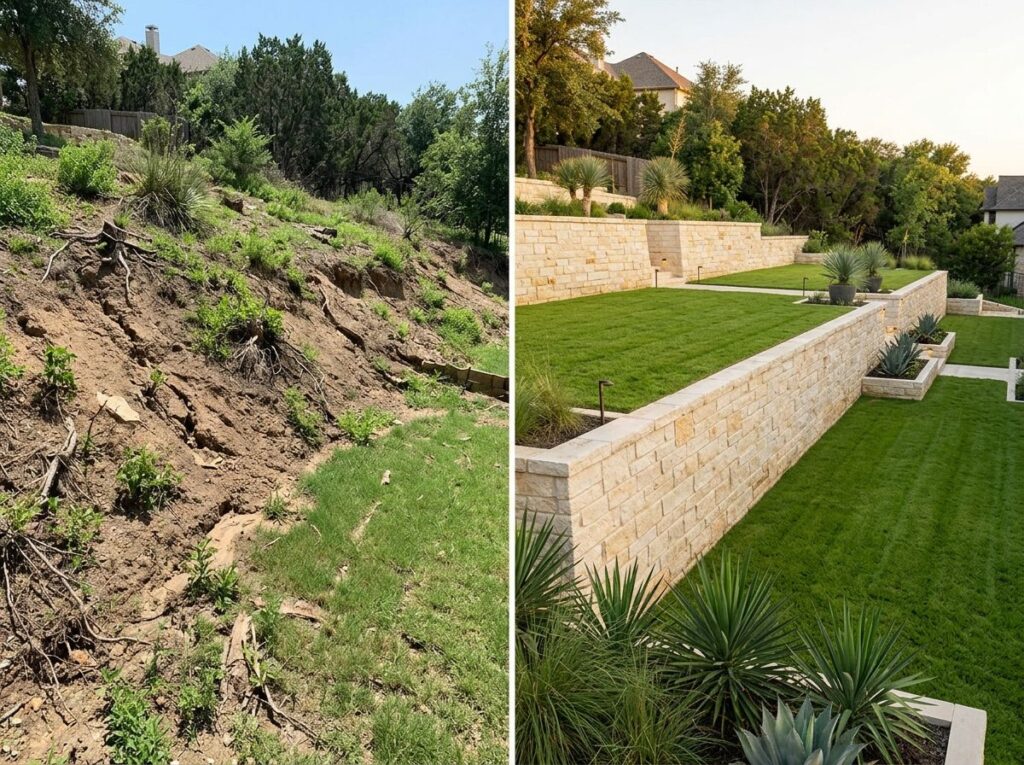
- Structural or tiered walls (4+ feet or multiple levels): These often need engineering and may involve tying Retaining Wall Installation into overall Drainage Installation, Yard grading / resloping, and downspout routing.
The more soil the wall has to hold, the more important the base, drainage, and design become—and that’s where much of the cost lives.
2. The major cost drivers: height, length, and site conditions
Once we know what the wall needs to do, we look at a few specific factors that move the price up or down.
- Wall height and length: Wall face area (length × average height) is usually the starting point. Doubling the height doesn’t just double the material—it changes the base, drainage, and sometimes the engineering requirements.
- Excavation and spoil removal: Walls that require deeper cuts into a slope or removal of old failing walls involve more digging, more haul-off, and more compaction work.
- Access for materials and equipment: Tight side yards, stairs, or rear-only access can mean moving block, stone, and base material by wheelbarrow instead of skid steer, which adds labor.
- Drainage behind the wall: A proper wall includes gravel backfill, fabric, and drains that tie into overall Drainage Installation or daylight. That’s a built-in part of the cost.
- Features and finishes: Steps, curves, caps, lighting, and integrated seating or planters add both function and cost.
Two walls the same size can land in very different budget ranges depending on these conditions, which is why we always walk the site before firming up a number.
For wall material planning, compare garden wall blocks with the slope and soil conditions discussed above.
For wall material planning, compare geogrid reinforcement with the slope and soil conditions discussed above.
For wall material planning, compare retaining wall drainage system with the slope and soil conditions discussed above.
3. How wall materials change both look and budget
In San Antonio, we typically see four main material families for retaining walls. Each has its own cost profile, look, and best use.
- Modular concrete block systems: Designed specifically for retaining soil, with built-in lock and batter (lean). Good balance of cost, strength, and design flexibility. Ideal for many residential Retaining Wall Installation projects.
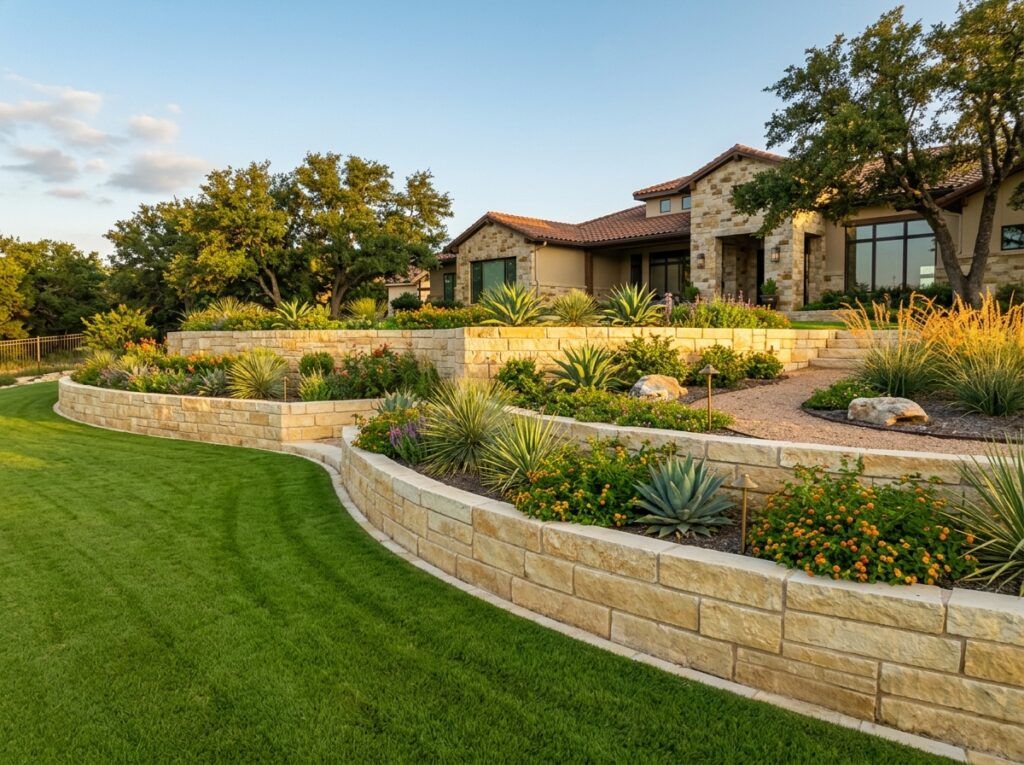
- Chopped limestone and stone walls: Deliver the classic Hill Country look. Heavier, more masonry labor, and typically higher cost—but hard to beat for curb appeal, especially when paired with upgraded Landscape Bed Installation and Landscape Lighting Installation.
- Cast-in-place concrete walls: Useful when space is tight or when you want a modern, smooth wall. Often higher design and forming cost, but very long lifespan when drained properly.
- Boulder or natural rock walls: Great for larger lots and informal slopes. They can be cost-effective where boulders are readily available, but require experienced layout so they still drain and support the soil.
Timber walls might look less expensive up front, but in our climate they usually have a shorter lifespan than a properly built block or stone wall. We treat them as shorter-term solutions, not long-term fixes.
For a related next step, read Do I Need a Permit for a Retaining Wall?.
For a related next step, read Concrete Block vs Limestone Retaining Walls.
For a related next step, read How Long Do Retaining Walls Last?.
4. How we typically scope a retaining wall project
A good wall is one piece of a broader plan for managing soil and water on your property. A typical project may include:
- Site evaluation and layout: Walking the yard, checking slopes, and understanding how water currently moves across the property.
- Grading and drainage integration: Coordinating the wall with Yard grading / resloping, French drains, and Surface drains & catch basins so water has a safe path away from the wall and the house.
- Wall construction: Building the wall with proper base, drainage rock, fabric, and outlets so it can handle the load it’s designed for.
- Landscape restoration: Re-establishing lawn with Sod Installation, refreshing nearby beds, or incorporating new Landscape Bed Installation and steps so the finished area looks complete.
This is why retaining wall quotes can look more involved than a simple line item price. Done right, the wall becomes part of a stable, usable yard—not just a row of blocks holding dirt.
Here goes your text ... Select any part of your text to access the formatting toolbar.
Retaining Wall Types and Typical Cost Positioning
| Retaining Wall Type | Typical Use | Look & Style | Relative Cost (Installed) | Typical Lifespan (with drainage) | Best Fit In San Antonio Yards |
|---|---|---|---|---|---|
| Modular Concrete Block Wall | 2–6 ft walls, curves, steps, terraces | Clean, consistent, many colors and faces | $$ – $$$ per sq ft of wall face | 20–30+ years | Backyard terraces, raised beds, slope control near patios |
| Chopped Limestone / Stone Wall | Decorative and structural walls 2–6 ft | Natural Hill Country look, heavier joints | $$$ – $$$$ per sq ft of wall face | 25–40+ years | Front yard elevation changes, premium curb appeal projects |
| Cast-in-Place Concrete Wall | Structural walls, tight spaces, tall walls | Smooth or textured modern concrete | $$$ – $$$$ per sq ft of wall face | 30–50+ years | Modern designs, narrow side yards, areas needing very thin wall profiles |
| Boulder / Natural Rock Wall | Informal, stepped slope retention | Rustic, irregular, “naturalized” look | $$ – $$$ per sq ft of wall face | 20–30+ years | Large lots, informal hillsides, water-friendly landscapes |
| Timber / Railroad Tie Wall | Short-term slope control, budget installs | Wood timbers, stacked with deadmen | $ – $$ per sq ft of wall face | 10–15 years | Shorter-term solutions where long life is not the priority |
Investing in a wall that’s built to last
Pros and Cons of Investing in a Proper Retaining Wall
PROS
- Helps tame steep slopes so more of the yard becomes usable and safe
- Controls erosion instead of letting soil wash onto patios, driveways, and walkways
- Protects structures, fences, and outdoor living areas from soil movement
- Creates level areas for sod, planting beds, or hardscape where grades were previously awkward
- Can add curb appeal and property value when designed to match the home and landscape
- Allows proper drainage and soil management around foundations when combined with grading and drains
CONS
- Requires a larger investment than simple edging or small bed borders
- Poorly built walls without correct drainage can fail and need full replacement
- Taller or structural walls may require engineering and permitting, adding design cost and time
- Construction is disruptive while excavation, base, and drainage are being installed
- Cheap materials or shortcuts that reduce up-front cost usually shorten the lifespan of the wall
Budget in terms of wall face area and complexity
Here goes your text ... Select any part of your text to access the formatting toolbar.
Typical Budget Ranges for Retaining Walls in San Antonio
While every project needs a site visit for accurate pricing, most residential retaining walls around San Antonio follow predictable patterns. Low garden walls and short raised beds fall at the lower end because they hold less soil and use less base and drainage. Functional walls in the 2–4 foot range—especially near patios, driveways, or property lines—move into a higher bracket as we add stronger construction and proper drainage. Taller walls, tiered systems, and walls with curves, steps, or premium materials will sit at the upper end of most budgets. Before scheduling work, review our retaining wall expectations so the project expectations are clear.
- Most retaining wall budgets are based on square feet of visible wall face (length × average height), plus stairs, corners, and tie-ins.
- Short, decorative garden walls and raised planters typically cost less per square foot than tall structural walls that need more base, drainage, and reinforcement.
- Modular concrete block systems are often the most cost-efficient way to build a long-lasting wall in the 2–6 ft range in San Antonio.
- Chopped limestone and natural stone walls are usually more expensive but offer a premium Hill Country look that pairs well with higher-end homes and landscapes.
- Adding proper drainage behind the wall—perforated pipe, gravel backfill, fabric, and outlets—is a non-negotiable cost if you want the wall to last.
- Site access, tight spaces, tree roots, utilities, and hauling distance for spoils and materials can all push a wall toward the higher end of typical budgets.
Straight answers before you start digging
Retaining Wall Cost FAQs for San Antonio Homeowners
These questions come up on nearly every retaining wall consultation. Use them to pressure-test quotes and understand where your money is going.
See All Frequently Asked QuestionsTiered walls often require more block or stone and more labor, but they can reduce the load on each wall and improve how the yard is used.
In some cases, two shorter walls with planting space between them are more attractive and practical than one tall wall. We compare both approaches on-site and recommend what makes sense for your grade and budget.
Related: Signs Your Yard Has Drainage Problems, How Long Do Retaining Walls Last?, Concrete Block vs Limestone Retaining Walls
Short timber walls or simple block walls can be less expensive up front, but they still need proper base and drainage to perform. We usually look at modular concrete block systems for cost-effective strength in the 2–4 foot range. For purely decorative edges around Landscape Bed Installation, low stone or block walls without heavy retained soil can also stay more budget-friendly.
Related: Signs Your Yard Has Drainage Problems, Landscape Bed Installation Cost Guide, Concrete Block vs Limestone Retaining Walls
Skipping drainage might reduce the initial price, but it significantly shortens the life of the wall. Without gravel backfill, fabric, and a way for water to exit, hydrostatic pressure builds behind the wall and pushes on it every time the soil gets wet. That’s when you see bulging, leaning, or cracking. A proper Retaining Wall Installation always includes a drainage plan.
Related: Signs Your Yard Has Drainage Problems, Landscape Bed Installation Cost Guide, Retaining Wall Installation
Once a wall reaches certain heights or is placed near structures, driveways, or property lines, it may require engineering and permitting to meet local code and safety standards.
That design work protects you by making sure the wall is sized correctly for the soil, load, and drainage conditions on your site. It adds design cost up front but reduces the risk of movement and failure later.
Related: Signs Your Yard Has Drainage Problems, Retaining Wall Installation, When Do You Need a Retaining Wall?
Most small decorative garden walls and raised planters land at the lower end of typical budgets, while functional yard-retaining walls that are 2–4 feet tall usually fall in the middle.
Taller or more complex walls with stairs, curves, or premium materials land toward the upper end. The square footage of wall face, drainage design, and access to the work area have the biggest impact on final cost.
Related: Project Guidelines Policy, Signs Your Yard Has Drainage Problems, How Long Do Retaining Walls Last?
The most accurate quote comes from a site visit where we can measure slopes, see how water moves, check access, and understand what you want the wall to do. From there, we can recommend materials, height, and layout, and show how the wall ties into Yard grading / resloping, Drainage Installation, and landscape restoration so you know exactly what’s included.
Related: Project Guidelines Policy, Signs Your Yard Has Drainage Problems, Retaining Wall Installation
Get a wall design that matches your yard and budget
Ready to Talk Through a Retaining Wall for Your Property?
We’ll walk the slope, look at drainage, and design a wall plan that holds up—and fits the way you actually use your outdoor space.