
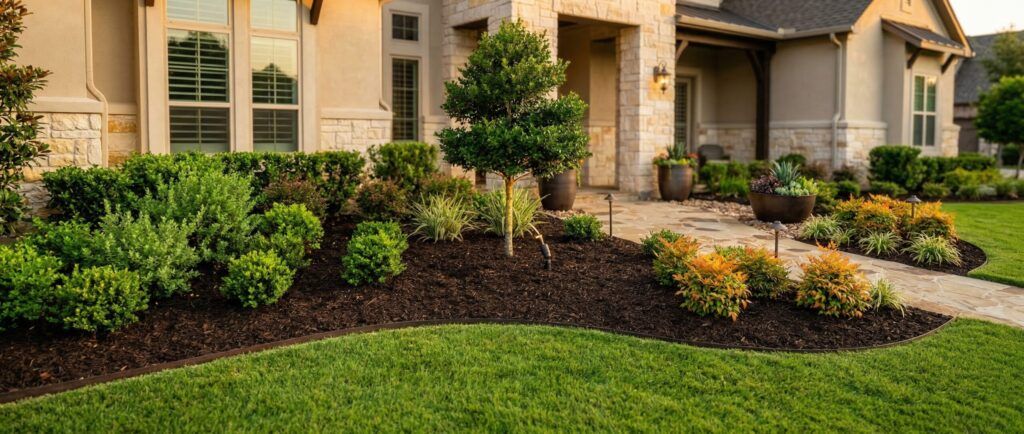
Component-based pricing
Landscape Bed Installation Cost Guide (San Antonio)
Landscape beds aren’t priced like sod or turf. They’re priced by components—prep work, edging, ground cover, and plants—based on what your yard actually needs.
Request Your Free EstimatePricing clarity
How much does landscape bed installation cost in San Antonio?
Most “bed projects” vary too much to quote as one flat price per square foot. A simple refresh (clean edge + mulch + light planting) can be a few thousand dollars, while a full front-yard redesign with masonry borders, decorative rock, and premium plants can be five figures.The clean way to think about it is this: your total is the sum of four buckets—prep, edging, ground cover, and planting—plus any upgrades like drainage fixes or irrigation adjustments.
- Prep drives the baseline (removal, shaping, grading)
- Edging sets the finish level (basic vs masonry)
- Mulch is lower-cost and flexible; rock is heavier and more labor-intensive
- Plants vary by species and size—this is the biggest swing factor
- Drainage and irrigation corrections are common add-ons
- Good quotes show line items, not one mystery number
A contractor’s framework
A Practical Pricing Framework for Bed Projects
If you want a realistic “range,” you first need to decide what you’re building. A landscape bed can be a thin ribbon along the house, a full foundation planting, a raised planter, or multiple connected areas with different materials. In San Antonio soils (often clay), the prep and drainage details matter as much as the plants you choose. For help turning the advice into a real project, review our landscape bed installation service page.
Step 1: Define the job type (refresh vs rebuild)
Refresh means the bed footprint stays about the same: clean the edge, add ground cover, and swap or add plants.
Rebuild means you’re changing the footprint, correcting grade, adding borders/planters, and rebuilding the “base” so it performs long-term.
- Refresh jobs are usually driven by materials (mulch/rock and plants).
- Rebuild jobs are driven by labor (removal, shaping, edging, and hauling).
Step 2: Price the four buckets (the way contractors do)
- Bed prep — removal, shaping, minor grading, hauling
- Edging / borders — composite/steel vs pavers/stone vs planter walls
- Ground cover — mulch or decorative rock (and depth)
- Planting — plant count, sizes, soil amendments, placement
If a quote only gives one number without these buckets, it’s hard to compare bids—and it’s easy to get surprised mid-project.
For ground-cover material planning, compare cedar mulch with the site conditions discussed above.
For edging material planning, compare steel landscape edging with the bed layout discussed above.
For ground-cover material planning, compare Texas blend river rock with the site conditions discussed above.
Step 3: Understand the “hidden multipliers” that change price fast
- Access: Can we wheelbarrow, or do we need machine access? Tight gates and long carries add labor.
- Clay soil: Heavy clay often benefits from soil improvement for planting zones, especially near foundations.
- Existing grade: If water is pushing toward the house, bed work alone won’t fix it—you may need Drainage Installation.
- Transitions: Where the bed meets lawn, turf, driveway, or walkway determines edging complexity.
- Drainage behind walls: Any planter wall or raised bed needs proper backfill and drainage detail to avoid failure.
For a related next step, read Mulch vs Rock: Which Is Better for Your Beds?.
For a related next step, read Best Edging Options for Landscape Beds.
For a related next step, read How Often Should You Refresh Mulch?.
Step 4: Use example “project profiles” instead of guessing square footage
Profile A — Bed Refresh: clean edge + fresh mulch + a few shrubs/perennials. Best for improving curb appeal quickly.
Profile B — Decorative Rock Upgrade: stronger edging + fabric + rock + moderate planting. Best for low-maintenance yards.
Profile C — Full Redesign: reshaped beds + masonry borders/planters + premium planting + irrigation adjustments. Best for front-yard transformations.
Once you pick a profile, a contractor can measure the bed areas and build a line-item scope that matches the finish level you want.
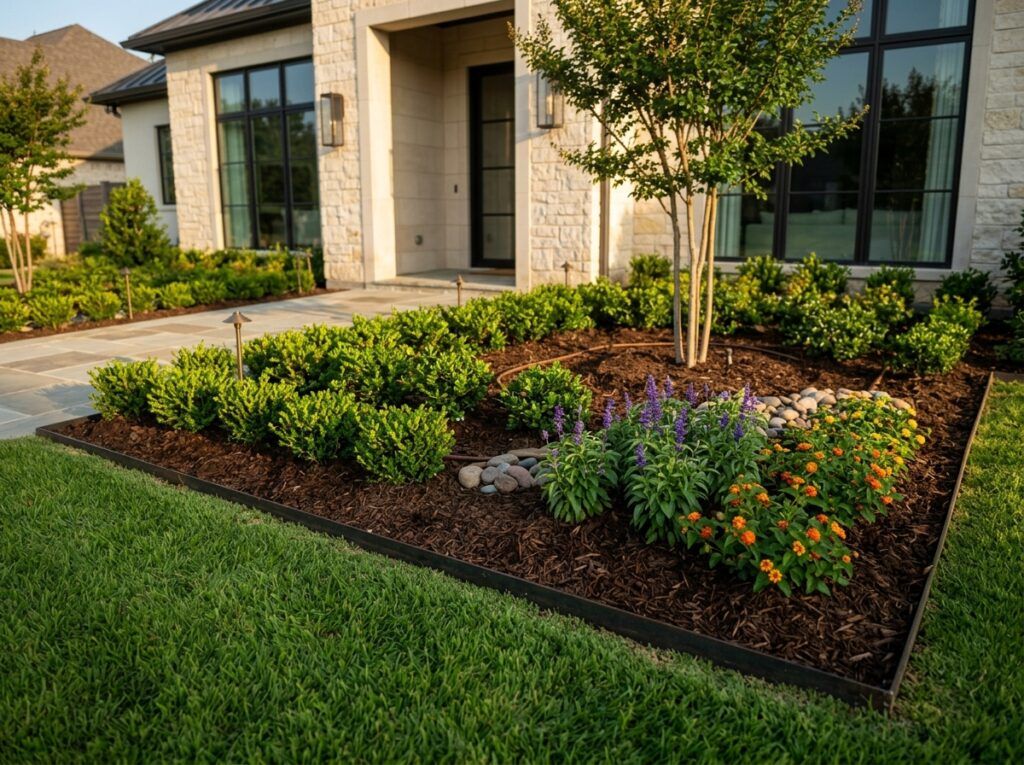
Here goes your text ... Select any part of your text to access the formatting toolbar.
Typical Cost Ranges by Component (San Antonio)
| Cost Driver | How It’s Measured | Typical San Antonio Range | What Moves It Up |
|---|---|---|---|
| Bed prep (removal + shaping) | Per sq ft | $6–$12 / sq ft | Thick turf removal, roots, clay correction, tight access, haul-off |
| Weed barrier fabric | Per roll / coverage | Sold by roll (often 200 sq ft coverage) | Higher-grade woven fabric, more cuts/overlaps, staking needs |
| Mulch | Per cubic yard | $45–$75 / yd installed | Premium mulch, extra depth, haul-off of old mulch, long carry |
| Decorative rock | Per cubic yard | $90–$180 / yd installed | Heavier rock, specialty blends, deeper install, edging detail |
| Edging (basic) | Per linear foot | Composite: $6–$10 / lf Steel: $8–$14 / lf |
Curves, grade changes, anchoring, clean transitions to turf/hardscape |
| Edging (masonry) | Per linear foot | Pavers: $18–$30 / lf Chopped stone: $25–$45 / lf |
Footing/base, drainage detail, height changes, caps, corners |
| Planter walls (low-height) | Per linear foot | Garden block: $40–$75 / lf (typical low height) | Wall height, backfill, drainage, cap style, tight access |
| Plants (installed) | Per plant | 1 gal: $25–$60 3 gal: $65–$150 5 gal: $120–$350+ |
Species cost, availability, soil amendments, irrigation tie-ins |
What your budget buys
Here goes your text ... Select any part of your text to access the formatting toolbar.
Example Budget Ranges (Without Fake Precision)
Because bed work is component-based, the most honest way to talk about total cost is by project profile. These are broad homeowner-facing ranges to set expectations—not a locked-in bid. Before scheduling work, review our landscape bed expectations so the project expectations are clear.
- Profile A (Refresh): $2,500–$5,500+ (mulch + clean edge + light planting)
- Profile B (Rock Upgrade): $6,000–$12,000+ (fabric + rock + stronger edging + moderate planting)
- Profile C (Full Redesign): $12,000–$25,000+ (reshaping + masonry borders/planters + premium planting + possible irrigation changes)
- Tight access, long carries, or heavy removal can push totals higher
- Drainage or grading corrections are quoted separately when needed
Common questions
Landscape Bed Pricing FAQs
Straight answers based on how bed projects are actually built and quoted in San Antonio.
See All Frequently Asked QuestionsSometimes bed reshaping helps, but if water is pooling or flowing toward the house, you usually need dedicated Drainage Installation (surface drains, downspout drainage, or grading corrections) to solve it correctly.
Related: Signs Your Yard Has Drainage Problems, How Downspout Drainage Protects Your Foundation, Does Yard Grading Fix Drainage?
Plant cost depends on species, size, availability, and whether it’s a specialty item. Installation can also include soil improvement, spacing/design, and irrigation adjustments—so plant selection can swing the project total quickly.
Related: Project Guidelines Policy, Sod Installation Cost Guide, How to Design a Clean, Modern Front Yard
Masonry edging (pavers, chopped stone, or low-height block) is the most durable when built on a proper base. Metal edging can also last well, but it depends on thickness, anchoring, and grade changes.
Related: Signs Your Yard Has Drainage Problems, Best Edging Options for Landscape Beds, Faqs/#What Edging Option Lasts The Longest
Under rock, fabric is commonly used to reduce mixing and make future cleanup easier. Under mulch, it depends—fabric can limit soil improvement and can become exposed over time. The right answer depends on your bed design and maintenance plan.
Related: Mulch vs Rock: Which Is Better for Your Beds?, How Often Should You Refresh Mulch?, Low-Maintenance Landscape Bed Ideas
Usually, yes. Mulch is lighter and faster to install, and it’s easier to refresh later. Rock lasts longer but costs more to install because of weight, labor, and edging detail.
Related: How Often Should You Refresh Mulch?, Mulch vs Rock: Which Is Better for Your Beds?, When Is the Best Time to Install Sod?
Because two beds with the same square footage can have completely different costs. Edging type, ground cover choice, plant quantity/size, and removal work are often bigger cost drivers than area alone.
Related: How to Prepare Your Yard for Sod Installation, Why Us, Best Edging Options for Landscape Beds
Get a clean scope
Want a Bed Plan That Matches Your Budget and Finish Level?
We’ll measure your areas, review material options (mulch, rock, edging, plants), and build a clear line-item scope so you know exactly what you’re paying for.