
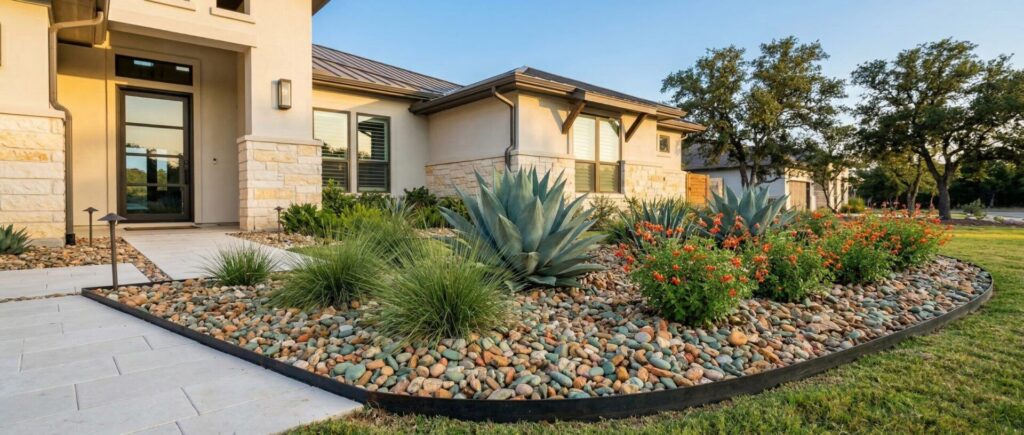
Clean beds without constant upkeep
Low-Maintenance Landscape Bed Ideas for San Antonio Yards
You don’t need a high-maintenance garden to have a sharp front yard. The key is choosing the right bed structure, materials, and plants for our heat, clay soil, and irrigation realities in San Antonio.
Request Your Free EstimateBig picture first
What makes a landscape bed “low maintenance” here?
Low-maintenance beds are built around structure, not constant color changes. They rely on hardy shrubs, simple shapes, reliable edging, and ground covers that stay put—rock, mulch, or living plants that suppress weeds.In San Antonio, that usually means fewer plant varieties, more evergreens, tougher ground covers, and bed layouts that are easy to mow and trim around. Done right, most of the work becomes seasonal touch-ups instead of weekly chores.
- Start with structure plants and simple bed shapes, not a long plant list
- Use rock or longer-lasting mulch where sun and wind are harsh
- Group plants by water needs so irrigation stays consistent
- Simplify edging so mowing and trimming are predictable
- Reserve high-maintenance color for small, high-impact areas only
Design for how you actually live
How We Design Low-Maintenance Beds on Real Projects
When someone asks for a low-maintenance landscape in San Antonio, we don’t just remove flowers and add rock everywhere. We walk the yard, look at sun, soil, drainage, and how you move around the property, then layer in structure, ground cover, and details that fit your tolerance for upkeep.
1. Start with structure, then add accents
Low-maintenance beds are built around backbone plants: evergreen shrubs, small trees, and hardy perennials that hold the shape of the yard year-round.
- We keep the plant palette tight—fewer species repeated in more places looks cleaner and is easier to care for.
- We use drought-tolerant shrubs and grasses that fit your sun conditions instead of forcing shade plants into full sun or vice versa.
- Seasonal color is limited to small pockets near the entry or a focal area, not the entire front yard.
This approach works especially well when combined with a full Landscape Bed Installation that includes fresh edging and ground cover.
2. Choose the right ground cover for each zone
Ground cover is where most of the maintenance lives. In San Antonio’s heat and heavy rains, the right material makes a big difference.
- Mulch is great under trees and shrubs where you want softer soil and soil improvement over time.
- Decorative rock does better against driveways, hot walls, and windy corners where mulch blows out or bakes.
- Living groundcovers can replace some mulch once established, especially on gentle slopes or under filtered light.
On many low-maintenance projects, we mix materials—mulch in planting pockets and rock in “hard duty” areas—rather than committing the entire property to one option.
For plant planning, compare Texas sage with the site conditions discussed above.
For plant planning, compare red yucca with the site conditions discussed above.
For plant planning, compare muhly grass with the site conditions discussed above.
For ground-cover material planning, compare dark native mulch with the site conditions discussed above.
3. Simplify bed lines and edges
Complex curves and tight corners look nice on paper but are harder to mow, trim, and keep clean. Low-maintenance beds use shapes that work with your mower and layout.
- We smooth out sharp wiggles and small “peninsulas” that encourage grass to creep in.
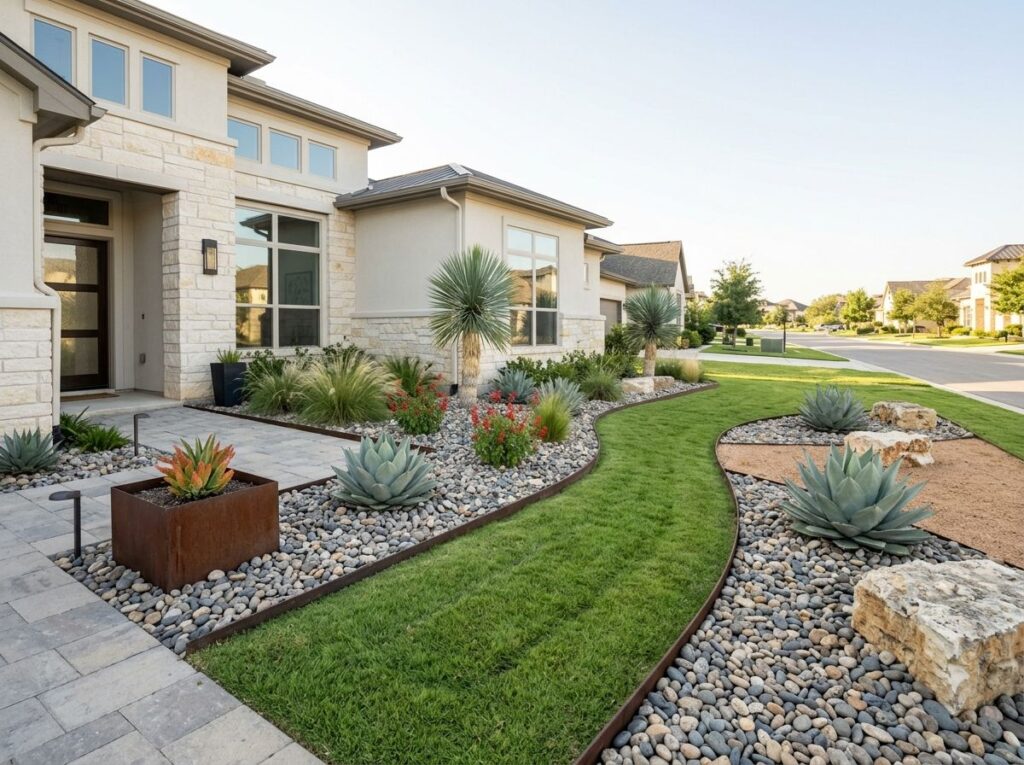
- We use consistent edging types along front beds for a clean, uninterrupted line.
- We avoid tiny, isolated beds in the lawn that require extra trimming time.
Good edging—composite, steel, paver, or stone—paired with smart bed lines reduces weed intrusion and makes Seasonal Yard Cleanups faster and more predictable.
For a related next step, read How to Design a Clean, Modern Front Yard.
For a related next step, read Landscape Bed Installation Cost Guide.
For a related next step, read Mulch vs Rock: Which Is Better for Your Beds?.
4. Plan for drainage and irrigation from day one
Nothing creates extra maintenance like beds that stay soggy or dry out constantly. Before we finalize a “low-maintenance” design, we look at how water actually moves through the space.
- If water is pooling in beds, we may recommend minor Yard grading / resloping or tying into existing Drainage Installation instead of just adding more plants.
- We group plants by water needs so sprinkler zones or drip layouts can run consistently.
- We avoid placing rock right where roof run-off blasts the ground unless we add ways to slow and spread water.
Good drainage and irrigation design protect your investment and cut down on plant replacement over time.
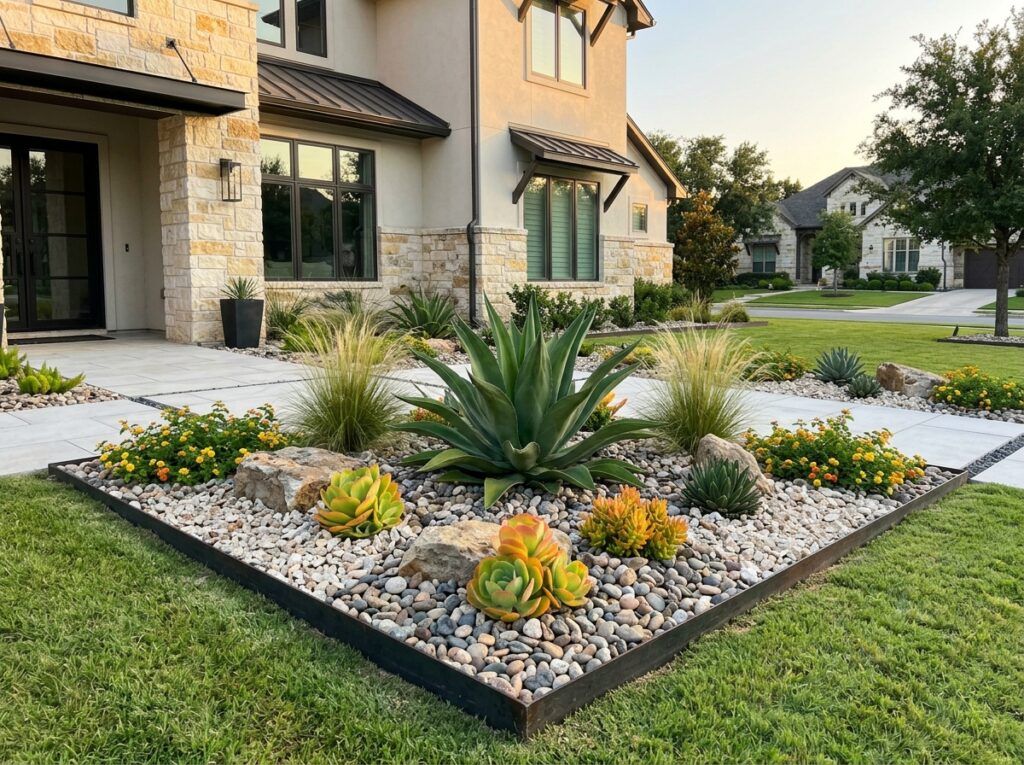
Here goes your text ... Select any part of your text to access the formatting toolbar.
Common Bed Styles and Their Maintenance Levels
| Bed Style | Maintenance Level | Water Needs | Weed Pressure | Best Use in San Antonio |
|---|---|---|---|---|
| All-Mulch Shrub Bed | Medium (yearly refresh + light pruning) | Moderate, depends on plant mix | Moderate if depth is kept at 2–3 inches | Foundation beds with irrigation and partial shade |
| Rock Bed with Evergreen Framework | Low once established | Lower; focuses on drought-tolerant plants | Low with proper prep and fabric in the right zones | Hot, sunny sides of the house, drive edges, and parkways |
| Shrubs + Living Groundcover | Medium-Low after fill-in | Moderate; groundcover shares water but shades soil | Low once plants knit together | Gently sloped areas, under trees that get filtered light |
| Specimen Plants in Gravel “Pads” | Low (occasional cleanup and pruning) | Low–Moderate depending on species | Low if beds are edged and prepped correctly | Modern front yards, courtyards, and side yards |
| Mixed Seasonal Color Bed | High (swap-outs, deadheading) | Higher; frequent irrigation needed | Moderate–High without strong prep | Small accent areas only, near entries—not for full yard |
Not maintenance-free—but less of it
Pros and Cons of Low-Maintenance Bed Designs
PROS
- Less week-to-week work once everything is established
- Fewer plant types to learn and manage
- Easier mowing, trimming, and seasonal cleanup
- Better fit for irrigation restrictions and hot summers
- Clean, simple look that works well with many San Antonio home styles
CONS
- Higher upfront cost when using more rock, edging, and hardy plant material
- Less seasonal “flower bed” look if you reduce annuals
- Design mistakes are more visible in simple layouts
- Some areas may still need hands-on care, especially near entries
- No design is completely maintenance-free—just lower effort over time
Upfront vs. ongoing costs
Here goes your text ... Select any part of your text to access the formatting toolbar.
How Low-Maintenance Beds Typically Price Out
Low-maintenance doesn’t always mean low-budget at the beginning. Beds that rely on better edging, decorative rock, and upgraded plants usually cost more to install than a quick mulch-and-annuals approach. The payoff is less frequent replacement, fewer emergency fixes, and simpler cleanups over the years. Before scheduling work, review our landscape bed expectations so the project expectations are clear.
- Rock-heavy beds often carry a higher upfront line item than mulch-based beds, but require fewer material refreshes.
- Investing in quality edging, proper bed prep, and drainage reduces the need for repeated corrective work.
- Repeating a short list of reliable shrubs and grasses can be more cost-effective than constant seasonal plant change-outs.
- Combining a full bed renovation with Seasonal Yard Cleanups or a Winter-to-Spring Yard Reset can stretch your budget further than piecemeal work.
Practical answers
Low-Maintenance Bed FAQs
Straightforward guidance on what “low maintenance” really means in day-to-day care.
See All Frequently Asked QuestionsYes. Many of the cleanest, most upscale landscapes in San Antonio use simple plant palettes, strong bed shapes, and a mix of rock and mulch. The key is quality materials and a design that fits your architecture.
Related: Landscape Bed Installation Cost Guide, Home, How to Design a Clean, Modern Front Yard
If you want a consistently tidy yard without constant plant swap-outs or weekend bed work, low-maintenance design is usually a good fit.
We can walk the property, talk through how you use the space, and show you what a realistic maintenance plan would look like.
Related: Landscape Bed Installation Cost Guide, Faqs/#I Know If Low Maintenance Beds Are Right For My Property
In many cases we can reuse parts of your current layout—keeping certain plants, reshaping beds, and changing ground cover. On heavily overgrown or failing beds, a full reset as part of a complete Landscape Bed Installation is often more effective long term.
Related: Landscape Bed Installation Cost Guide, Landscape Bed Installation, Mulch vs Rock: Which Is Better for Your Beds?
No.
Fabric is useful under many rock beds, but it can cause problems in some planted areas if roots need to spread. We use it selectively where it truly helps and rely on prep, depth, and plant density in other spots.
Related: Landscape Bed Installation Cost Guide, Mulch vs Rock: Which Is Better for Your Beds?, When Do You Need a Retaining Wall?
Rock is usually lower maintenance in harsh sun and wind, but it’s not always the right answer under trees or in planting-heavy beds.
We often combine rock in high-abuse areas with mulch in planting pockets to balance plant health and upkeep.
Related: Landscape Bed Installation Cost Guide, Mulch vs Rock: Which Is Better for Your Beds?, How Often Should You Refresh Mulch?
No landscape is truly maintenance-free. What we can do is reduce how often you need to weed, trim, refresh materials, and replace plants. That happens through better design, plant selection, edging, and ground cover—not by eliminating care entirely.
Related: Best Edging Options for Landscape Beds, Plants Care & Survival Policy, Faqs/#Can You Make My Beds Completely Maintenance Free
Design it once, maintain it smart
Ready to Simplify Your Landscape Beds?
We’ll look at your current beds, sun and shade patterns, and how much upkeep you want to handle—then design and install low-maintenance beds tailored to your home.