
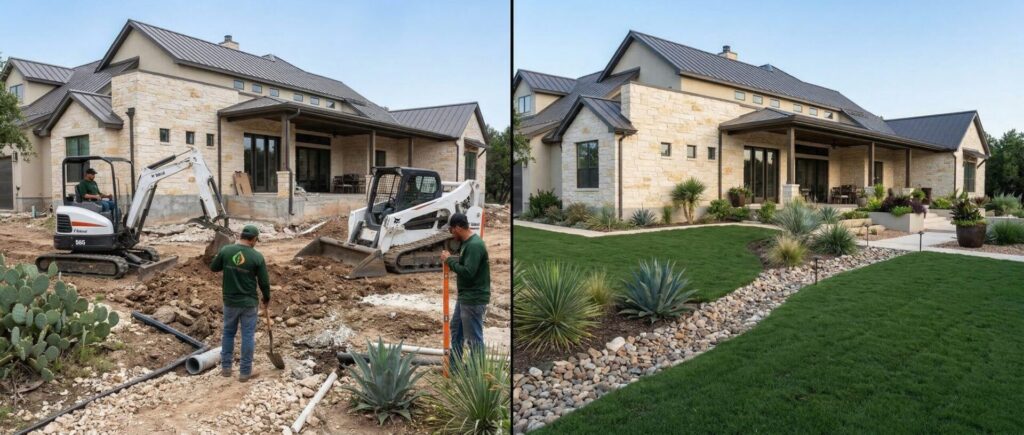
Shape the yard so water has somewhere to go
Does Yard Grading Fix Drainage Problems in San Antonio?
Regrading is one of the most powerful tools we have for drainage—but it isn’t a magic wand. This guide explains when reshaping the yard is enough, and when you also need drains, downspout work, or even retaining walls.
Request Your Free EstimateGrading is the foundation of good drainage
Can yard grading alone solve my drainage issues?
In many San Antonio yards, careful grading will handle the bulk of everyday drainage problems—especially shallow puddles in the lawn and gentle slopes that send water toward the house. By reshaping the soil so water flows away from structures and toward safe exit points, you prevent a lot of future headaches.But grading has limits. It can’t create slope where there is no fall across the lot, and it won’t fix subsurface water that wants to move along fence lines or between homes. In those situations, grading is the base layer and French drains, surface drains, or downspout drainage systems finish the job.
- Yard grading fixes how water moves across the surface, not underground
- It works best in yards that already have some natural fall to a lower point
- Flat lots, tight side yards, and heavy clay soils often need drains in addition to grading
- Regrading is often step one before new Sod Installation or Landscape Bed Installation
- The right solution is usually a balance of grading, drains, and downspout improvements
Start with slope, then add tools as needed
How Yard Grading Fits Into a Complete Drainage Plan
When we evaluate a drainage problem, we don’t start by selling a French drain or a catch basin—we start by reading the yard. Grading is about shaping the entire site so gravity does most of the work, and then using other drainage tools only where they’re actually needed.
1. What yard grading actually does (and doesn’t do)
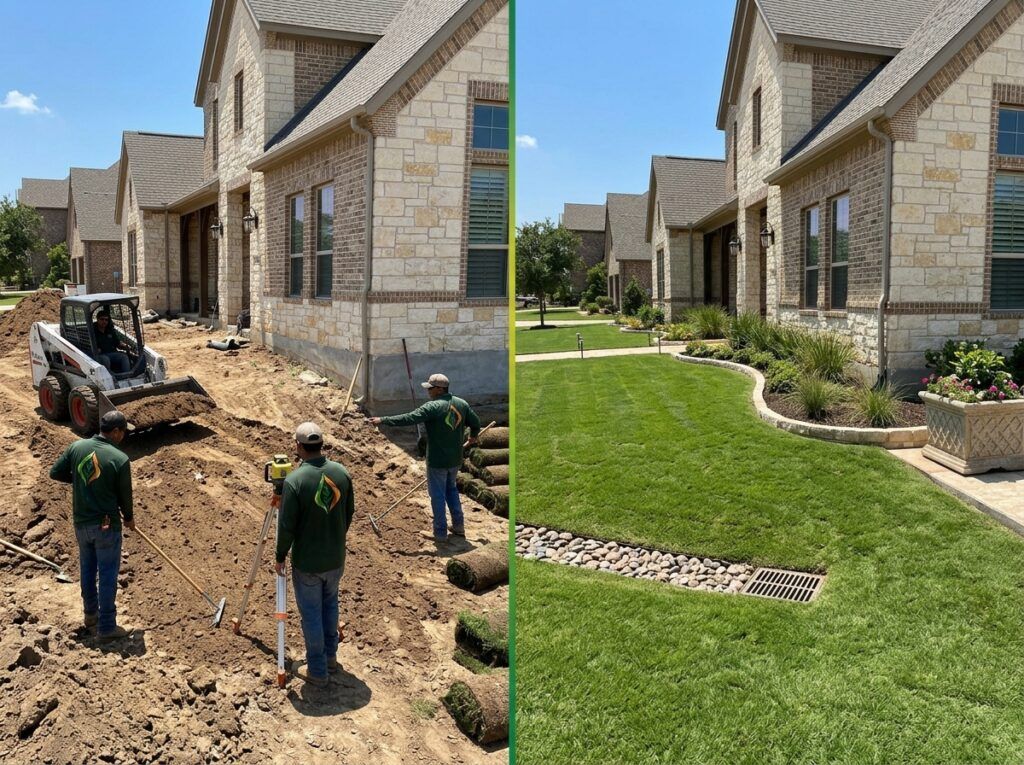
Grading is the process of cutting high spots, filling low spots, and creating gentle slopes so water sheds away from the house, hardscapes, and key landscape areas. In San Antonio’s clay-heavy soils, the top few inches of grade make a big difference in how long water hangs around after a storm.
- What it does well: Directs surface water away from the foundation, patios, and pool decks; smooths low areas that collect water; prepares the site for new Sod Installation or Landscape Bed Installation.
- What it doesn’t do: Create a lower elevation where none exists, replace the need for French drains where water is trapped, or handle roof runoff by itself without proper Downspout drainage.
Think of grading as setting the “playing field.” Drains, basins, and extensions are tools you add where grading alone can’t solve the problem.
2. When yard grading is usually enough on its own
There are plenty of drainage problems we can solve with grading alone, especially on lots that already have some natural slope to the street or an alley.
- Open lawn puddles: Shallow “bird baths” in the middle of the yard are often fixed by cutting highs, filling lows, and re-sodding.
- Mild negative slope toward the house: Rebuilding the grade in the first 6–10 feet away from the foundation can push water where it should go.
- Uneven ground by new patios or walkways: When concrete is correct but the adjacent soil is not, grading the lawn side can stop water from sitting at the edge.
In these situations, we’ll often combine grading with fresh Sod Installation or a Seasonal Yard Cleanup and bed refresh so the yard looks finished when we’re done.
For drainage material planning, compare minor lawn regrading with the water issue described above.
For drainage material planning, compare full grading with drain integration with the water issue described above.
For drainage material planning, compare channel drain system with the water issue described above.
3. When grading needs help from drains and downspouts
Some drainage problems simply can’t be fixed with slope alone. If there’s nowhere for water to go without crossing property lines or backing up against a structure, we add other tools.
- Tight side yards and fence lines: Side yards that act like channels between houses often need French drains to carry water to a safe discharge point.
- Flat or bowl-shaped lots: When the whole yard sits in a low area, grading can improve things, but Surface drains & catch basins are usually required to collect and move water.
- Heavy roof runoff: If downspouts dump water into beds or onto lawn right next to the house, we almost always pair grading with improved Downspout drainage to get that water out and away.
Here, grading is still critical, but it’s part of a broader Drainage Installation plan rather than the only fix.
For a related next step, read How Downspout Drainage Protects Your Foundation.
For a related next step, read Why Standing Water Is Dangerous for Lawns & Foundations.
For a related next step, read Yard Drainage Cost Guide.
4. Where retaining walls and structural changes come into play
On steeper lots or dramatic elevation changes, grading has a limit—at some point you’re fighting gravity. That’s where Retaining Wall Installation and proper wall drainage become part of the conversation.
- Slopes that are hard to walk or mow: We may terrace the yard with small walls and regrade each level for safe, predictable drainage.
- Existing walls with water issues: If water is collecting at the base of a wall, we often have to correct both the grading in front and the drainage behind the wall.
- New builds and major renovations: When you’re redoing large portions of the yard, it’s the right time to design grading, walls, and drains together so they work as one system.
Handled correctly, walls and grading work together—walls hold the soil, and grading and drains tell water exactly where to go.
Here goes your text ... Select any part of your text to access the formatting toolbar.
When Yard Grading Is Enough—and When It Isn’t
| Situation | What Yard Grading Can Do | When Grading Alone Is Enough | When You Need More Than Grading |
|---|---|---|---|
| Low spots in open lawn areas | Re-shapes the surface so water sheds instead of pooling | Shallow depressions away from the house, patios, and fences | Deep pockets tied to buried utilities, tree roots, or tight side yards |
| Water drifting toward the foundation | Creates a positive slope away from the house | Mild slope issues within 6–10 feet of the house, with good soil depth | Homes with flat lots, high clay content, or nowhere for water to exit without drains |
| Soggy strips between homes or along fences | Improves surface flow across shared side yards | Light ponding that clears quickly once slope is corrected | Chronic saturation where subsurface water is the real problem—often needs French drains |
| Patios, walks, and pool decks settling or holding water | Re-grades adjacent lawn areas to pull water away | Minor edge issues where concrete is still sound | Sunken concrete, trapped water with no downhill outlet, or tight courtyards that need surface drains |
| Steep or tiered yards | Smooths transitions and reshapes slopes | Small adjustments to make maintenance and water flow more manageable | Slopes tall enough to need Retaining Wall Installation with proper drainage behind the wall |
See the tradeoffs clearly
Pros and Cons of Yard Grading for Drainage
PROS
- Can significantly reduce standing water in open lawn areas
- Improves how the whole yard drains, not just one puddle
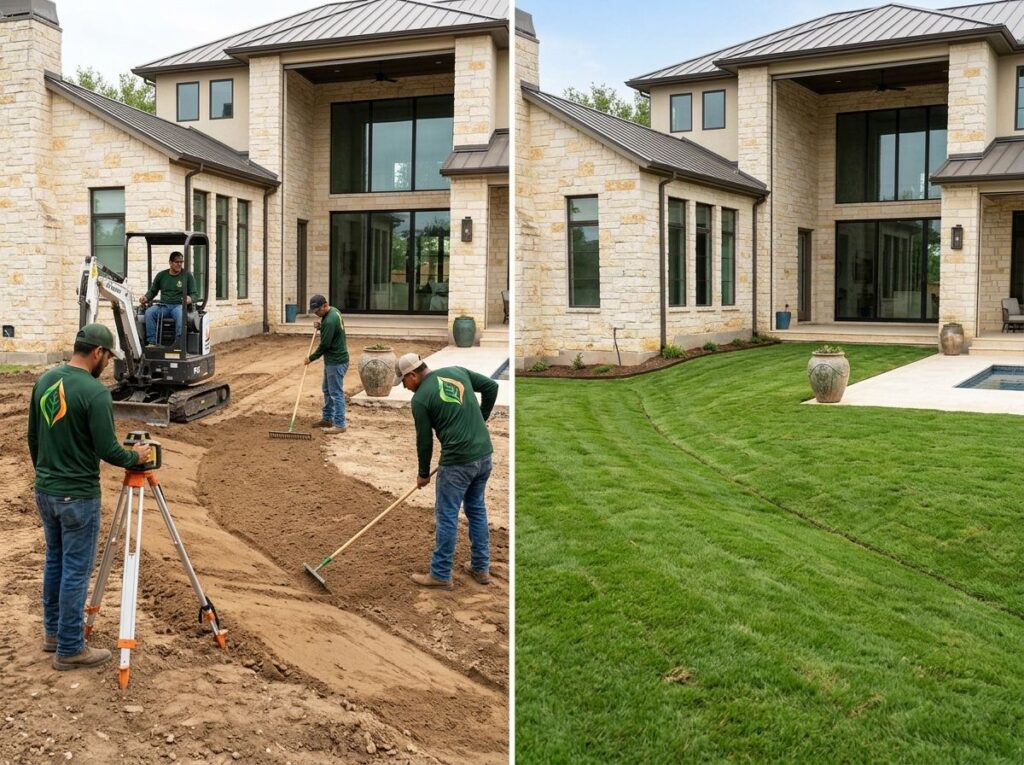
- Sets up future projects like Sod Installation and Landscape Bed Installation for success
- Often the cleanest-looking solution with no exposed grates in the middle of the yard
- Can be phased with other work, like drainage lines and new planting beds
CONS
- Needs a place for water to go—grading alone can’t create an outlet that doesn’t exist
- May disturb existing turf, beds, or irrigation that then need repair or replacement
- Less effective in very flat yards or tight side yards without room for slope
- Does not solve subsurface water issues on its own
- Incorrect grading can move water problems from one area to another if not planned correctly
Think in terms of zones, not one giant number
Here goes your text ... Select any part of your text to access the formatting toolbar.
How We Think About the Cost of Yard Grading vs. Other Drainage Fixes
Instead of guessing a single price for “grading the yard,” we usually break a property into drainage zones and decide what each area actually needs. Some may only require reshaping the soil. Others need grading plus drains or downspout work to truly solve the problem. That structure helps you phase work and see where grading delivers the biggest return. Before scheduling work, review our drainage expectations so the project expectations are clear.
- Small grading-only projects focused on one or two low areas are generally on the lower end of typical drainage budgets.
- Full-yard regrading, especially when paired with new Sod Installation, is a larger investment but often replaces multiple small band-aid fixes.
- When yard grading is combined with French drains, surface drains & catch basins, or downspout drainage extensions, most of the cost comes from excavation, hauling, and restoration rather than the drains themselves.
- Lots with very little natural fall may need both grading and drainage systems so water has a reliable place to exit, not just a smoother surface.
- Your written estimate should break out grading, drainage components, and restoration separately so you can see where each dollar is going.
Straight answers about grading and drainage
Yard Grading & Drainage FAQs
These questions come up often when homeowners are deciding whether grading is worth the investment.
See All Frequently Asked QuestionsYes.
Any time you invest in new Sod Installation or Artificial Turf Installation, it’s smart to correct grading first. New lawn or turf will look better, drain better, and last longer if the base and slope are right from the beginning.
Related: Best Artificial Turf for Dogs, How to Prepare Your Yard for Sod Installation, Signs Your Yard Has Drainage Problems
Not always.
Simple grading corrections can be less expensive than complex drain systems, but on flat or constrained lots you may spend more trying to force slope than you would on well-designed French drains or surface drains & catch basins. The most cost-effective approach usually blends both based on your site.
Related: Signs Your Yard Has Drainage Problems, French Drain vs Surface Drain: What’s the Difference?, Faqs/#Is Grading Always Cheaper Than Installing Drains
Filling small depressions can help for a while, but if the surrounding slope is wrong, the low spot will often come back.
Proper yard grading looks at how water moves across the entire area, not just one puddle, so the fix lasts longer and works with the rest of your drainage system.
Related: Signs Your Yard Has Drainage Problems, Low Voltage Landscape Lighting Explained, Low-Maintenance Landscape Bed Ideas
In areas where we’re significantly changing the slope, existing grass usually has to be removed and replaced.
We plan grading and new Sod Installation together so you don’t pay twice. In lighter-touch zones, we may be able to preserve more turf or restore smaller sections instead of the whole yard.
Related: Best Artificial Turf for Dogs, How to Prepare Your Yard for Sod Installation, Signs Your Yard Has Drainage Problems
Grading and drainage improvements help protect your foundation going forward by keeping water away from the slab.
They are not a substitute for structural repairs if damage has already occurred, but they are often recommended alongside foundation work to prevent the same issues from returning.
Related: Signs Your Yard Has Drainage Problems, How Downspout Drainage Protects Your Foundation, Faqs/#Can Yard Grading Help With Foundation Problems I Already Hav
We look at natural low points, property boundaries, and where we can legally and safely discharge water.
If gravity alone can pull water to a good exit point, grading does most of the work. When there’s no downhill path or chronic subsurface moisture, we add drains to carry water from where it collects to where it can safely leave.
Related: Signs Your Yard Has Drainage Problems, Why Standing Water Is Dangerous for Lawns & Foundations, Faqs/#You Decide Where To Stop Grading And Start Using Drains
Shape the yard once, benefit for years
Wondering If Yard Grading Will Fix Your Drainage?
We’ll walk the property, check slopes, and show you where grading alone will work and where drains, downspouts, or walls should be part of the plan.