
Surface Drains Channel Drain System
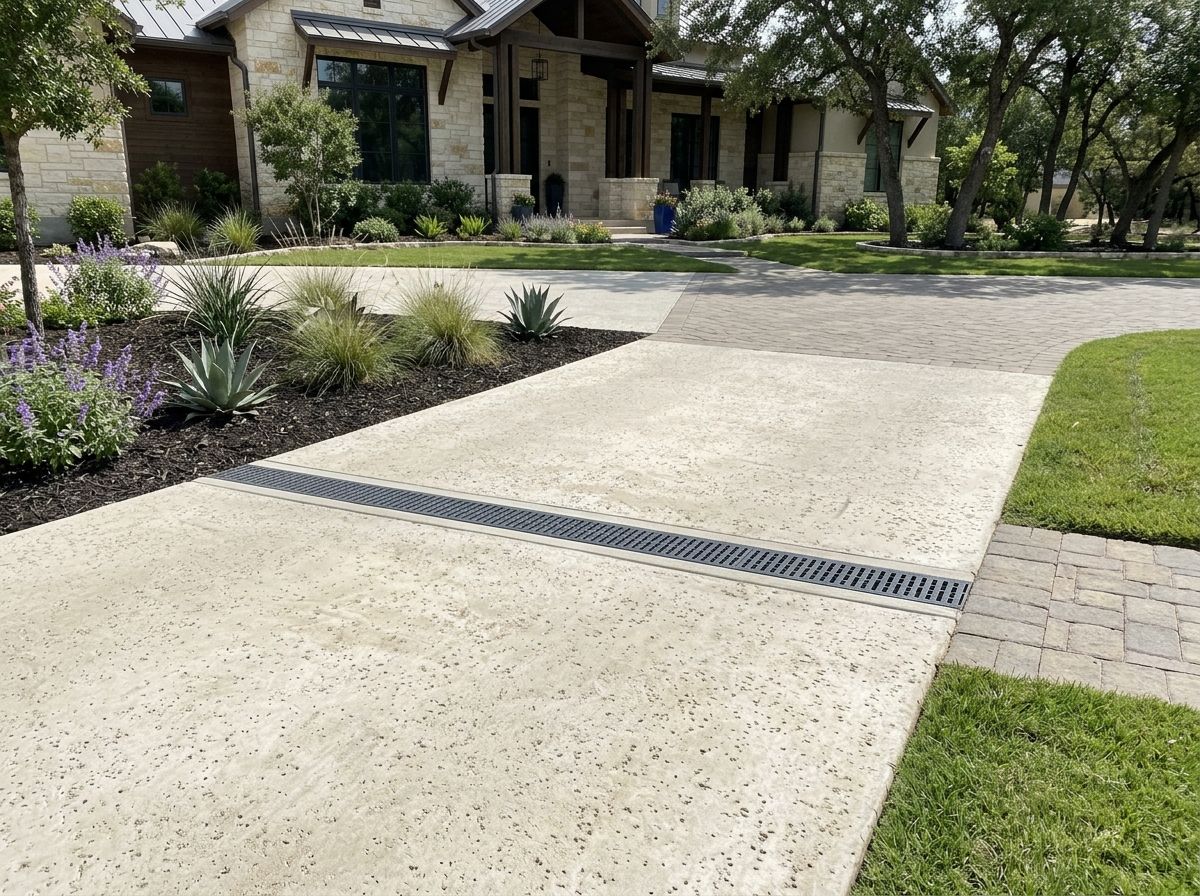
Decorative
High Volume Capacity
Recommended Use: Hard surfaces with water sheeting or runoff issues.
Introduction to Channel Drain System
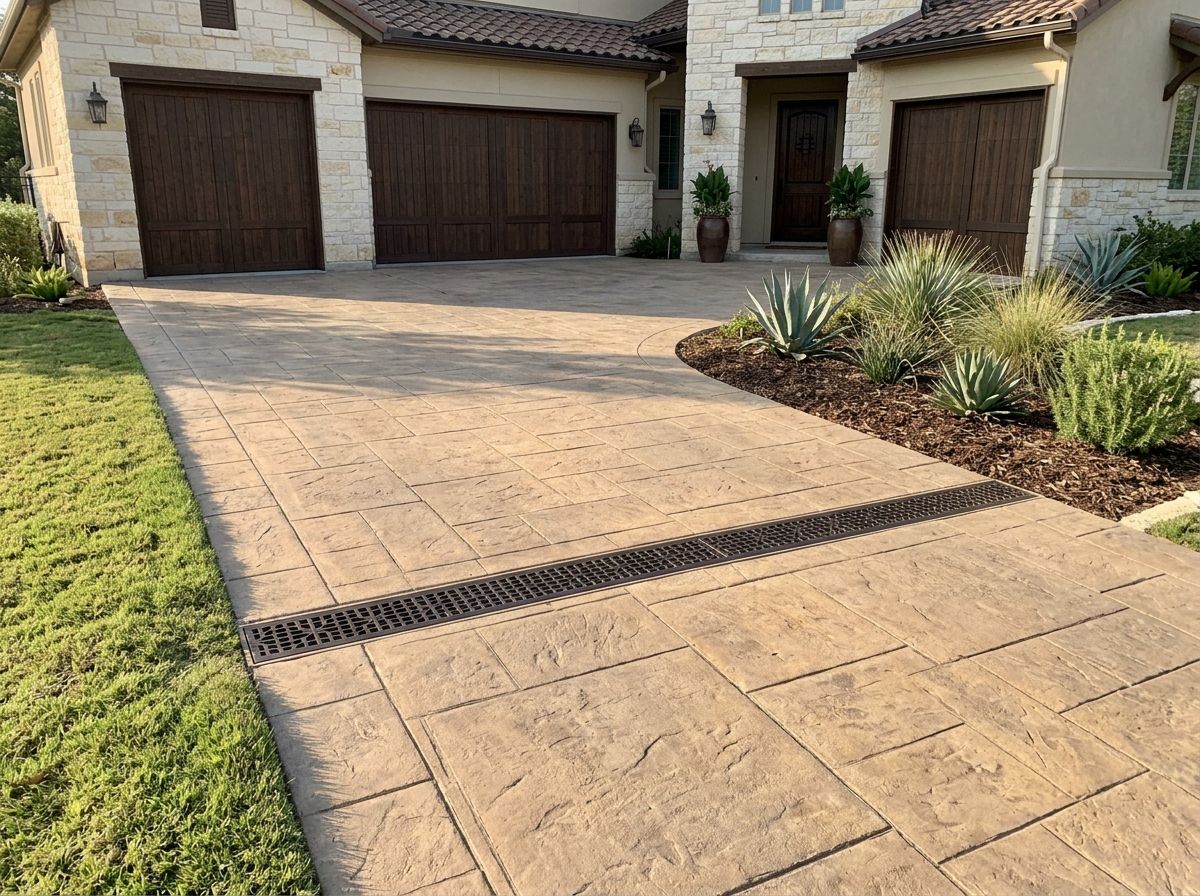
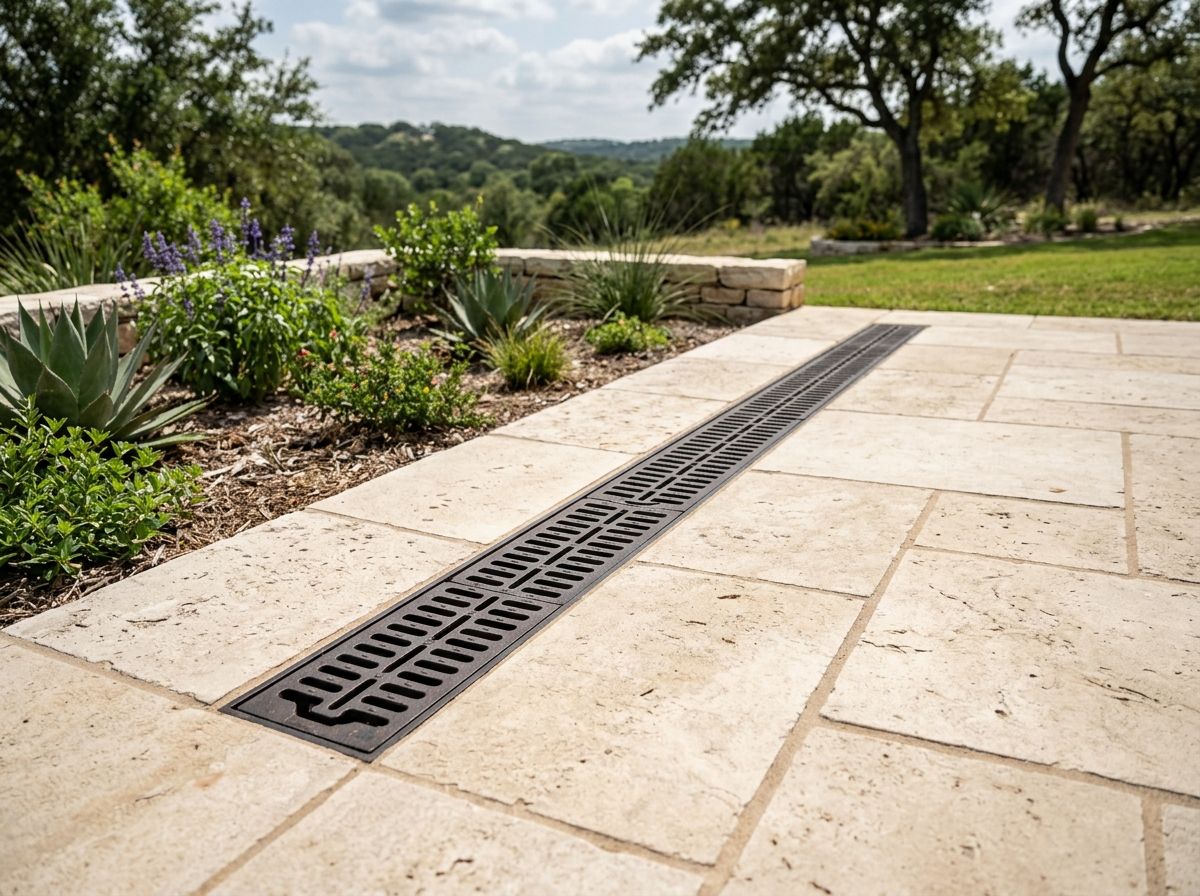
A Channel Drain System is a linear trench drain with a grate, typically installed across or along driveways, patios, sidewalks, pool decks, and other hardscape areas. It is designed to intercept sheet flow before water crosses a threshold, collects near a structure, or washes across a walkway.
This product is different from a round yard drain because it collects water along a line rather than at a single point. That makes it useful at garage entries, patio edges, driveway aprons, and transitions where water moves across a broad hard surface.
A channel drain is a surface-water solution. It does not collect groundwater from within the soil unless it is paired with other drainage components.
How It Works
A narrow drain channel is set into the hardscape or soil edge with the grate sitting flush with the finished surface. As water flows across the area, it drops through the grate into the channel.
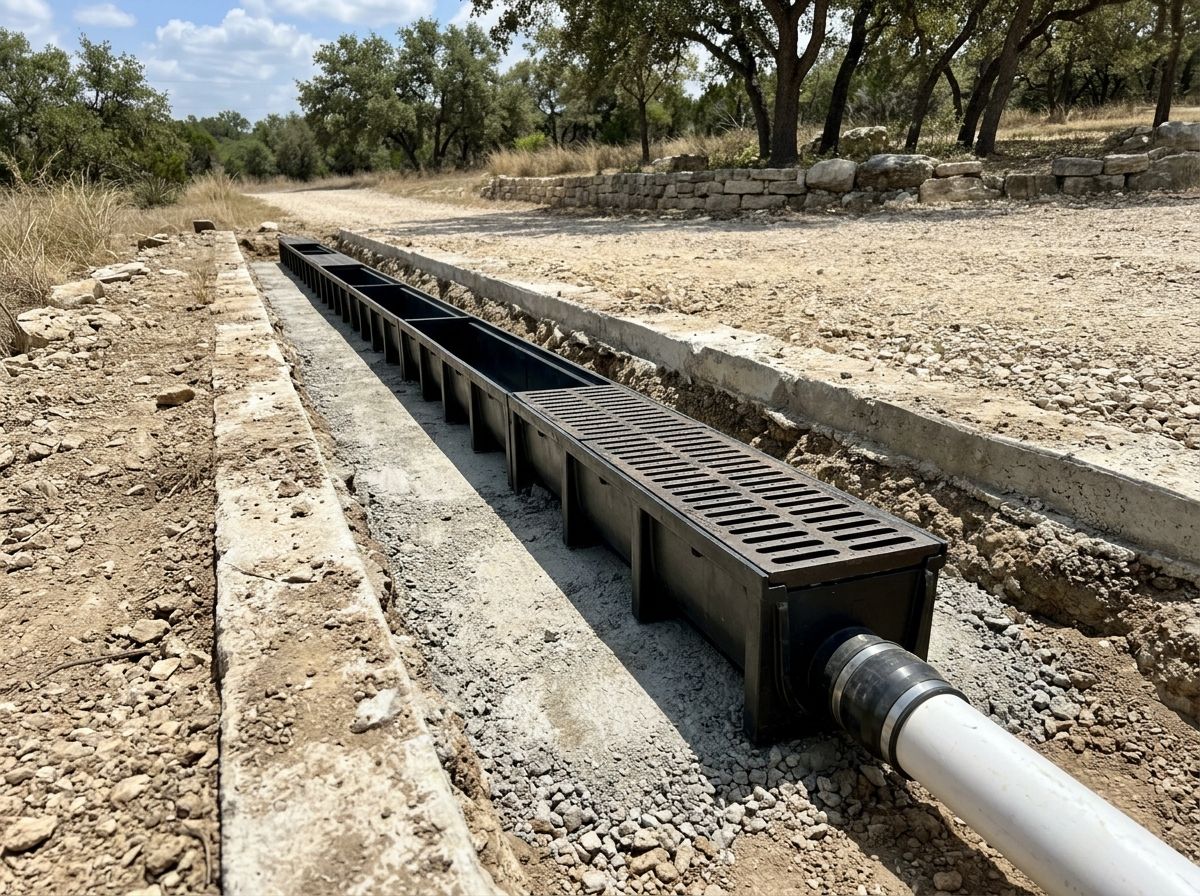
The channel then carries the water to an outlet connection and underground pipe. The system must be installed with the correct elevation and slope so water enters the drain instead of bypassing it.
Maintenance
Maintenance involves keeping the grate openings clear. Leaves, mud, gravel, and grass clippings can block water from entering the channel, especially after storms or landscape work.
The grate may need to be lifted periodically so sediment can be removed from the channel. Traffic-rated grates should be used where vehicles or heavy loads will pass over the system.
Quick Facts
- Product Type: Linear trench or channel drain
- Best For: Driveways, patios, sidewalks, garage approaches, and hardscape runoff
- Main Components: Drain channel, grate, end caps or outlets, and underground pipe
- Water Collected: Surface sheet flow from paved or compacted areas
- Drainage Method: Water enters through a linear grate and exits through pipe
- Maintenance Level: Moderate; grates and channels must be cleaned
- Limitations: Not intended as a subsurface groundwater drain
- Special Traits: Excellent for intercepting water across a wide hardscape edge
Suggestions for San Antonio Homeowners
- Hardscape Placement: Use a channel drain where water crosses a driveway, patio, sidewalk, or garage entry before it can be redirected by a single catch basin.
- Flush Installation: The grate should sit flush with the surrounding surface to avoid trip hazards and to allow water to enter cleanly.
- Traffic Needs: For driveways, choose materials and grates rated for the expected load and install them with proper support.
- Discharge Planning: Do not let the channel drain simply move water from one problem spot to another. Connect it to a pipe route with a safe outlet.
- Storm Cleanup: San Antonio storms can move leaves, oak tassels, mulch, and grit quickly. Clear the grate after heavy rain so the drain remains effective.
A Channel Drain System is a good solution for San Antonio homes where runoff moves across hard surfaces and needs to be intercepted in a clean, controlled way. When installed flush and connected to a proper outlet, it helps keep patios, walks, and driveways more usable during rain events.





Want this product installed? Check out our Drainage Installation page to view pricing and other details.
Ready When You Are
Get a Clear Plan for Your Yard
Tell us what you’d like to improve. We’ll ask a few questions, review your project, and let you know the best next step — no pressure and no guesswork. Fill out the form for a free quote.