
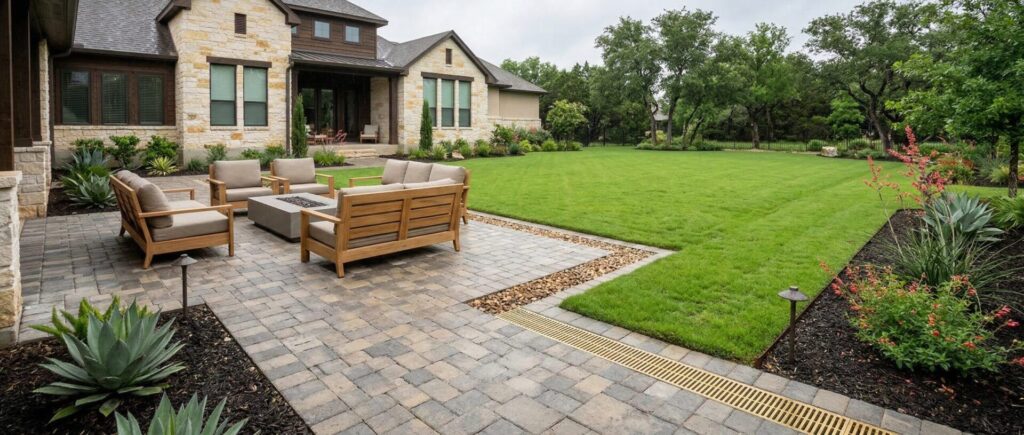
Fix water problems with realistic numbers
Yard Drainage Cost Guide for San Antonio Homeowners
Standing water, muddy side yards, and damp foundations are fixable—if you choose the right solution for the way your property actually drains. This guide explains how yard drainage is typically priced in San Antonio so you can budget with clear expectations.
Request Your Free EstimateWhat most projects really cost
How much does yard drainage usually cost in San Antonio?
Most residential drainage projects land somewhere between a small fix and a full system. Simple downspout reroutes or a short surface drain run can often be handled in the lower thousands, while full French drain systems, grading, and wall drainage can reach into the mid-to-upper thousands depending on length, depth, and access.Contractors typically price drainage by a mix of linear footage, number of structures (like basins or downspouts), and the amount of excavation and restoration needed. The more soil we move, rock we haul, and surfaces we restore, the higher the investment.
- Expect simple, targeted fixes to start around the lower thousands, not a few hundred dollars
- French drains and multi-zone systems are usually priced per linear foot plus basins and discharge points
- Grading and resloping are often priced by area or project, not just footage
- Access, depth, and how much lawn or concrete must be restored all impact final cost
- The cheapest fix that doesn’t solve the problem is the most expensive option long term
Price follows the problem—not just the footage
How We Evaluate and Price Yard Drainage Work
Before any numbers go on paper, we look at how water moves across your property today: where it comes from, where it’s trying to go, and what’s in its way. Only then do we match symptoms to solutions—French drains, surface drains, downspout drainage, or Yard grading / resloping—and outline what it will realistically take to correct the issue.
1. Identify the water source and priority risk
Not all water problems are equal. Some are annoyances; others can damage foundations, patios, and interior spaces.
- Roof runoff issues: Water dumping at corners, saturating beds, or eroding mulch near the foundation often point to downspout and grade changes.
- Surface ponding: Water standing in the yard after rain usually indicates poor slope or trapped low spots.
- Subsurface seepage: Constantly soggy soil, especially near structures, can signal the need for French drains or re-routing collected water.
We prioritize fixes that protect the home and hardscape first, then refine comfort issues like muddy side yards or soft turf that can be addressed with Drainage Installation plus follow-up Sod Installation.
2. Match the problem to the right drainage system
French drains get most of the attention, but they’re not always the first or only answer. On real projects, we usually consider several tools:
- Downspout drainage to carry roof water through buried lines to a safe discharge point instead of letting it dump at the foundation.
- Surface drains and catch basins to pick up visible standing water and tie into discharge piping.
- French drains for subsurface water moving through soil, especially along fences, side yards, or behind Retaining Wall Installation.
- Yard grading / resloping to re-shape how water naturally flows so gravity does more of the work.
Your quote reflects which combination of these systems makes the most sense, not just the most expensive option.
For drainage material planning, compare downspout pop-up with the water issue described above.
3. Understand where the money goes on a drainage project
Most of the cost in proper drainage is labor, equipment, and restoration—not just pipe and fittings.
- Excavation and hauling: Digging trenches through compacted clay, tree roots, and existing landscaping is time and machine intensive.
- Rock and bedding materials: French drains and some surface systems require washed rock, fabric, and proper backfill.
- Structures and fittings: Basins, pop-up emitters, cleanouts, and transitions add both parts and labor.
- Restoration: Rebuilding beds, replacing turf, and repairing hardscape after the trenching is complete.
Two quotes that show similar footage can be very different in price based on how deep the system goes, how much rock is used, and how your yard is put back together.
For a related next step, read French Drain vs Surface Drain: What’s the Difference?.
For a related next step, read Signs Your Yard Has Drainage Problems.
For a related next step, read Does Yard Grading Fix Drainage?.
4. Typical budget ranges by project type
Every property is different, but most drainage projects in established San Antonio neighborhoods fall into a few broad budget categories:
- Targeted downspout and surface fixes: Re-routing a few downspouts with buried lines and/or adding a basin in a trouble spot often falls in the lower thousands, depending on depth, distance, and restoration.
- Single-zone French drain systems: A primary French drain run with rock, fabric, and discharge for one problem area commonly lands in the mid-thousands, with length, depth, and obstacles driving the range.
- Multi-zone or whole-yard drainage plans: Larger projects with several drain lines, multiple basins, grading, and wall drainage can reach the upper thousands or beyond, particularly on sloped or wooded lots.
Your written proposal should clearly explain which category your project falls into and why, along with the scope of prep and restoration included with the Drainage Installation.
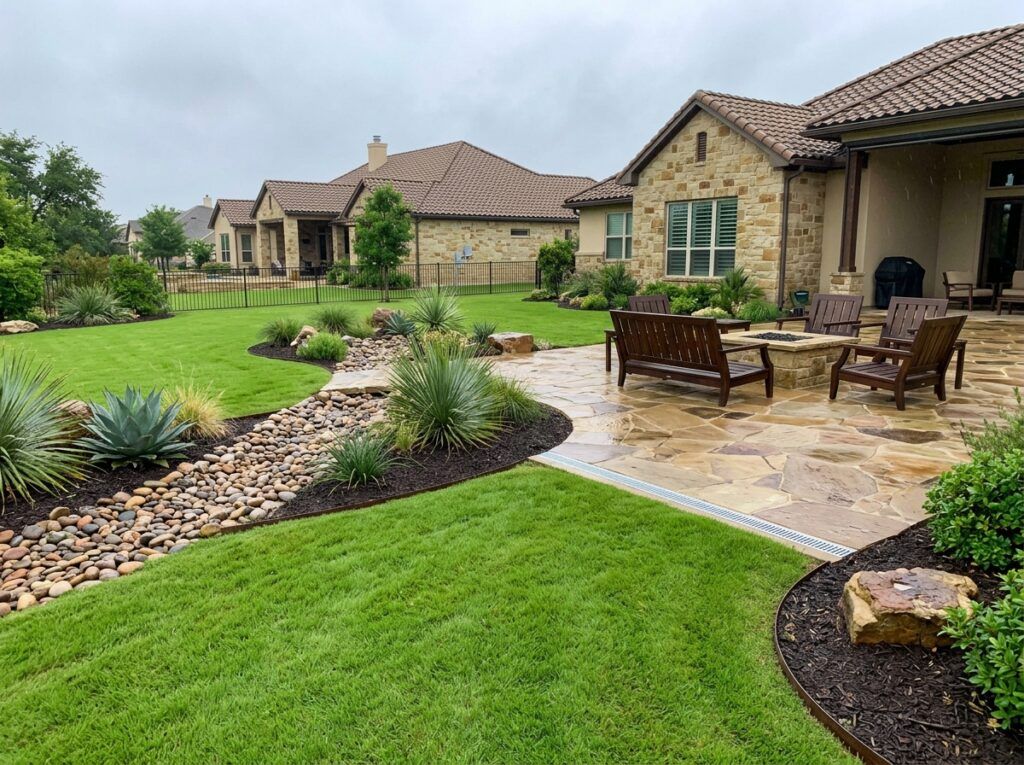
Here goes your text ... Select any part of your text to access the formatting toolbar.
How Major Drainage Solutions Differ in Role and Cost
| Solution Type | Primary Role | Typical Pricing Pattern | Best For | Notes for San Antonio Yards |
|---|---|---|---|---|
| Downspout Extensions & Buried Lines | Move roof water away from foundation | Often priced per downspout and/or per linear foot of pipe | Wet corners at patios, walkways, and near the house | Common first step; can often solve “splash zone” problems without full French drains. |
| French Drains | Collect subsurface water and redirect it | Usually priced per linear foot based on depth, rock, and discharge | Low spots that stay soggy, fence lines, side yards between homes | Material and labor heavy; the most talked-about but not always the first choice. |
| Surface Drains & Catch Basins | Pick up visible standing water and move it out | Typically priced per basin plus connecting pipe runs | Swales, depressions, and hardscape edges where water sits | Pairs well with grading to encourage water toward each basin. |
| Yard Grading / Resloping | Fix the way water naturally flows | Usually priced by area or project, not per foot | Backyards that drain toward the house or fence instead of the street | Can reduce or eliminate the amount of piping needed if done correctly. |
| Retaining Walls with Drainage | Hold back soil and relieve water pressure | Commonly priced per square foot of wall face, plus drainage details | Steep slopes, raised patios, and level changes near the home | Drainage behind the wall is not optional; it’s part of doing the wall safely. |
Fix it once vs. patch it every year
Pros and Cons of Investing in Proper Yard Drainage
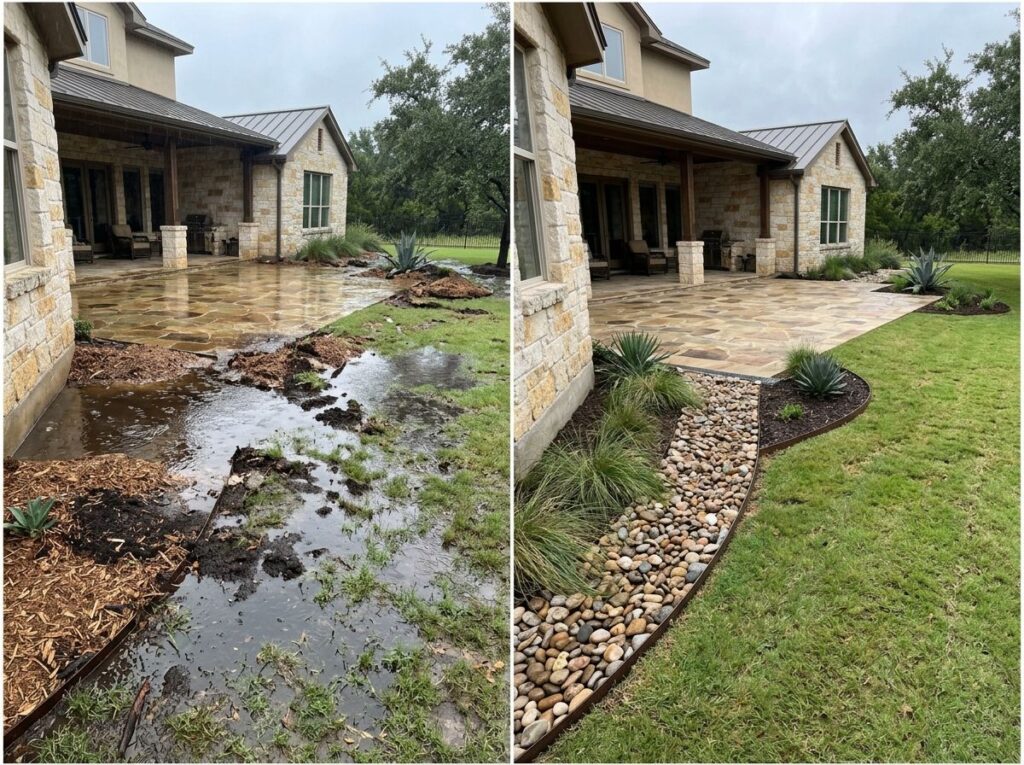
PROS
- Protects foundations, patios, and pool decks from ongoing water damage
- Reduces soggy lawns, muddy side yards, and unusable outdoor space
- Helps keep mulch, rock, and beds in place instead of washing out
- Can improve lawn health when paired with follow-up Sod Installation
- Often increases buyer confidence when selling a home with a known drainage history
CONS
- Higher upfront cost than short-term patch fixes like extra mulch or small berms
- Work is disruptive while trenches are open and restoration is underway
- Not all problems can be solved with one system; multiple tools may be needed
- Drainage lines still require occasional inspection and maintenance
- Poorly designed or cheap systems can move the problem instead of solving it
How contractors actually build your number
Here goes your text ... Select any part of your text to access the formatting toolbar.
Cost and Pricing Patterns for San Antonio Drainage Projects
Most professional landscapers and outdoor contractors in San Antonio use a combination of linear-foot pricing, per-structure pricing, and project-based allowances for grading and restoration. The goal is to match the scope of work to the specific water problems we’re solving—not to sell the longest or most expensive system possible. Before scheduling work, review our drainage expectations so the project expectations are clear.
- French drains and buried lines are often estimated per linear foot, adjusted for depth, rock volume, and discharge details.
- Surface drains and catch basins are typically priced per basin or structure plus the connecting pipe.
- Grading, resloping, and wall drainage are usually priced as project components based on area, access, and soil conditions.
- Quotes should spell out what restoration is included—such as re-sodding, bed rebuilding, or basic Landscape Bed Installation touch-ups.
- Prices can change over time with fuel, material, and labor costs, so any online ranges are guidelines, not fixed offers.
Budget and scope questions, answered
Yard Drainage Cost FAQs
These are the conversations we have most often with San Antonio homeowners before we put numbers on paper.
See All Frequently Asked QuestionsPlan on occasional visual checks at discharge points and basins, keep leaves and debris cleared, and avoid driving heavy equipment over known drain paths. During Seasonal Yard Cleanups, it’s a good time to confirm that water still flows where it should and that gravel or rock areas haven’t clogged up.
Related: Signs Your Yard Has Drainage Problems, Landscape Bed Installation Cost Guide, Seasonal Yard Clean-Ups
Typical residential drainage improvements inside your property line often do not require a permit, but rules can vary, especially if work ties into municipal systems or involves structural elements like tall retaining walls.
We’ll let you know if your specific scope triggers any additional requirements.
Related: Signs Your Yard Has Drainage Problems, Do I Need a Permit for a Retaining Wall?, How Long Do Retaining Walls Last?
We only open the trenching that’s needed to solve the problem, but drainage is intrusive work. We plan trench routes carefully, protect existing features when possible, and include restoration—such as new Sod Installation or Landscape Bed Installation touch-ups—in the plan so the yard recovers well.
Related: How to Prepare Your Yard for Sod Installation, Signs Your Yard Has Drainage Problems, Landscape Bed Installation Cost Guide
Proper French drains are labor and material intensive.
They require excavation, washed rock, fabric, perforated pipe, and a safe discharge point, plus restoration. Cheaper versions often skip steps, use the wrong materials, or don’t have a place to send the water, which is why many homeowners end up paying twice.
Related: Landscape Bed Installation Cost Guide, French Drain vs Surface Drain: What’s the Difference?, Faqs/#Why Are French Drains More Expensive Than I Expected
Sometimes. If your yard simply slopes the wrong way, strategic Yard grading / resloping may reduce or eliminate the need for long pipe runs. On other properties, grading plus a short French drain or surface drain is the best balance of performance and cost.
Related: Signs Your Yard Has Drainage Problems, Does Yard Grading Fix Drainage?, French Drain vs Surface Drain: What’s the Difference?
Linear footage is one piece, but not the whole story.
Depth, soil conditions, rock volume, number of basins and downspouts, and how much restoration is needed all affect the final price. Two 50-foot drains can be very different in cost if one is shallow and open and the other is deep, rocky, and runs through finished landscaping.
Related: Signs Your Yard Has Drainage Problems, Landscape Bed Installation Cost Guide, Why Us
Turn problem areas into usable space
Need a Clear Plan and Price for Your Yard Drainage?
We’ll walk the property, trace how water moves today, and design a practical drainage plan with a written proposal so you know exactly what you’re investing in and why.