
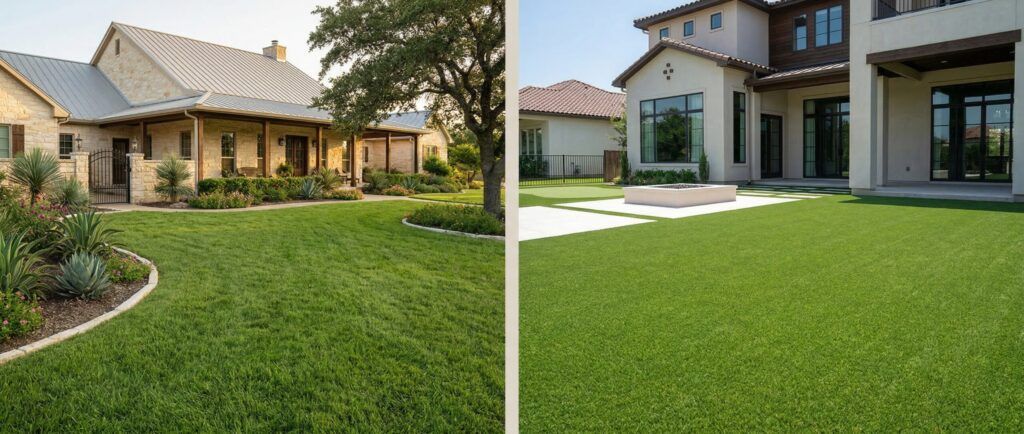
Natural vs synthetic
Sod vs Artificial Turf: Which Is Better for San Antonio Lawns?
Both options work in South Texas—but for very different goals.
This guide compares cost, heat, maintenance, durability, drainage, and long-term value.
Quick comparison
Should you choose sod or artificial turf?
Sod provides a natural, cooler surface and lower upfront cost, but requires watering, mowing, and seasonal care.Artificial turf eliminates mowing and reduces water use but has higher upfront cost and can retain heat in direct sun.The better option depends on usage, maintenance preference, drainage, and long-term goals.
- Sod: lower initial cost, ongoing maintenance.
- Turf: higher upfront cost, low maintenance.
- Sod stays cooler in extreme heat.
- Turf works well for pets and high wear.
- Drainage design affects both options.
Decision framework
How to decide between sod and artificial turf in San Antonio
San Antonio’s climate includes 100°+ summers, clay soil, and occasional heavy rainfall.Choosing between natural grass and synthetic turf requires evaluating maintenance tolerance, water use, and heat exposure. For help turning the advice into a real project, review our artificial turf installation service page.
Cost structure differences
Sod is priced per pallet (approximately 450 sq ft each), with installed starting ranges depending on grass type.
Artificial turf is priced per square foot installed and includes base preparation, infill, and edging.
Heat and comfort
Natural sod cools through transpiration and stays significantly cooler under direct sun.
Artificial turf can become hot during peak summer hours, especially without shade.
For grass selection, compare TifTuf Bermuda sod with the lawn conditions discussed above.
For turf selection, compare K9 Comfort Turf with the use case described above.
For turf selection, compare Multi-Use Flex Turf with the use case described above.
Maintenance and water use
- Sod requires mowing, fertilizing, and irrigation.
- Turf eliminates mowing and reduces water demand.
- Sod may require overseeding or patching over time.
For a related next step, read Sod Installation Cost Guide.
For a related next step, read Bermuda vs Zoysia vs St. Augustine vs Buffalo.
For a related next step, read Best Sod for Full Sun Lawns.
Drainage and durability
Both systems require proper base preparation.
Poor grading can cause pooling in sod or base instability under turf.
Drainage Installation may be required before either option.
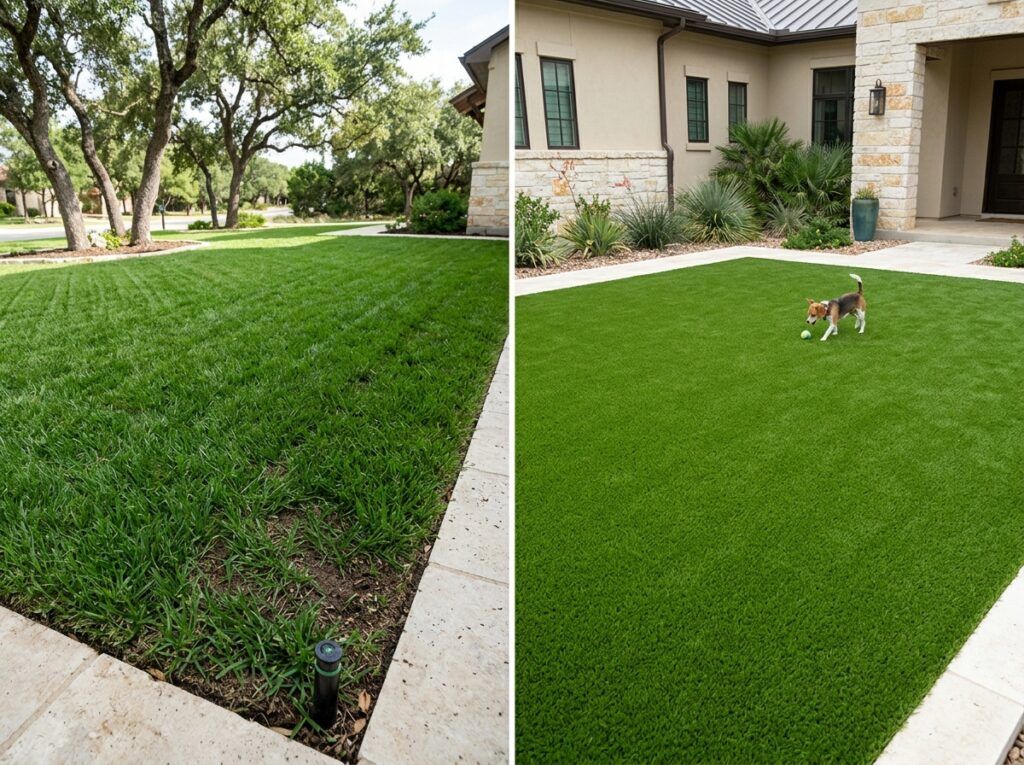
Here goes your text ... Select any part of your text to access the formatting toolbar.
Sod vs Artificial Turf comparison
| Factor | Sod | Artificial Turf |
|---|---|---|
| Upfront cost | Lower | Higher |
| Ongoing maintenance | Moderate–High | Low |
| Heat retention | Cooler | Hotter in direct sun |
| Water use | Requires irrigation | Minimal |
| Natural feel | Yes | Synthetic surface |
Strengths and tradeoffs
Pros and cons overview
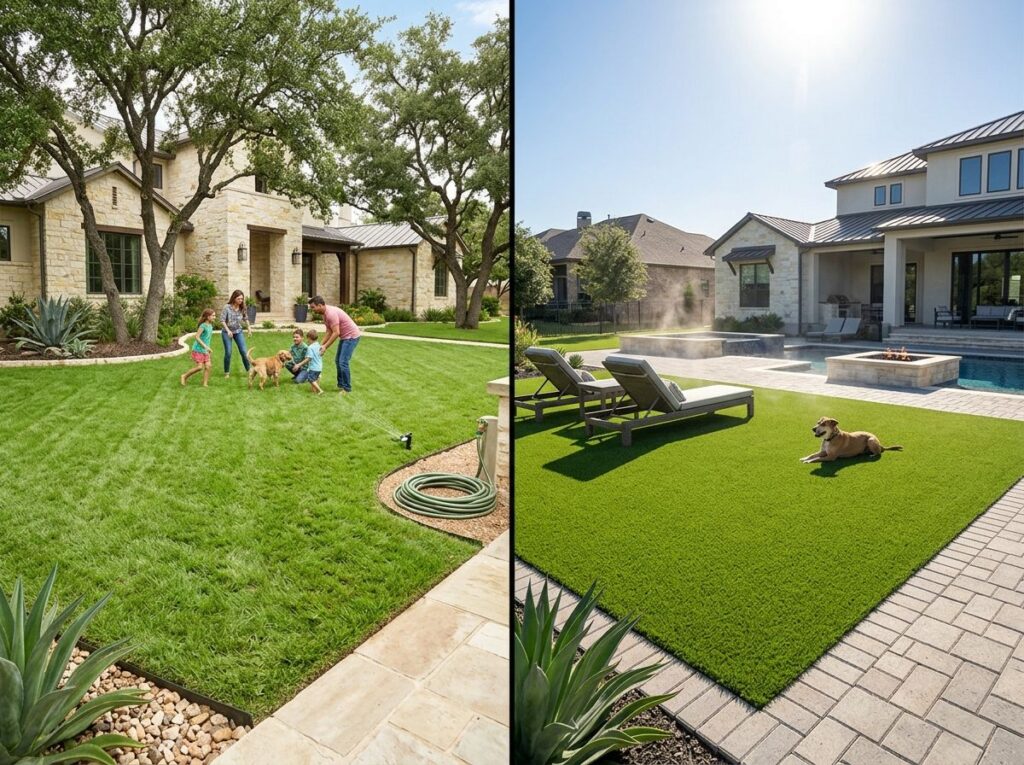
PROS
- Sod provides natural cooling and feel.
- Turf reduces mowing and water demand.
- Sod has lower initial cost.
- Turf performs well in heavy traffic areas.
CONS
- Sod requires ongoing maintenance.
- Turf has higher upfront cost.
- Turf can become hot in summer.
- Sod may thin if drainage is poor.
Cost comparison
Here goes your text ... Select any part of your text to access the formatting toolbar.
How pricing differs between sod and turf
Sod installation is typically priced per pallet installed, with starting ranges depending on variety.Artificial turf is priced per square foot installed and generally requires higher upfront investment due to base preparation and material cost.Long-term cost depends on water, maintenance, and lifespan. Before scheduling work, review our sod care policy so the project expectations are clear.
- Sod: ongoing irrigation and maintenance cost.
- Turf: higher initial cost, lower long-term upkeep.
- Drainage and grading corrections affect both systems.
Comparison FAQs
Sod vs turf questions
Common homeowner questions about natural grass vs synthetic turf.
See All Frequently Asked QuestionsNo, but it requires far less maintenance than natural grass.
If you share a few details about your yard, we can give you a clearer recommendation.
Related: Best Artificial Turf for Dogs, Low-Maintenance Landscape Bed Ideas, Faqs/#Is Turf Maintenance Free
Well-maintained sod enhances curb appeal and cooling benefits.
If you share a few details about your yard, we can give you a clearer recommendation.
Related: How to Prepare Your Yard for Sod Installation, Sod Installation, Sod Care Policy
It depends on maintenance tolerance, usage, and budget priorities.
If you share a few details about your yard, we can give you a clearer recommendation.
Related: Low-Maintenance Landscape Bed Ideas, How Long Do Retaining Walls Last?, How Long Does Artificial Turf Last?
Only if grading and drainage are properly designed.
If you share a few details about your yard, we can give you a clearer recommendation.
Related: Signs Your Yard Has Drainage Problems, Does Yard Grading Fix Drainage?, Yard Drainage Cost Guide
Turf handles heavy pet traffic well, but proper drainage and cleaning are important.
Related: Best Artificial Turf for Dogs, Signs Your Yard Has Drainage Problems, Artificial Turf Installation
Turf can last many years if properly installed, while sod requires ongoing care to maintain density.
Related: Best Artificial Turf for Dogs, How to Prepare Your Yard for Sod Installation, How Long Does Artificial Turf Last?
Make the right choice
Compare sod and turf for your property
We evaluate sun exposure, drainage behavior, and usage needs before recommending sod or artificial turf.