
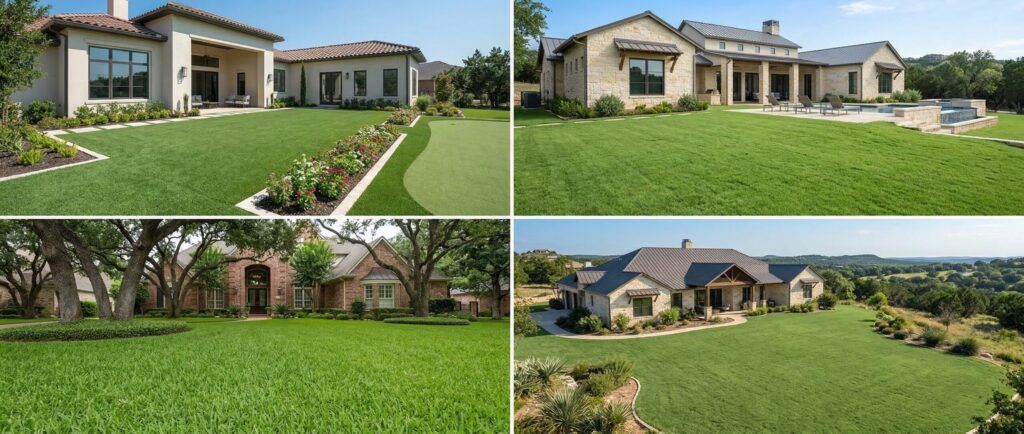
Pick the right grass the first time
Bermuda vs Zoysia vs St. Augustine vs Buffalo: A San Antonio Sod Decision Guide
This isn’t a botany lesson. It’s a decision framework based on sun exposure, irrigation reality, traffic, and how San Antonio soil behaves after rain.
Use it to choose the sod that fits your yard—and your tolerance for maintenance.
The 60-second answer
Which sod is best in San Antonio?
There is no “best” sod—only the best fit for your yard. Use this shortcut.
Pick by yard condition:
Full sun + kids or dogs → Bermuda
- Most durable
- Fast recovery from wear
- Best value for sunny lawns
Mixed sun & shade + premium look → Zoysia
- Dense, high-end appearance
- Handles sun and partial shade (variety matters)
- Slower to recover from damage
Heavy shade under trees + irrigation → St. Augustine
- Performs best in shade
- Needs consistent watering
- Not ideal for high traffic
Full sun + low water expectations + Native Looking → Buffalo
- Very drought-tolerant
- Natural, less manicured look
- Not a “perfect carpet” lawn
Before you choose, check these 5 things:
- Sun hours: full sun vs mixed vs heavy shade
- Water reality: full irrigation or hose-only
- Traffic: kids, dogs, worn paths
- Drainage: standing water = fix grade first
- Variety matters: Raleigh vs Palmetto, Tifway vs TifTuf, Zeon vs Palisades
If those don’t line up, even “good sod” will fail.
A decision framework, not generic pros/cons
How to choose the right sod for your specific yard
Most bad sod decisions come from picking grass by looks alone.A better approach is to choose based on four filters: (1) sun hours, (2) irrigation consistency, (3) traffic and recovery, and (4) how your soil drains after rain.
Filter #1: Sun exposure (the non-negotiable)
Before you compare anything else, figure out how many hours of direct sun your lawn gets in summer.
- 6+ hours of direct sun: Bermuda, Buffalo, and many Zoysias are in play.
- 3–6 hours / mixed sun + shade: Zoysia often becomes the “best compromise.”
- Under live oaks / heavy shade: St. Augustine (and some shade-tolerant Zoysias) typically outperform Bermuda.
San Antonio reality: Shade changes by season. A lawn that looks “sunny” in winter can be shaded in summer when oaks fully leaf out.
Filter #2: Irrigation reality (what you will actually do, not what you hope)
St. Augustine can look amazing in shade, but it generally needs consistent irrigation to hold color and density in San Antonio heat.
- If you have solid sprinkler coverage: St. Augustine and Zoysia are realistic options.
- If you are hose-watering or inconsistent: Bermuda and Buffalo tend to be more forgiving.
Also consider water movement: if your lawn stays soggy after rain, address grading or Drainage Installation first. Wet feet will weaken any turf and increase disease pressure.
For grass selection, compare TifTuf Bermuda sod with the lawn conditions discussed above.
For grass selection, compare Palisades Zoysia sod with the lawn conditions discussed above.
For grass selection, compare Palmetto St. Augustine sod with the lawn conditions discussed above.
For grass selection, compare 609 Buffalo grass sod with the lawn conditions discussed above.
Filter #3: Traffic and recovery (kids, dogs, and the “path problem”)
- Bermuda: Strong recovery and aggressive growth—great for wear, but it can creep into beds without good edging.
- Zoysia: Very dense and wear resistant, but slower to fill in damaged areas (so recovery takes patience).
- St. Augustine: Lower wear tolerance—fine for normal foot traffic, not great for constant play zones.
- Buffalo: Handles low input well, but it’s not a “high-traffic sports turf” look or performance.
Decision tip: If you already have worn “dog run lines,” prioritize recovery speed over looks.
For a related next step, read Best Sod for Full Sun Lawns.
For a related next step, read Best Sod for Shade Lawns.
For a related next step, read How to Prepare Your Yard for Sod.
Filter #4: Maintenance tolerance (the part most homeowners underestimate)
All warm-season grasses need maintenance. The question is what kind of maintenance you’re willing to do.
- If you want the cleanest “carpet” look: Zoysia can deliver, but it rewards consistent mowing and good soil conditions.
- If you want rugged and forgiving: Bermuda is hard to beat in full sun.
- If shade is your yard’s reality: St. Augustine is often the practical choice, but budget for water and watch traffic.
- If you want low input and a natural look: Buffalo can work—just don’t expect it to look like a golf fairway.
Whatever you pick, success still depends on the Sod Installation prep. Poor prep can make “good sod” fail.
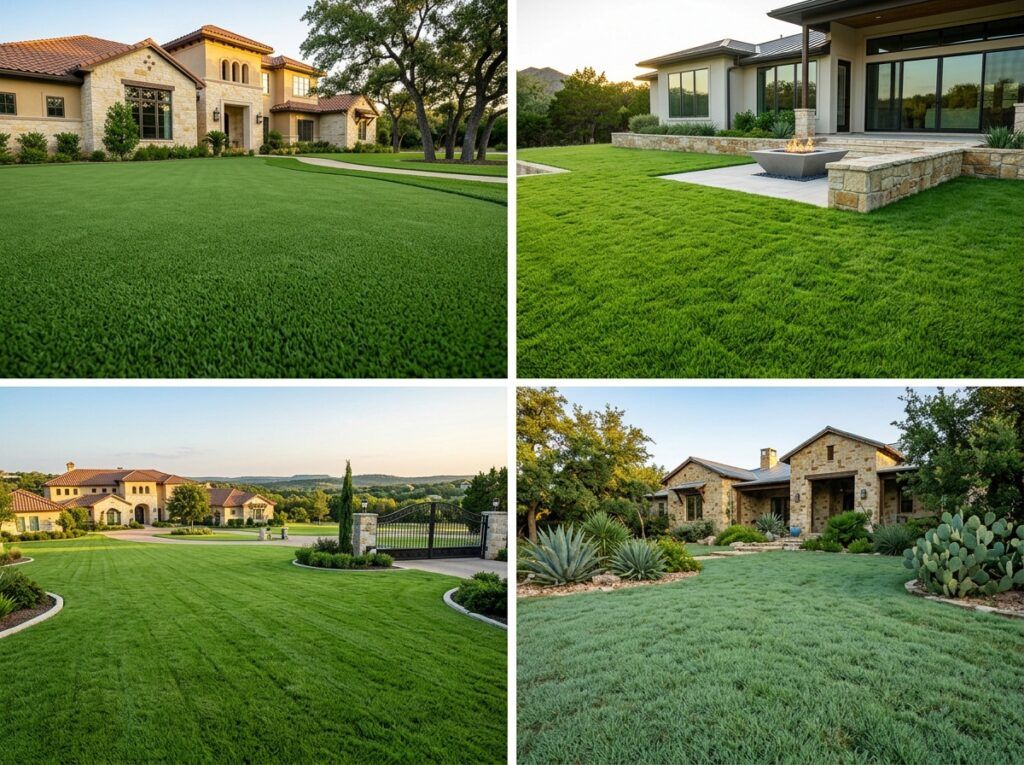
Here goes your text ... Select any part of your text to access the formatting toolbar.
Bermuda vs Zoysia vs St. Augustine vs Buffalo (San Antonio)
| Factor | Bermuda | Zoysia | St. Augustine | Buffalo |
|---|---|---|---|---|
| Best sun exposure | Full sun | Full sun to partial shade (variety dependent) | Partial shade to sun | Full sun |
| Shade performance | Poor | Moderate (best with shade-tolerant varieties) | Good | Poor |
| Traffic & durability | High | High (but slower recovery) | Low–moderate | Moderate (not “sports turf”) |
| Drought tolerance | Moderate–high | Moderate–high | Low | High |
| Maintenance feel | Forgiving; aggressive growth can creep into beds | Dense/premium feel; rewards consistent mowing | Needs water; watch traffic and disease in wet conditions | Low input; more natural prairie look |
| Establish / repair speed | Fast | Slow | Moderate | Moderate |
| Typical installed price direction (from your published starts) | Lower | Higher | Lower–mid (variety dependent) | Mid |
Honest tradeoffs
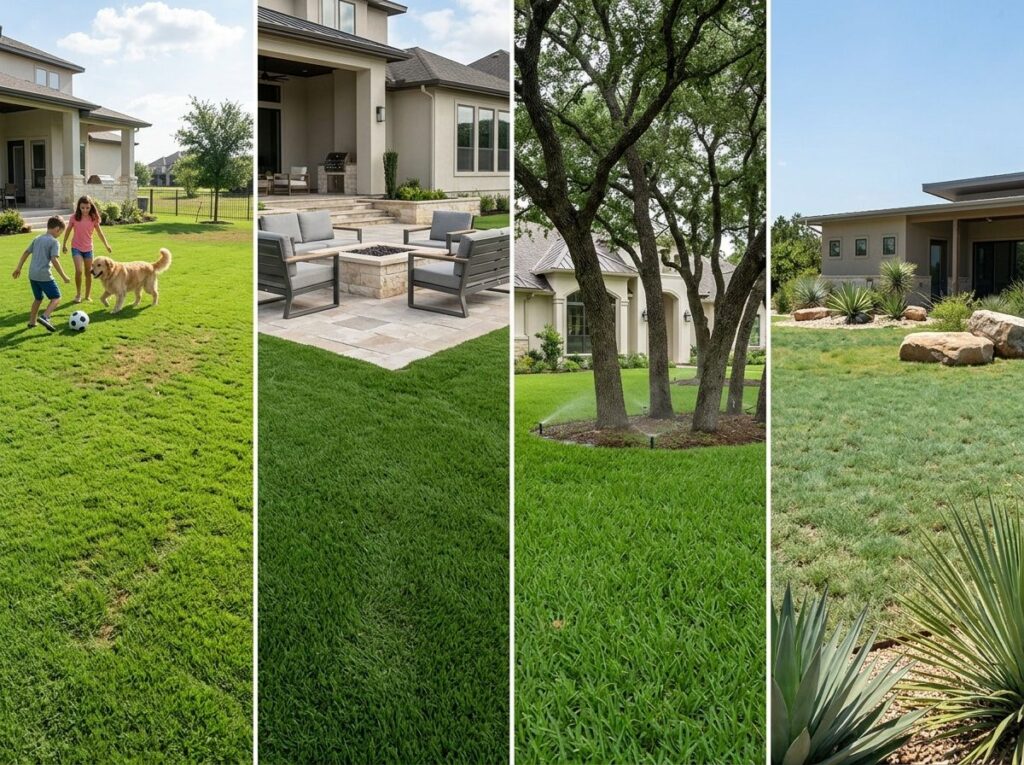
Pros and cons by grass type
PROS
- Bermuda: best value for full sun and heavy traffic; strong recovery
- Zoysia: dense, premium look; handles sun/shade depending on variety
- St. Augustine: strong shade performance under trees; looks great when irrigated
- Buffalo: very drought-tolerant; minimal input compared to other sods
CONS
- Bermuda: poor shade performance; can creep into beds without edging
- Zoysia: slower to establish and recover from damage; can test patience
- St. Augustine: needs water to thrive; lower wear tolerance in play zones
- Buffalo: not a “perfect carpet” lawn; best for open areas, not manicured looks
What price usually tracks
Here goes your text ... Select any part of your text to access the formatting toolbar.
How grass choice affects sod installation cost
Grass type affects the pallet price, but prep still determines the final total. Based on your current published installed starting pricing (3+ pallets), Bermuda and St. Augustine start around $575/pallet installed, Buffalo around $630–$645/pallet installed, and Zoysia around $650+/pallet installed (variety dependent). Before scheduling work, review our sod care policy so the project expectations are clear.
- Full pallet coverage: ~450 sq ft per pallet.
- Small jobs (1–2 pallets): add ~$50 per pallet.
- If your yard needs grading/drainage correction, prep can outweigh sod price differences.
- Ask for the exact variety name to compare pricing fairly.
Selection questions we hear on estimates
Sod comparison FAQs
Quick answers to common “which grass should I choose?” questions for San Antonio yards.
See All Frequently Asked QuestionsNo. Standing water is a drainage/grade issue. Address grading and/or Drainage Installation first, then install sod on a surface that can actually drain.
Related: How to Prepare Your Yard for Sod Installation, Signs Your Yard Has Drainage Problems, Why Standing Water Is Dangerous for Lawns & Foundations
Choosing by color/looks instead of sun and watering reality. The second biggest mistake is skipping prep—good sod can fail fast on poor soil prep or bad grade.
Related: How to Prepare Your Yard for Sod Installation, Signs Your Yard Has Drainage Problems, Best Sod for Full Sun Lawns
It can be, if you want a lower-input, natural look and you have full sun. It’s not ideal if you want a tightly manicured “show lawn” appearance.
Related: Best Sod for Full Sun Lawns, Faqs/#Is Buffalo Grass Good For A Normal Suburban Lawn
It’s often the best performer in shade, but it typically needs consistent irrigation and it doesn’t like heavy traffic. If your shaded yard is also a play zone, a shade-tolerant Zoysia may be a better fit.
Related: Best Sod for Shade Lawns, Faqs/#Is St Augustine Always The Best For Shade
Usually not successfully. Bermuda needs strong direct sun. In heavy shade it thins out, weeds move in, and you end up redoing the lawn.
Related: Best Sod for Full Sun Lawns, Faqs/#Use Bermuda Under Live Oaks
Zoysia is often the safest compromise because many varieties handle both sun and partial shade. The exact variety matters, so match it to your sun hours and tree canopy.
Related: Best Sod for Full Sun Lawns, Best Sod for Shade Lawns, Faqs/#If My Lawn Gets Mixed Sun And Shade Which Is Safest
Next step
Get the right sod recommendation for your yard
We’ll look at sun exposure, irrigation coverage, and drainage behavior—then recommend the sod type and prep scope that makes sense for long-term results.