
Shrubs Lamb’s Ear
(Stachys byzantina)
Other Common Names: Woolly Betony
Bees
Deer Resistant
Drought-Tolerant
Evergreen
Full Sun
Recommended Use: Ideal for dry, sunny borders needing soft, silver foliage for year-round texture.
Introduction to Lamb’s Ear
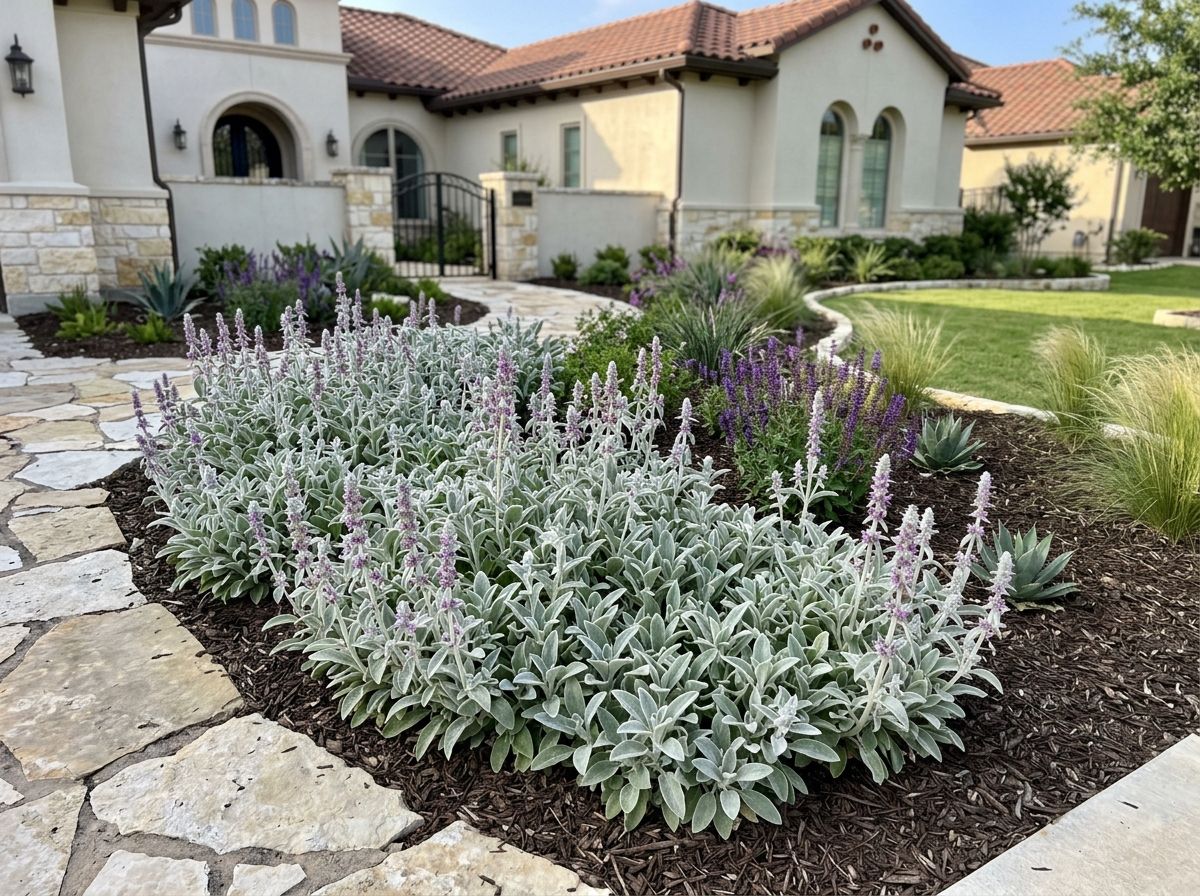
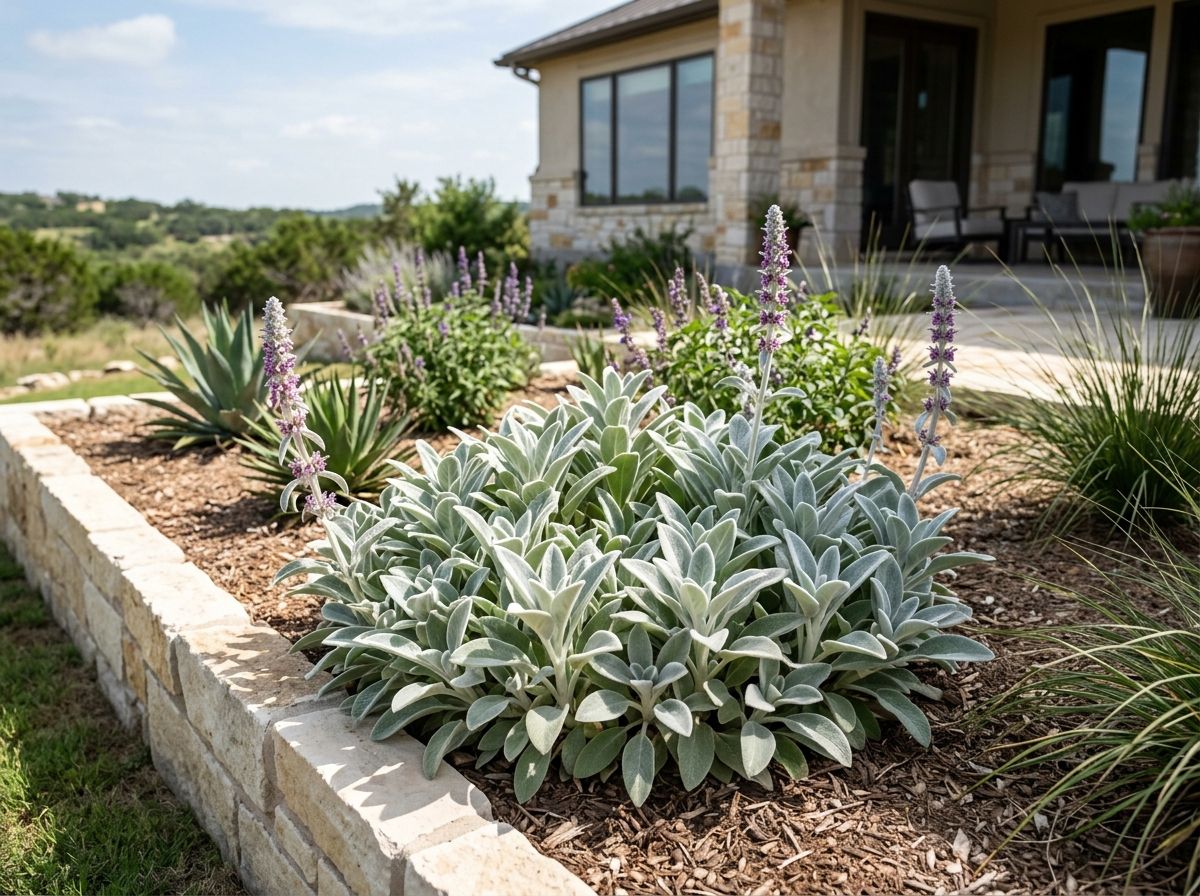
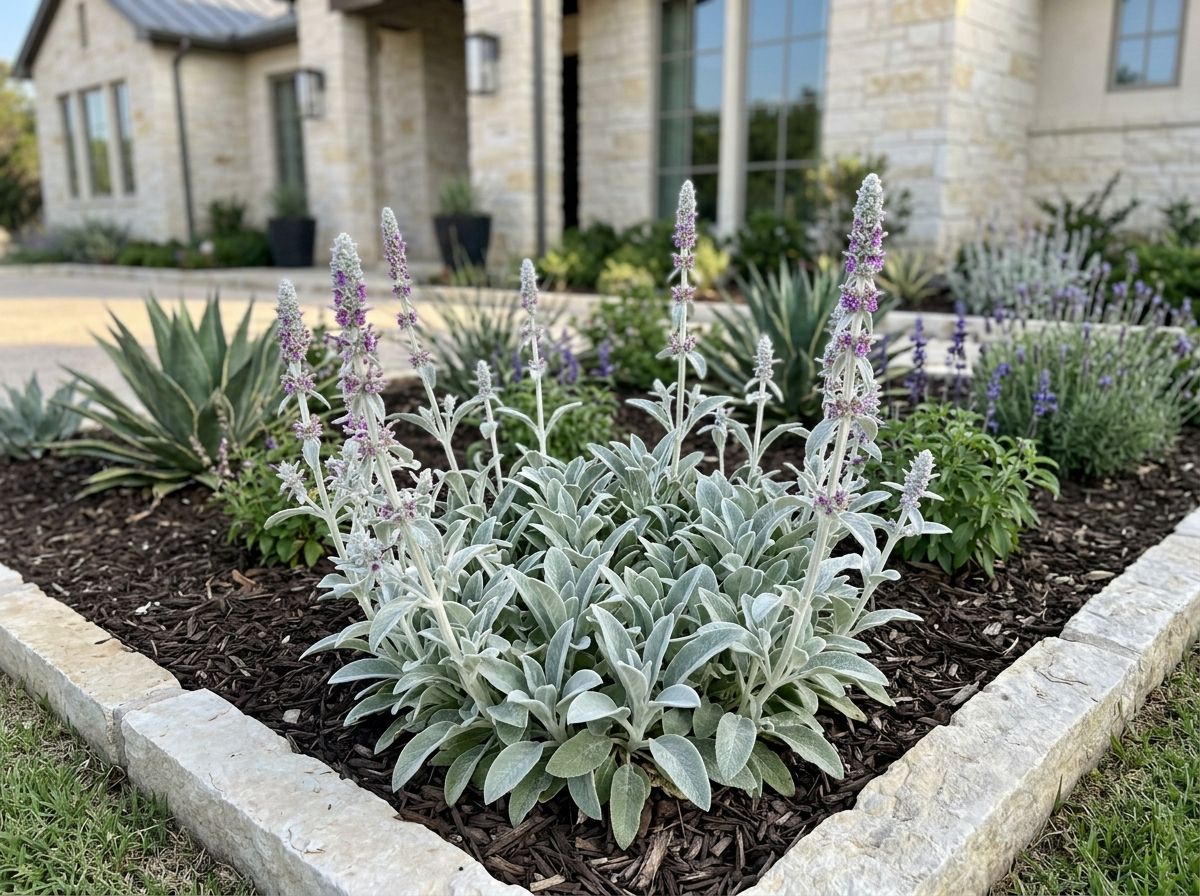
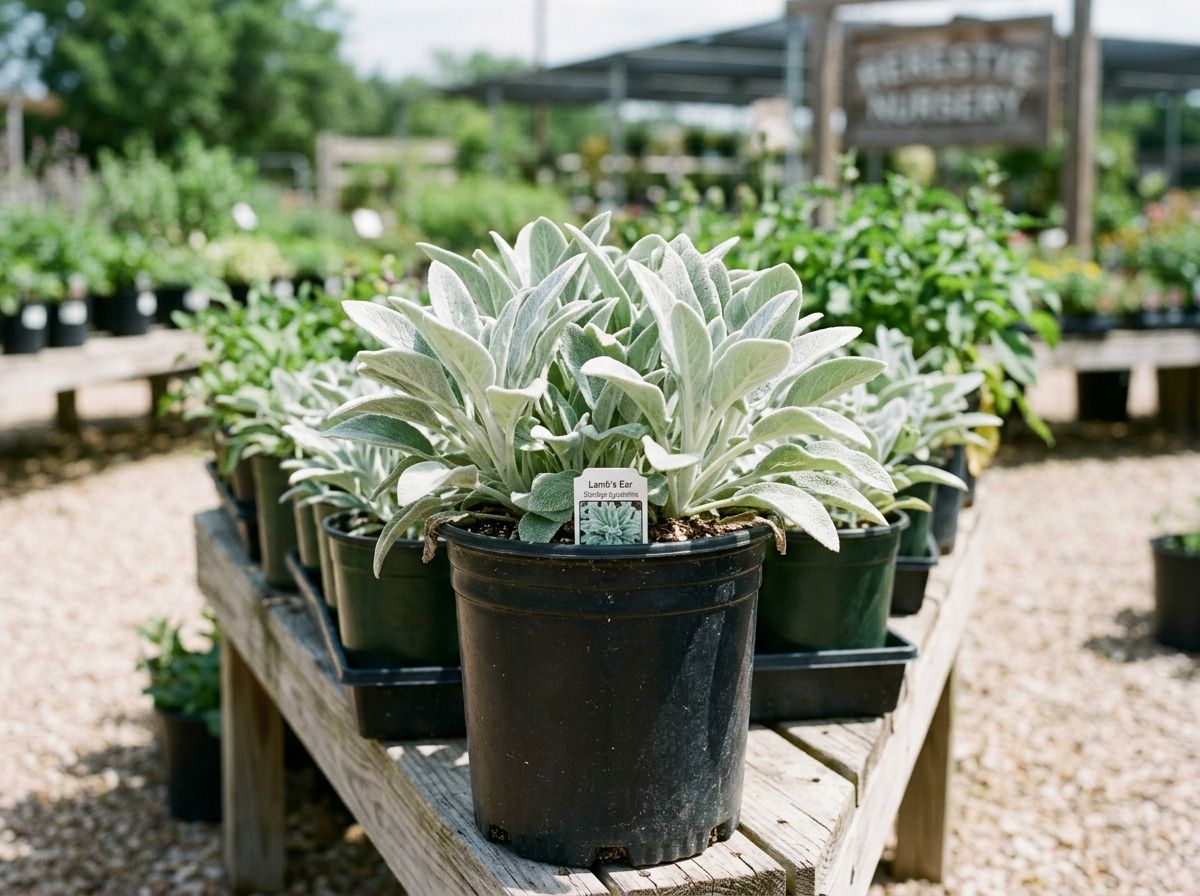
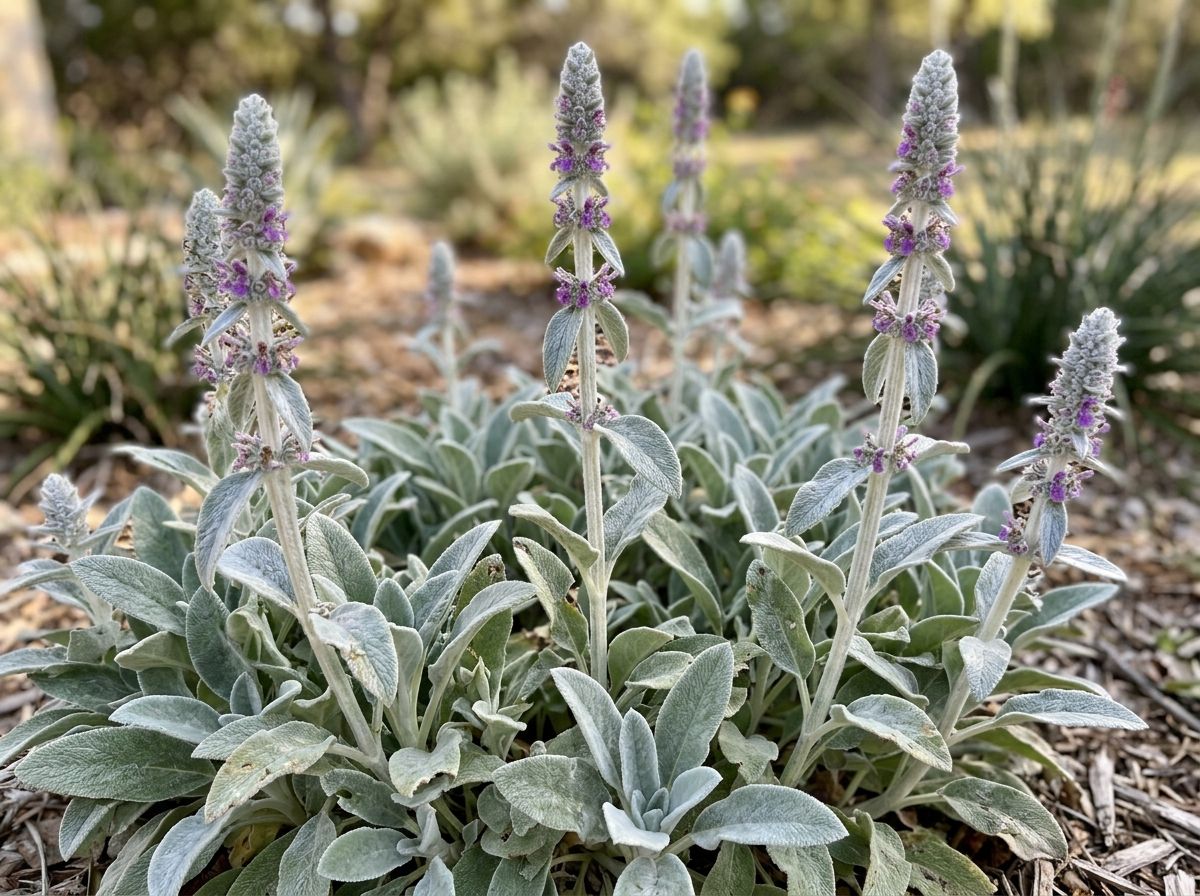
Lamb’s Ear, scientifically known as Stachys byzantina, is a popular perennial appreciated for its striking silver-gray foliage and dense, velvety leaves that resemble a lamb’s ear, giving the plant its common name. It typically grows to a height of 12 to 18 inches with a spread of about 12 inches, making it an excellent ground cover. The plant occasionally produces spikes of small, purple flowers in late spring to early summer, though it is primarily grown for its attractive foliage. Lamb’s Ear is commonly used in borders, rock gardens, and as an edging plant due to its unique texture and color, which contrasts beautifully with other greenery.
Maintenance and Care
Lamb’s Ear is relatively low-maintenance, thriving with minimal care. It prefers well-drained soil and can tolerate poor soil conditions, making it versatile for different garden settings. This plant requires full sun to partial shade; however, in hotter climates, some afternoon shade can prevent leaf scorch. Watering should be moderate; while Lamb’s Ear is drought-tolerant once established, it’s best to water deeply but less frequently to maintain optimal health. Pruning is minimal; simply remove spent flower spikes and trim any dead or diseased leaves to promote airflow and prevent mold. It is generally resistant to pests and diseases, though overly wet conditions can lead to rot or fungal issues.
Quick Facts
– Hardiness Zones: 4-8
– Growth Rate: Moderate
– Deer Resistance: Yes
– Pollinator Attraction: Occasionally attracts bees to its blooms
– Special Characteristics: Renowned for its fuzzy, soft leaves which add a tactile element to any garden; excellent drought tolerance once established.
Want this product installed? Check out our page to view pricing and other details.
Related Products
Planting Role / Visual Structure > Evergreen Backbone
Planting Role / Visual Structure > Softening / Groundcover Blend
Wildlife Garden Blend
Ready When You Are
Get a Clear Plan for Your Yard
Tell us what you’d like to improve. We’ll ask a few questions, review your project, and let you know the best next step — no pressure and no guesswork. Fill out the form for a free quote.