
Shrubs Trailing Juniper
(Juniperus horizontalis)
Other Common Names: Creeping Juniper, Prostrate Juniper
Birds
Drought-Tolerant
Evergreen
Full Sun
Screening/Privacy
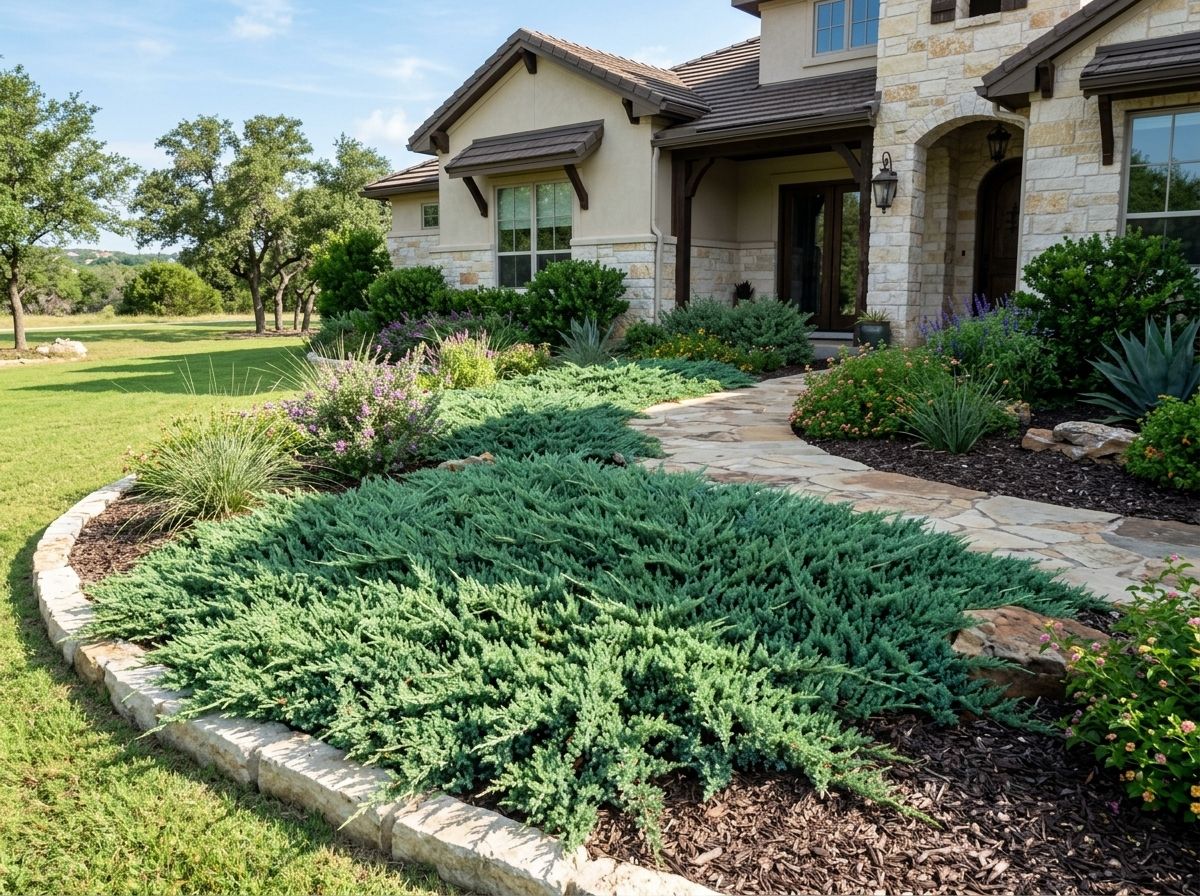
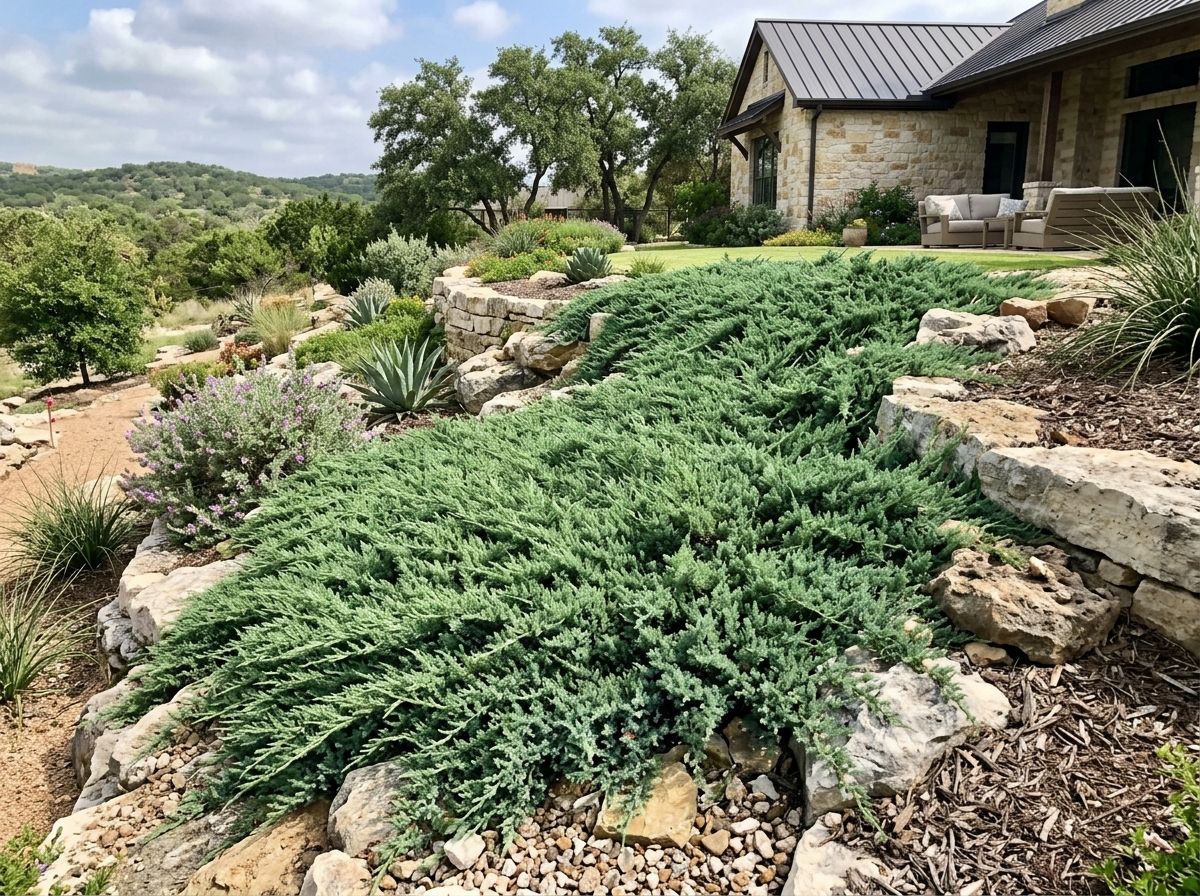
Recommended Use: Perfect for erosion control on slopes or retaining walls needing a hardy, evergreen, low-growing spread.
Plant Description
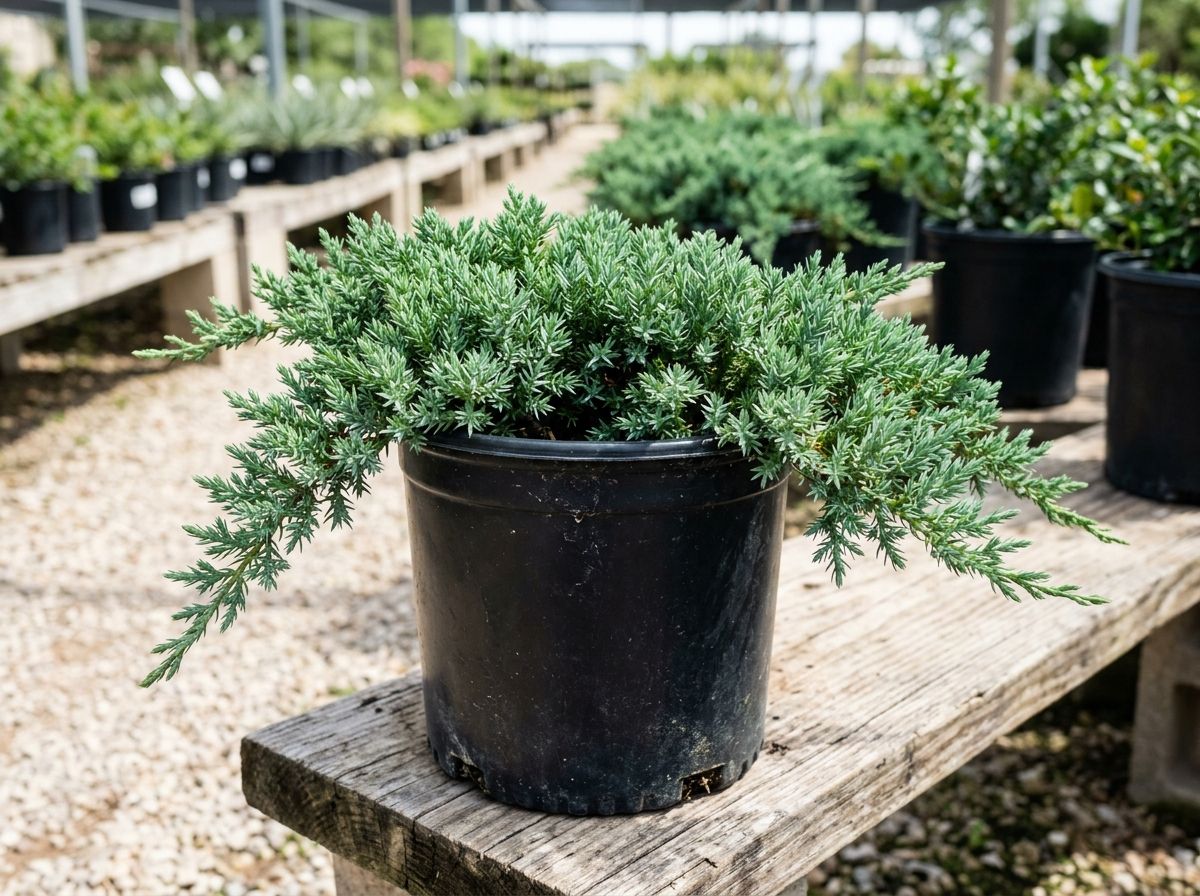
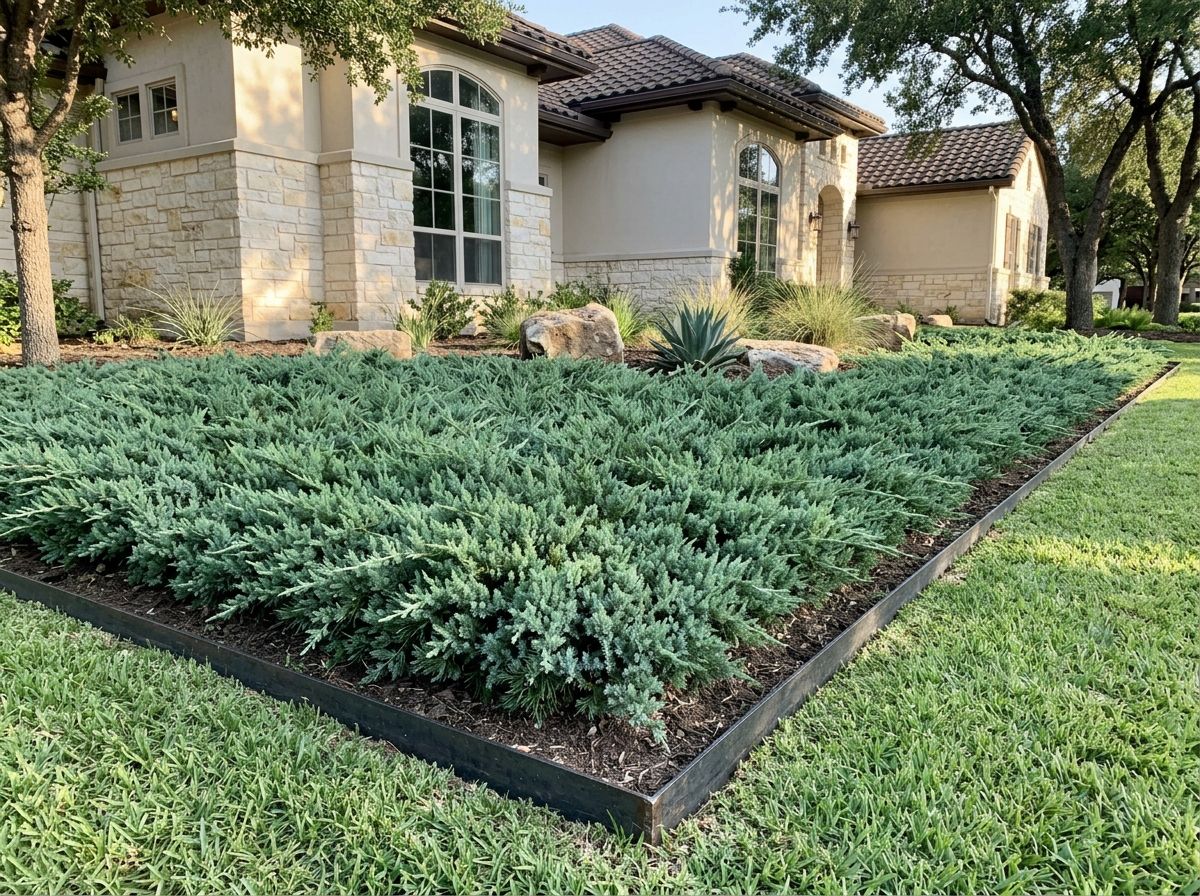
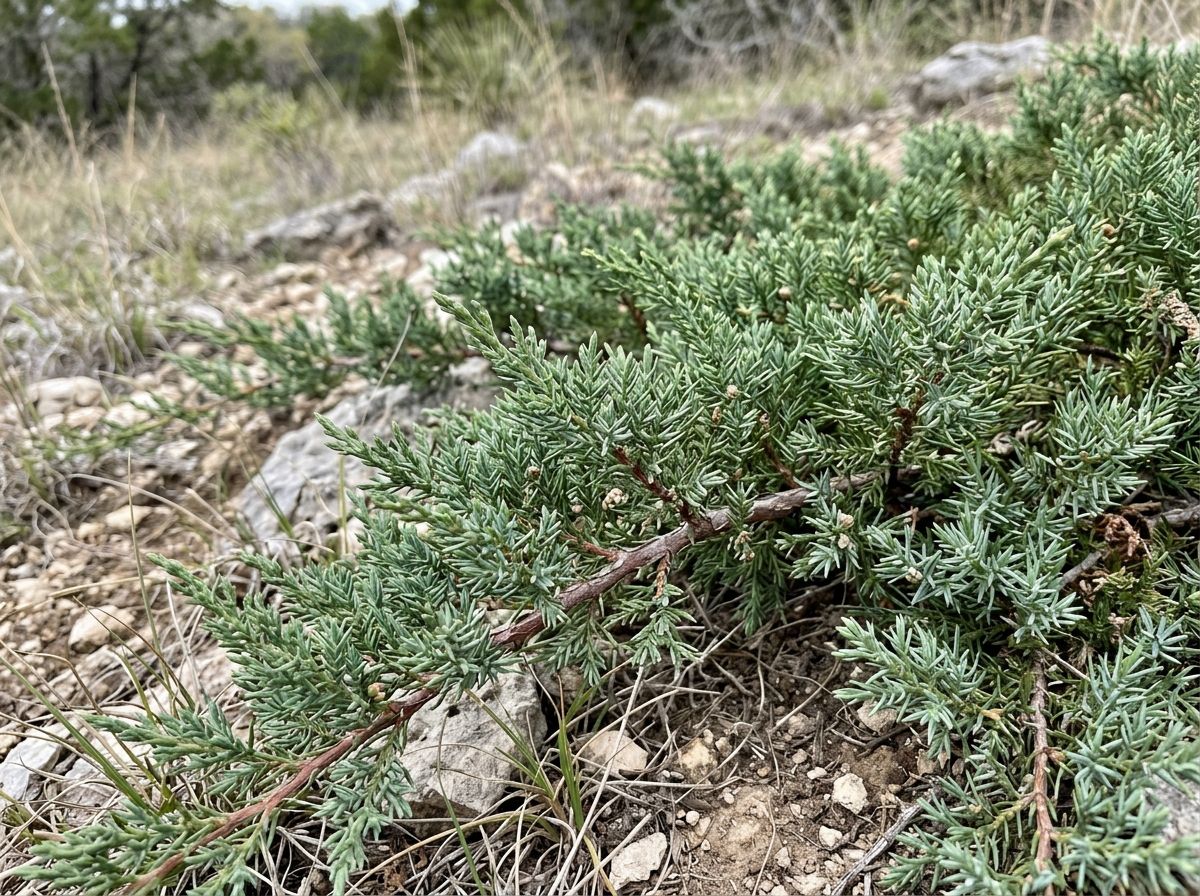
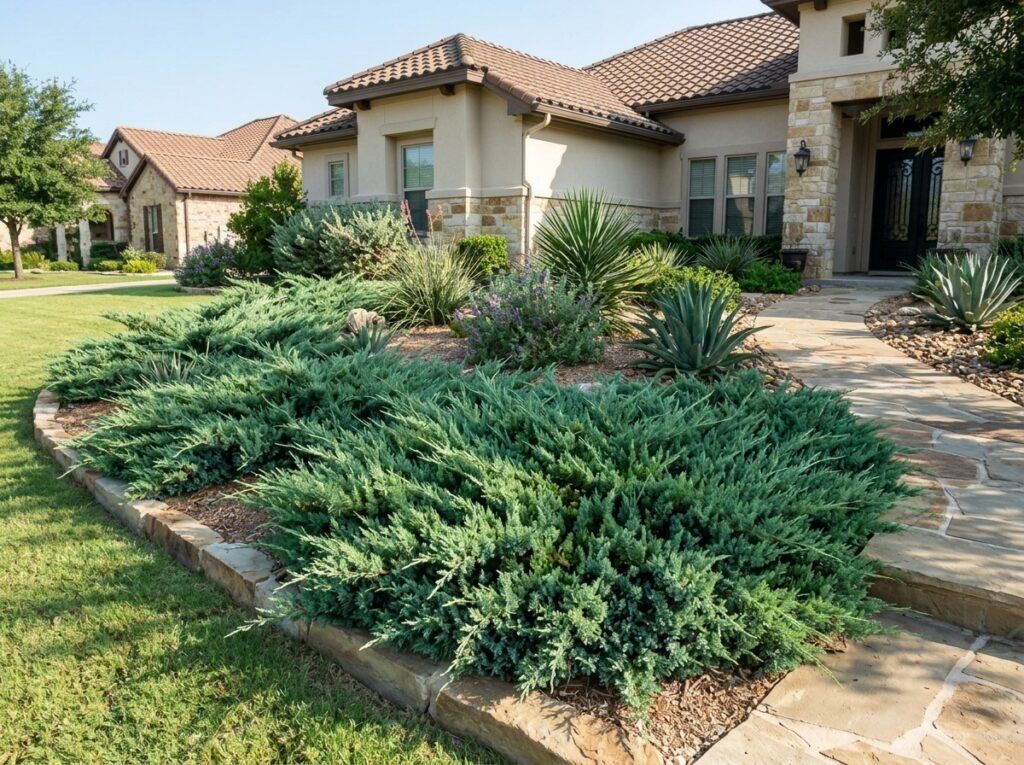
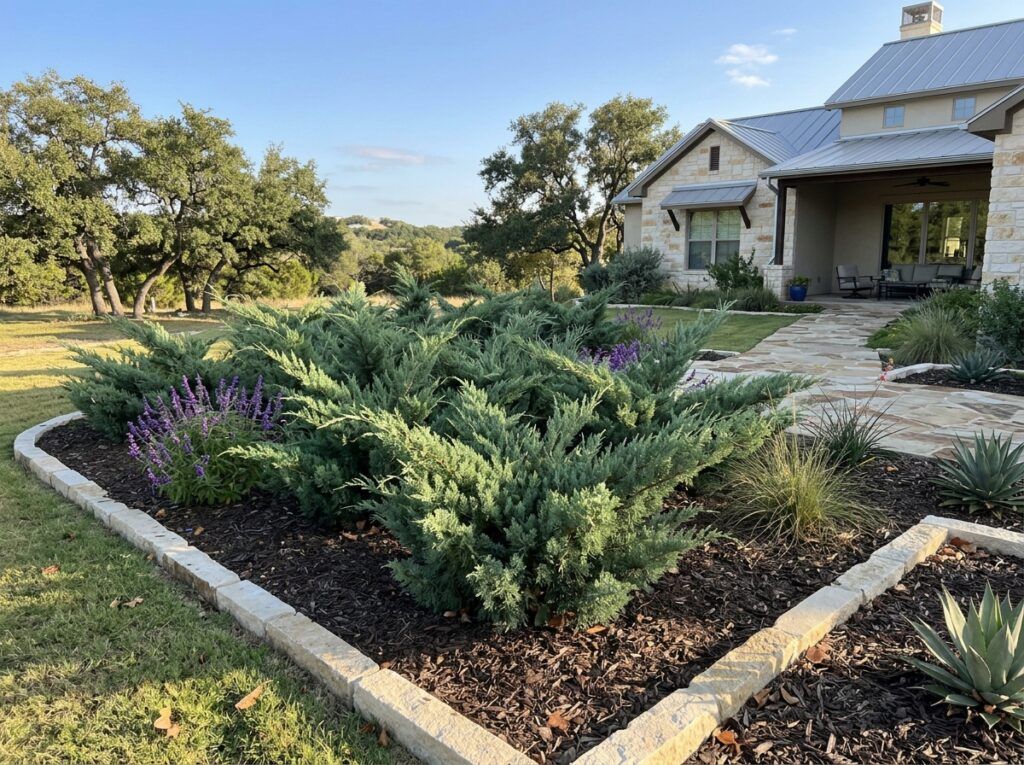
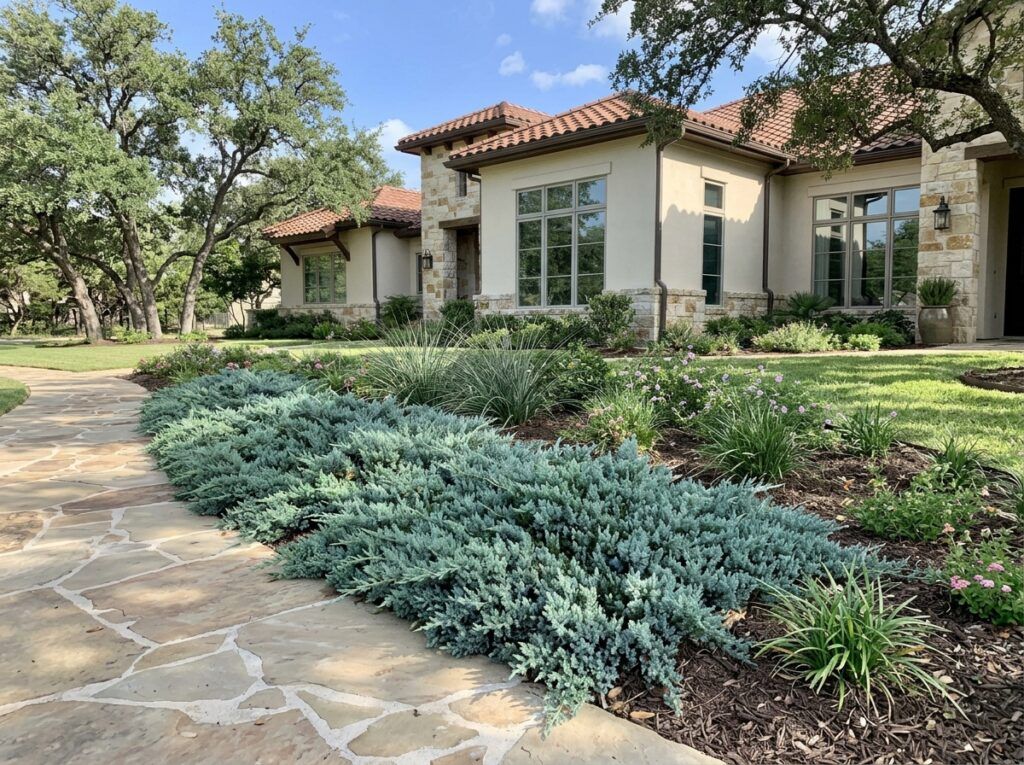
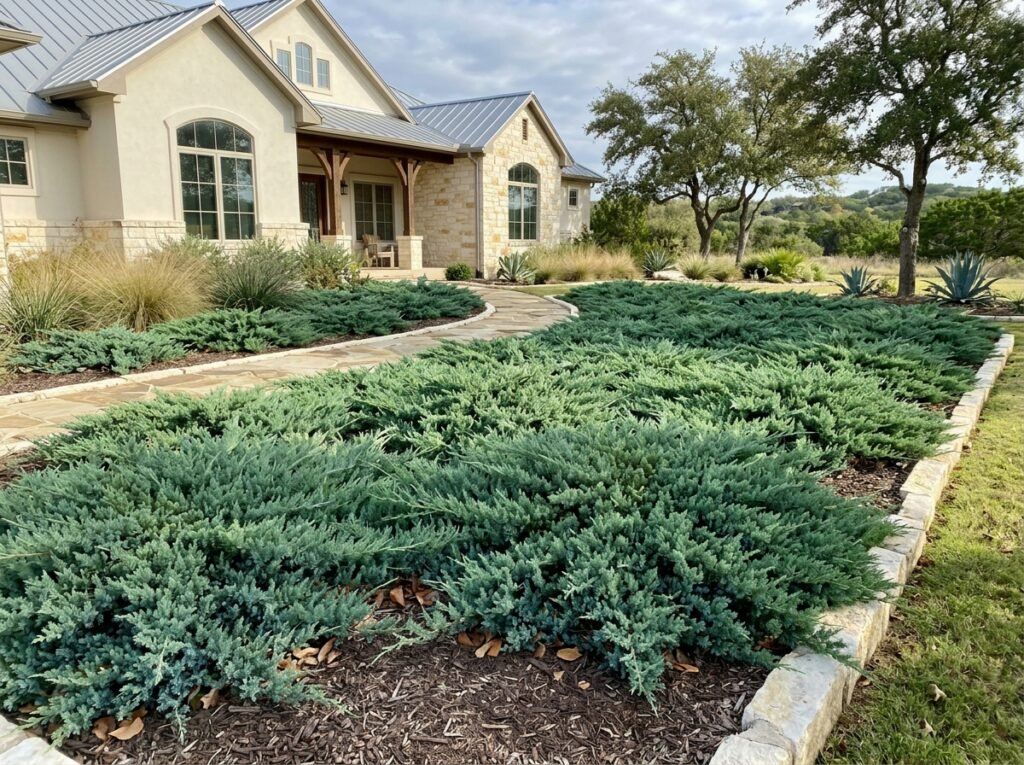
Trailing Juniper, scientifically known as Juniperus horizontalis, is a low-growing evergreen shrub admired for its attractive foliage and adaptability in various landscape settings. This ground-hugging plant typically reaches a height of 6 to 18 inches while spreading 8 to 10 feet wide, creating a lush, dense mat of greenery. Trailing Juniper displays a range of foliage colors, from silvery-blue to green, often with a purple tint in colder months. It is widely used in landscaping as a ground cover on slopes to prevent erosion, in rock gardens, and as an edging plant along pathways and borders. Its versatile nature makes it suitable for a variety of design applications, and it is often chosen for its low-maintenance beauty.
Maintenance
Trailing Juniper thrives in well-drained soil and requires minimal watering once established, making it drought-tolerant. It prefers full sun exposure but can also tolerate partial shade. The plant does best in sandy or rocky soils, avoiding wet, humid areas that can lead to root rot. Pruning is generally unnecessary, except to remove dead or damaged branches and to maintain its shape. Juniperus horizontalis is relatively resistant to pests and diseases, although occasional issues with mites or blight may occur in less than ideal conditions.
Quick Facts
– Hardiness Zones: 3-9
– Growth Rate: Slow to moderate
– Special Characteristics: Deer resistant
– Several varieties available
– Not suitable for wet, humid areas
– Sun exposure: Full sun to partial shade
Want this product installed? Check out our page to view pricing and other details.
Related Products
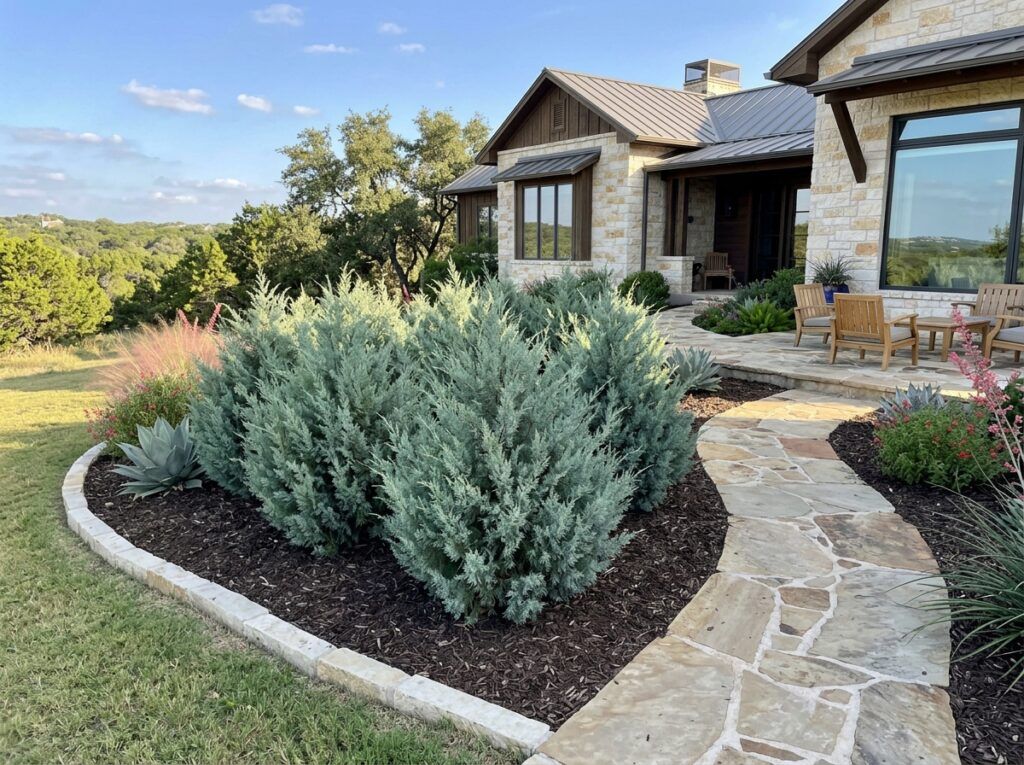
Planting Role / Visual Structure > Evergreen Backbone

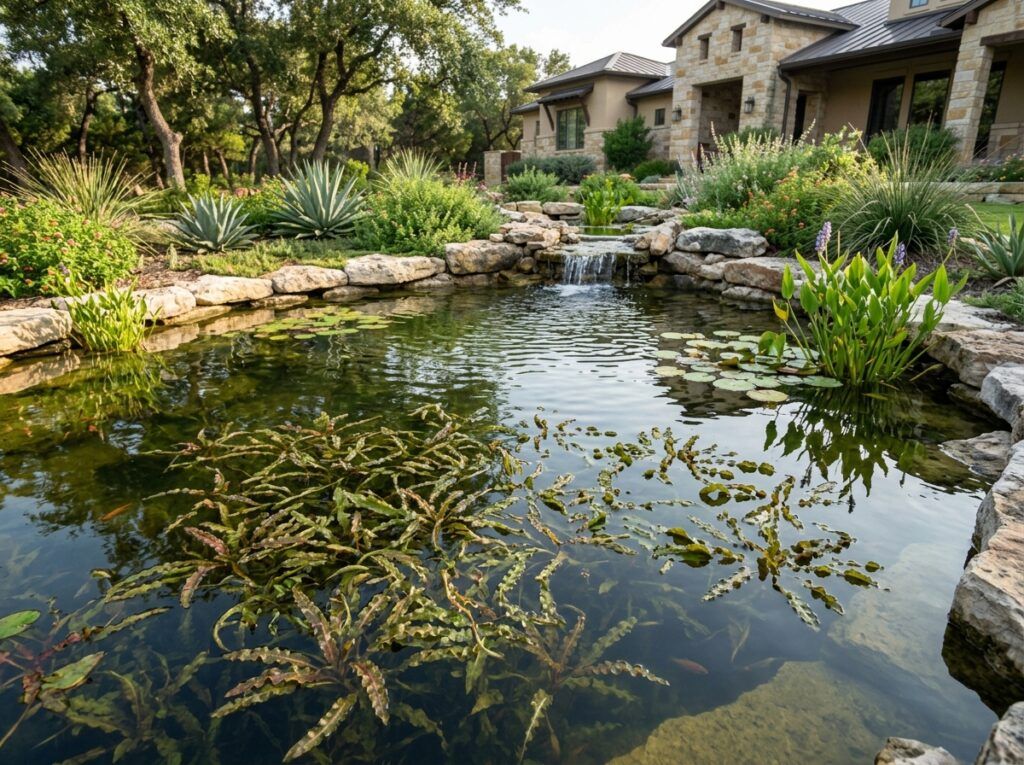
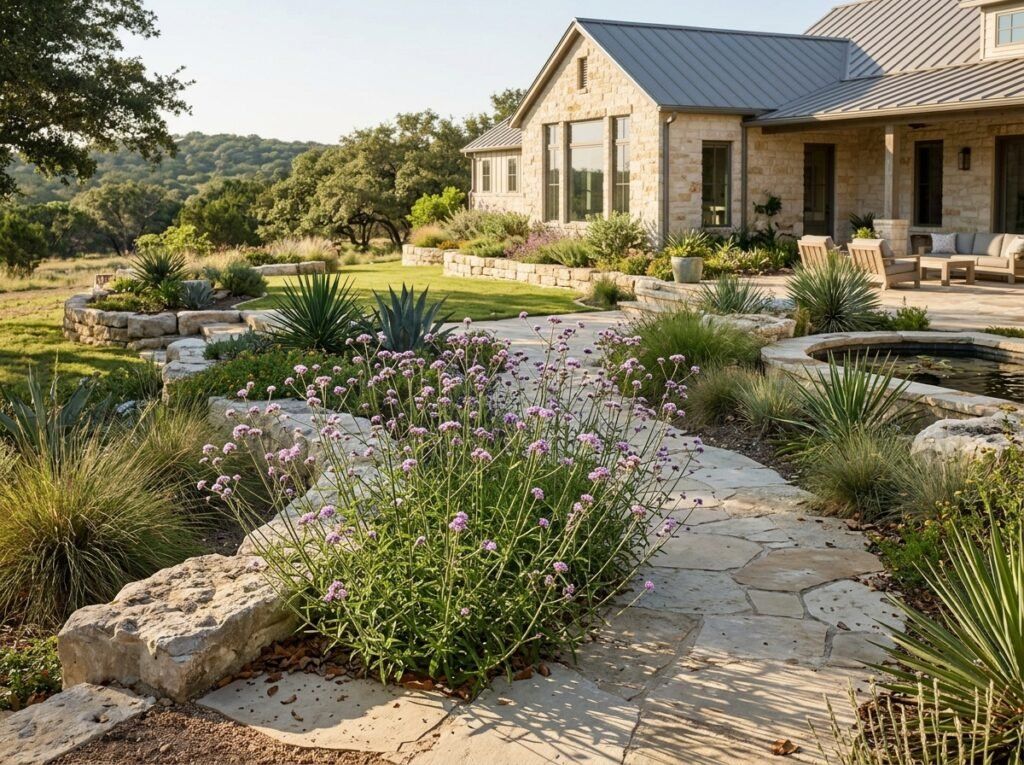
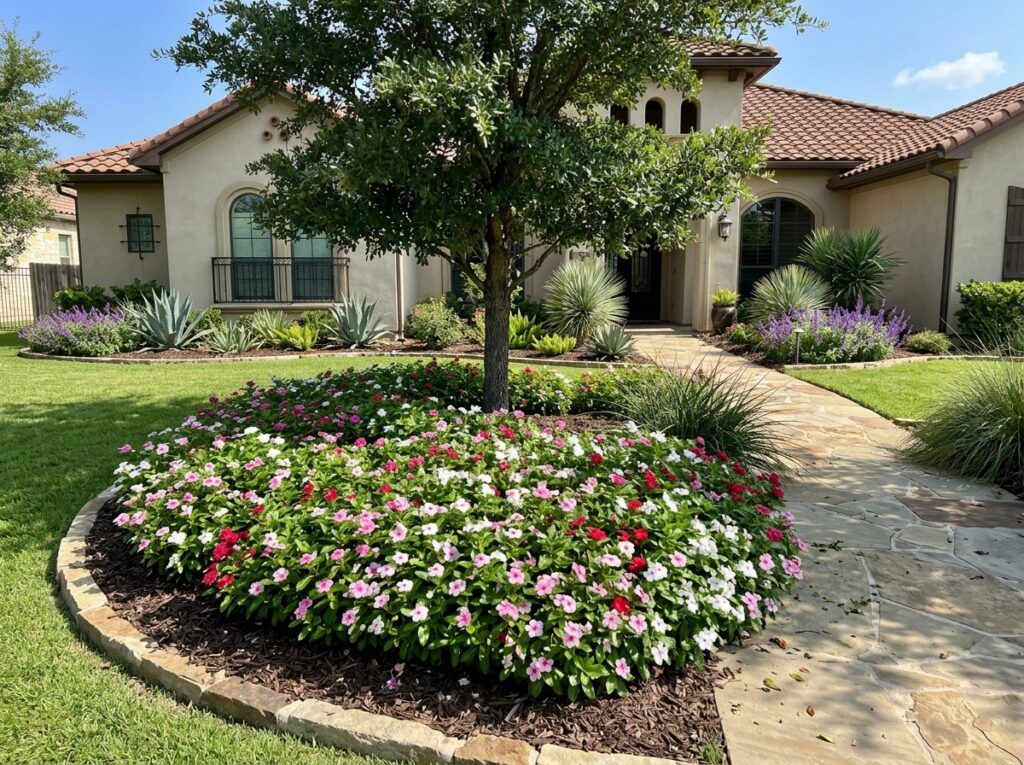
Planting Role / Visual Structure > Softening / Groundcover Blend

Ready When You Are
Get a Clear Plan for Your Yard
Tell us what you’d like to improve. We’ll ask a few questions, review your project, and let you know the best next step — no pressure and no guesswork. Fill out the form for a free quote.