
Palms Texas Palmetto
(Sabal mexicana)
Other Common Names: Mexican Palmetto, Texas Sabal Palm
Birds
Drought-Tolerant
Evergreen
Freeze Hardy
Full Sun
Recommended Use: Best for large, naturalized plantings needing a native palm with bold texture.
Introduction to Texas Palmetto
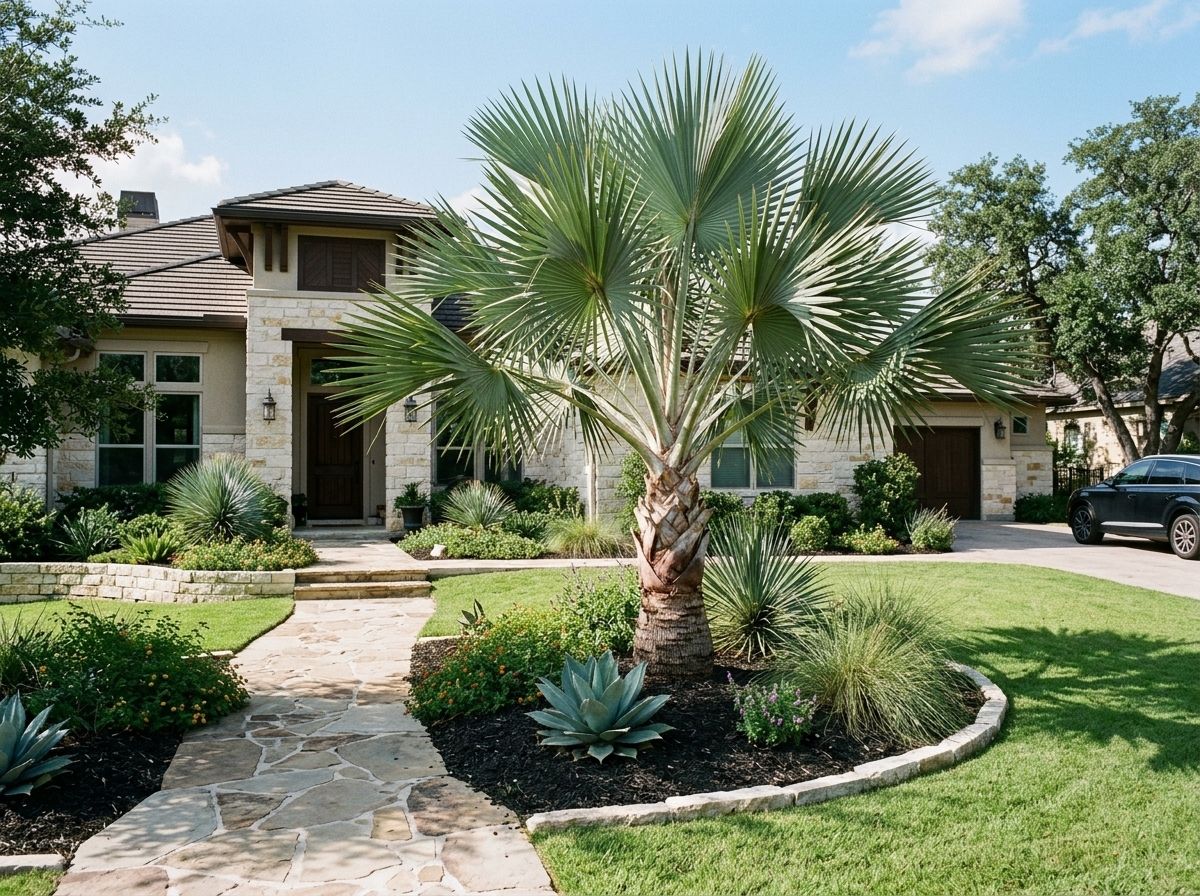
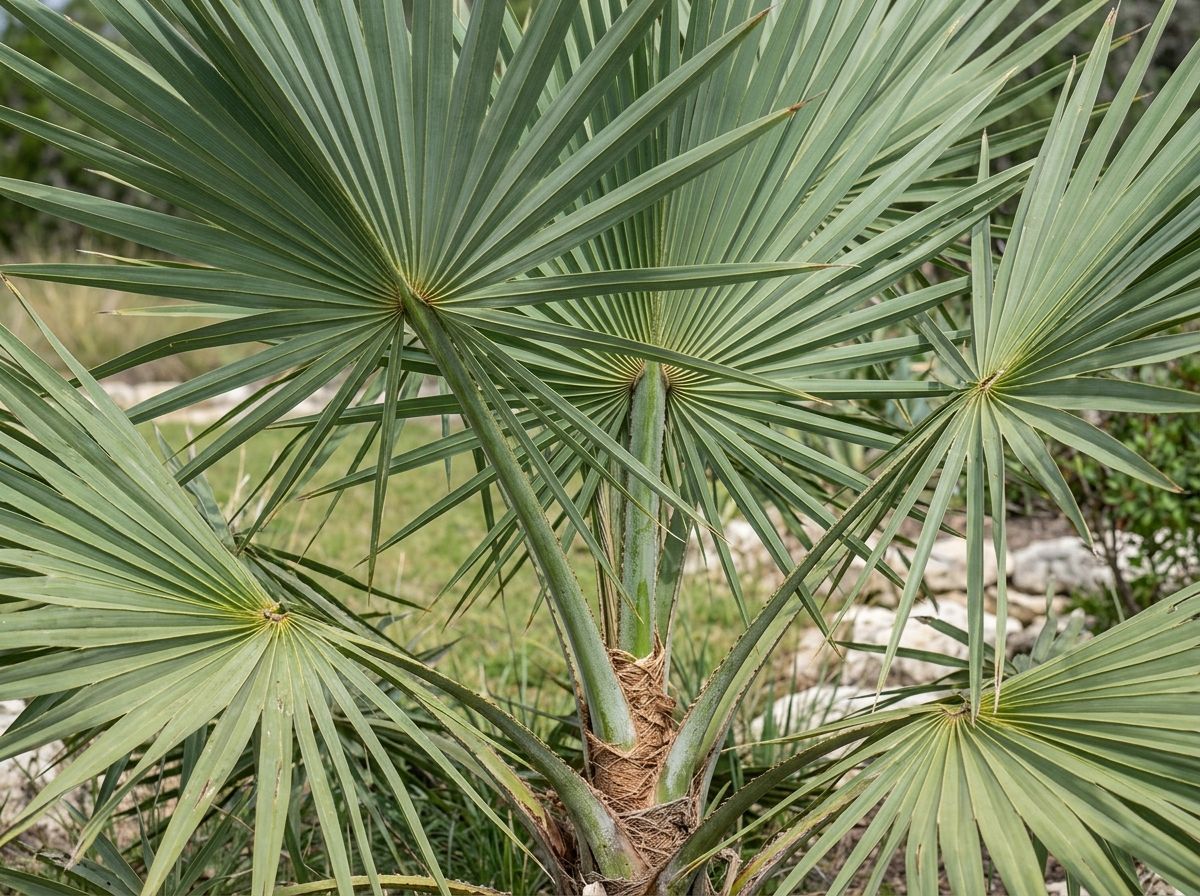
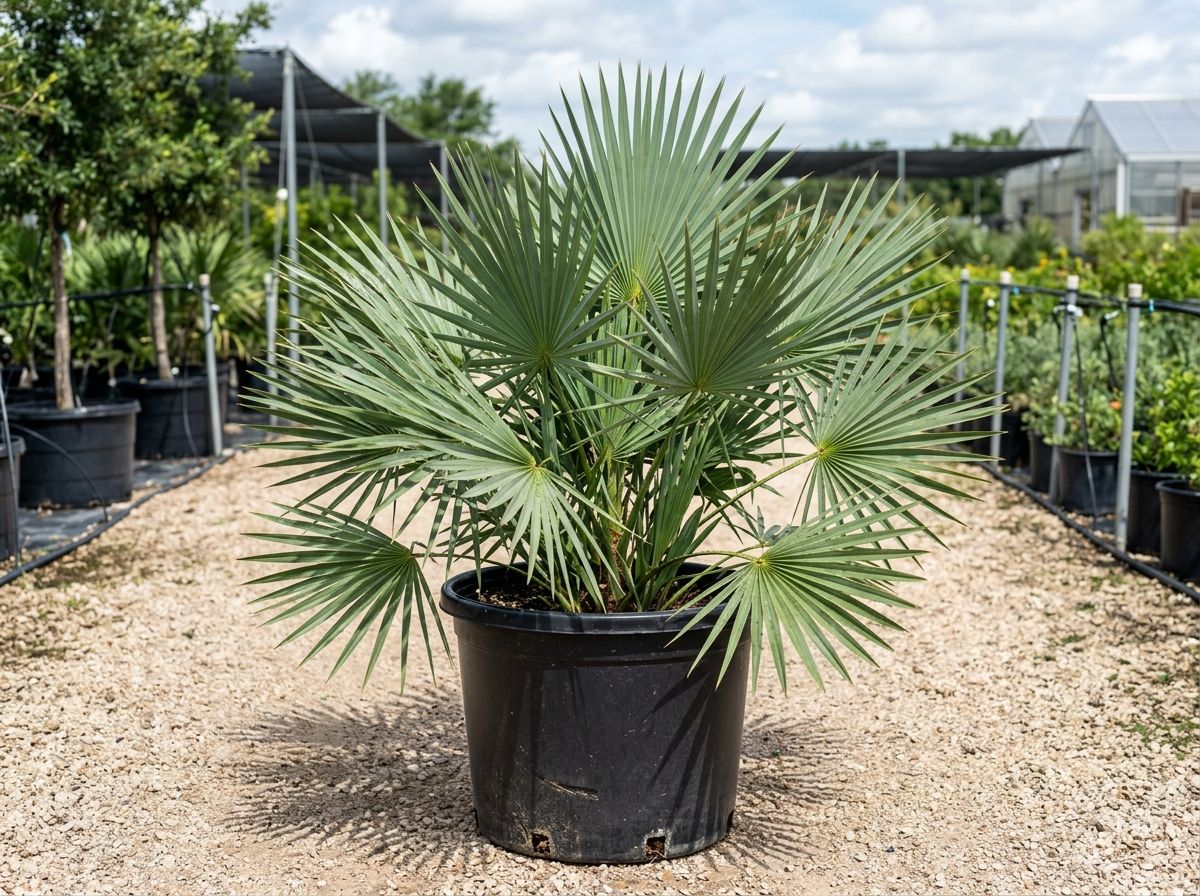
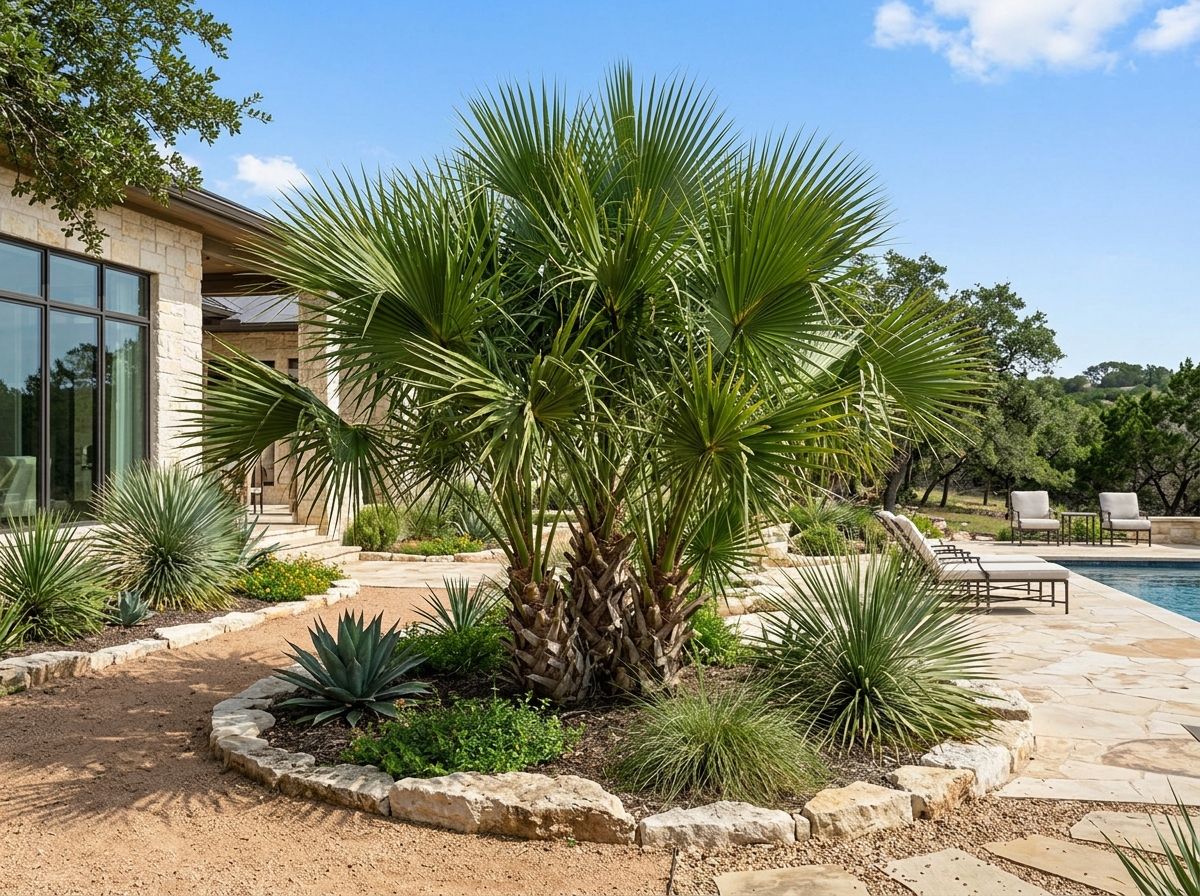
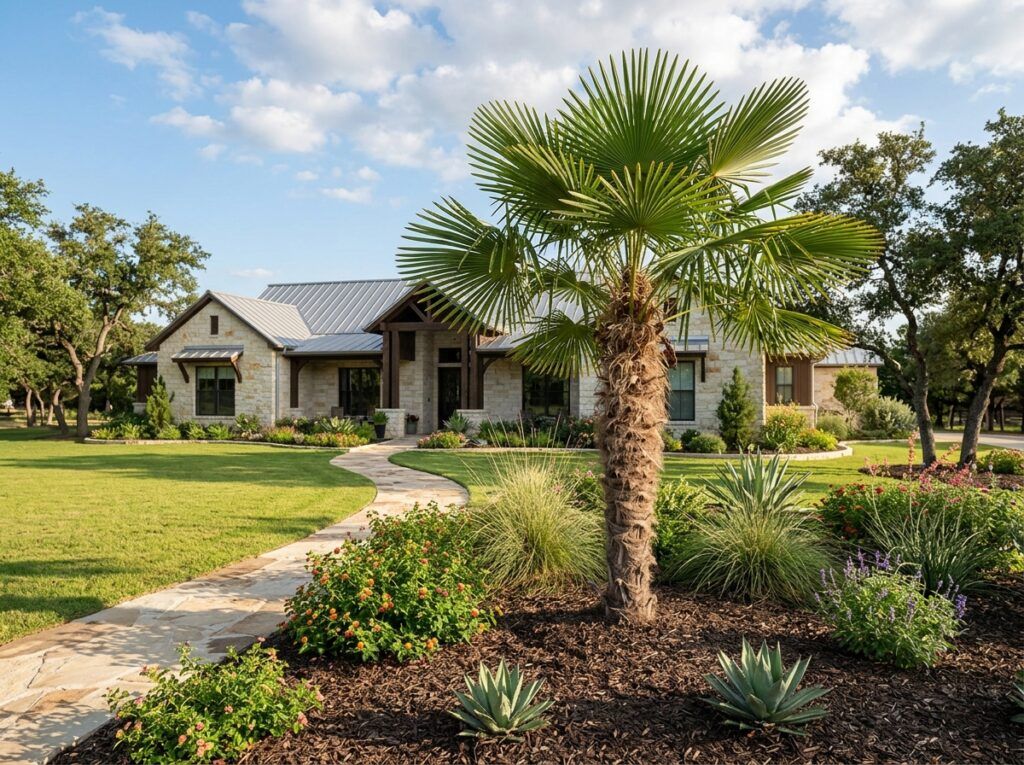
The Texas Palmetto is a striking native palm valued for its tropical look and adaptability. It grows as a single-trunk palm, reaching heights between 40 and 50 feet, with a mature width of 15 to 20 feet. Its large, fan-shaped, evergreen fronds have a lush green color and a coarse texture that provides bold visual interest in landscapes.
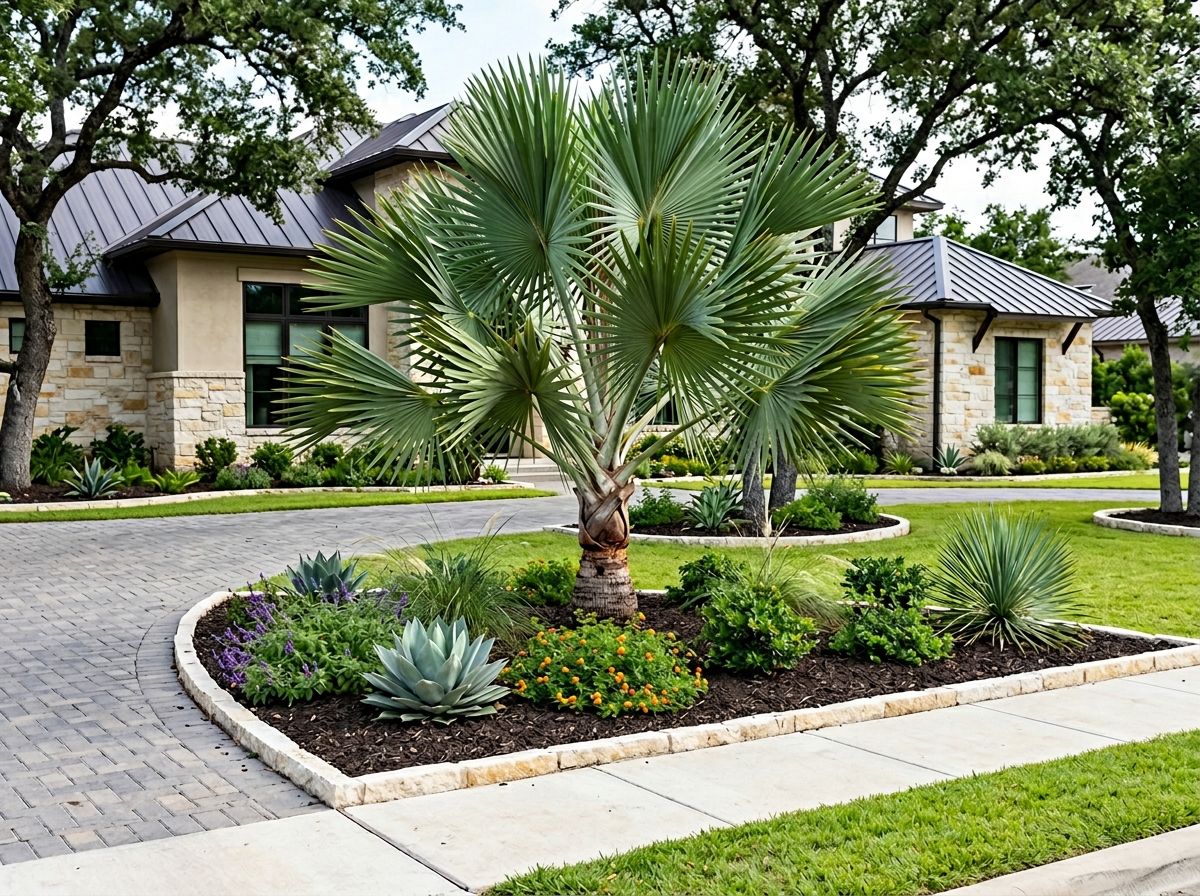
This palm is an excellent choice for creating naturalized or tropical-style landscapes, serving as a strong accent or focal point. Its tall stature and dense canopy make it ideal for providing shade or forming a wind-resistant barrier. It thrives best in full sun to partial shade environments. While the Texas Palmetto produces white flowers, they are not typically the main attraction but add subtle seasonal interest.
Maintenance
Texas Palmetto is known for its low-maintenance nature once established. It prefers well-drained soils but adapts well to sandy, loamy, and other soil types common in San Antonio landscapes. Regular watering supports healthy growth, particularly during dry periods; however, the palm is drought-tolerant once mature.
Pruning is minimal and mainly involves removing dead or damaged fronds to keep the palm neat and healthy. It is resistant to most pests and diseases, making it a dependable option for homeowners seeking a hardy, attractive palm without extensive care needs.
Quick Facts
- Hardiness Zones: 8b to 11 (suitable for San Antonio’s zone 8b)
- Growth Rate: Moderate
- Evergreen: Yes
- Flower Color: White (seasonal but not prominent)
- Drought Tolerance: High once established
- Deer Resistance: Yes
- Sunlight Preference: Full sun to partial shade
- Watering Needs: Moderate; drought-tolerant once mature
- Wildlife Friendly: Attracts pollinators and provides habitat
Suggestions for San Antonio Homeowners
- Soil Adaptability:
Texas Palmetto grows well in San Antonio’s mix of alkaline and clay soils, especially if amended for drainage. Incorporate organic matter to improve soil texture and fertility if needed. - Watering Advice:
Water regularly during the first year to help establish roots. Afterward, reduce watering frequency; this palm tolerates San Antonio’s hot, dry summers well. Avoid overwatering to prevent root rot. - Heat and Drought Tolerance:
This palm is well-suited for San Antonio’s hot climate and can withstand drought conditions once established. It helps maintain green landscapes even in challenging weather. - Weed Suppression & Spread:
The Texas Palmetto does not spread aggressively, making it manageable in yard settings. It does not act as a ground cover but works best as a focal or specimen plant. - Pet Safety:
According to current reliable sources, Texas Palmetto is not listed as toxic to pets. However, avoid allowing pets to consume fallen fruit to prevent potential messiness.
The Texas Palmetto is a resilient, beautiful native palm perfect for San Antonio homeowners who want a low-maintenance, drought-tolerant tree with a tropical feel.
Want this product installed? Check out our page to view pricing and other details.
Related Products
Planting Role / Visual Structure > Evergreen Backbone
Planting Role / Visual Structure > Focal Plant Palette
Wildlife Garden Blend

Ready When You Are
Get a Clear Plan for Your Yard
Tell us what you’d like to improve. We’ll ask a few questions, review your project, and let you know the best next step — no pressure and no guesswork. Fill out the form for a free quote.