
Decide if lighting belongs in your next phase of improvements
Is Landscape Lighting Worth It for San Antonio Homes?
Landscape lighting is not just about looks. Done correctly, it can improve safety, highlight the work you have already done in your yard, and make patios and outdoor areas usable long after sunset. This guide walks through when lighting is a smart investment—and when it makes sense to wait or phase it in.
Request Your Free EstimateWorth it when you value safety, curb appeal, and outdoor living
When Is Landscape Lighting Truly “Worth It”?
Landscape lighting tends to be worth it for San Antonio homeowners who care about three things: safer walkways and steps at night, better curb appeal, and more usable time outside on patios and backyards. If you routinely come home after dark, entertain outdoors, or have guests navigating uneven grades, a professional system solves real, everyday problems—not just aesthetics.On the other hand, if your yard is still under construction, or you rarely use your outdoor spaces at night, it may make sense to finish core projects first—such as drainage, Landscape Bed Installation, or Retaining Wall Installation—and treat lighting as a second phase.This guide will help you weigh your own routine, property layout, and budget so you can decide whether a low-voltage LED Landscape Lighting Installation should be part of your near-term plan or kept on the future list.
- Lighting is most valuable when you use outdoor spaces after dark or arrive home at night
- Professional systems provide consistent, low-glare light that makes walkways, steps, and grade changes safer
- Well-designed lighting highlights architecture, trees, and beds you have already invested in
- If larger projects are unfinished, lighting can be phased in after drainage, grading, or new sod are complete
Start with how you use the property—not with fixture counts
How to Decide If Landscape Lighting Is Right for Your Home
Instead of asking, “Is lighting worth it?” a better question is, “What problems do I want solved after dark?” When you answer that clearly, it becomes easier to see whether a professionally designed lighting system belongs in your next project phase.
1. Nighttime safety and navigation
Many San Antonio homes have steps, grade changes, and long walks from the driveway or street to the front door. In those situations, lighting is not just decorative—it is a safety tool.
- Lights at entries, steps, and walkways help guests see where they are going and reduce the risk of trips and falls.
- Soft, low-glare lighting makes it easier to carry groceries, walk pets, or welcome visitors after dark.
- Homes with new Sod Installation, fresh beds, or stone borders benefit from defined edges that are easier to see at night.
If you or your family frequently arrive home after sunset, or if you have older family members or guests, the safety aspect alone often justifies the investment in Landscape Lighting Installation.
2. Curb appeal and highlighting existing investments
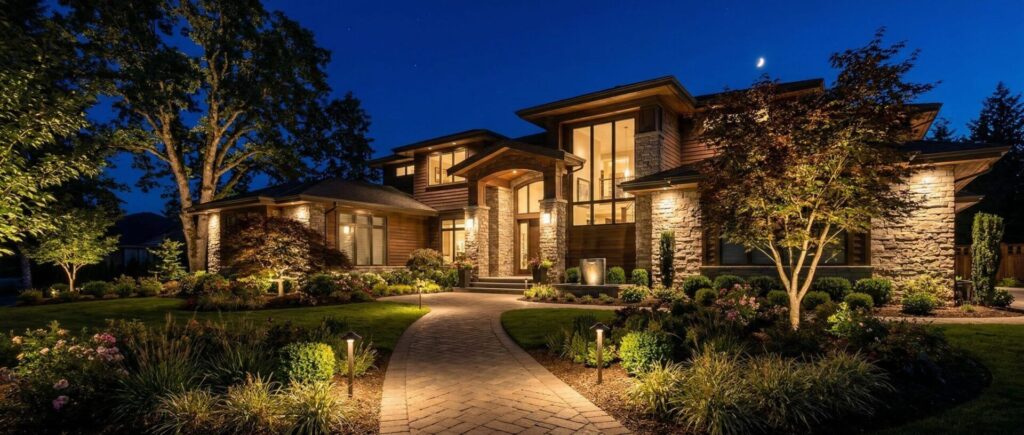
Lighting can be one of the most cost-effective ways to showcase work you have already done outside. If you have invested in Landscape Bed Installation, specimen trees, or upgraded hardscape, these features disappear into the dark without lighting.
- Uplights on trees and architectural elements draw the eye to the strongest parts of the property.
- Soft wash lighting on stone, stucco, or brick can make the home look finished and welcoming after dark.
- Accenting retaining walls, steps, and borders adds depth and structure to the landscape at night.
In established neighborhoods and higher-end areas, a well-designed lighting system can help your property keep pace with nearby homes and present better in real estate photos and evening showings.
For lighting component planning, compare classic path light with the areas you want to illuminate.
For lighting component planning, compare wall cap hardscape light with the areas you want to illuminate.
For lighting component planning, compare smart timer hub with the areas you want to illuminate.
3. Outdoor living and comfort in San Antonio’s climate
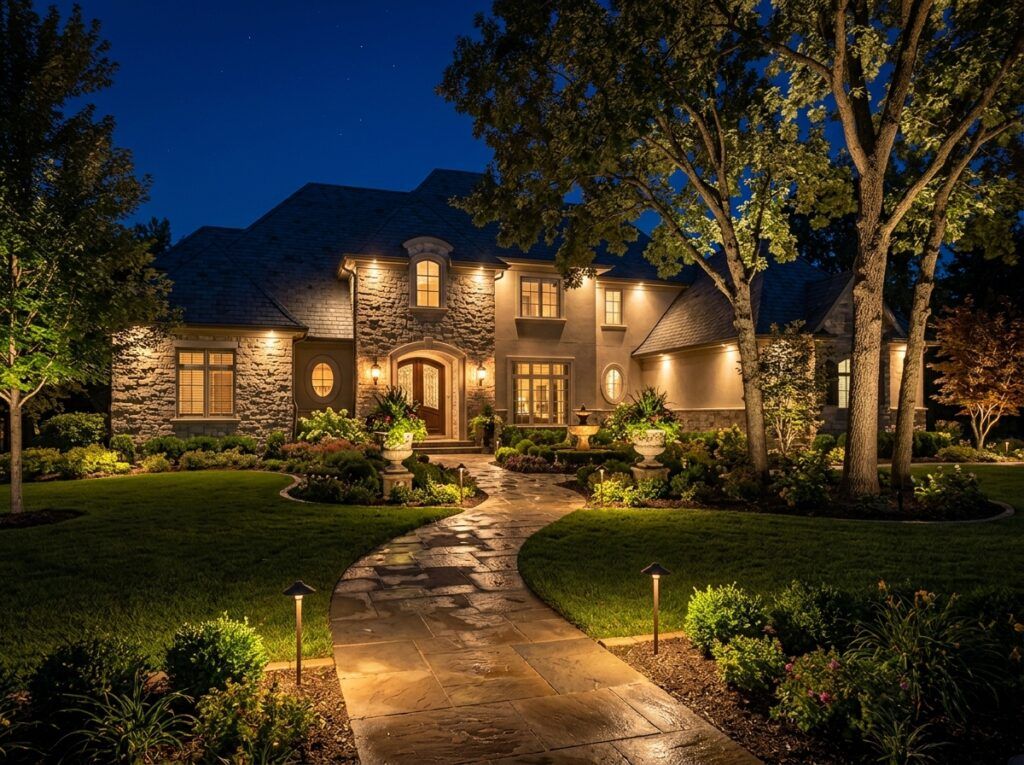
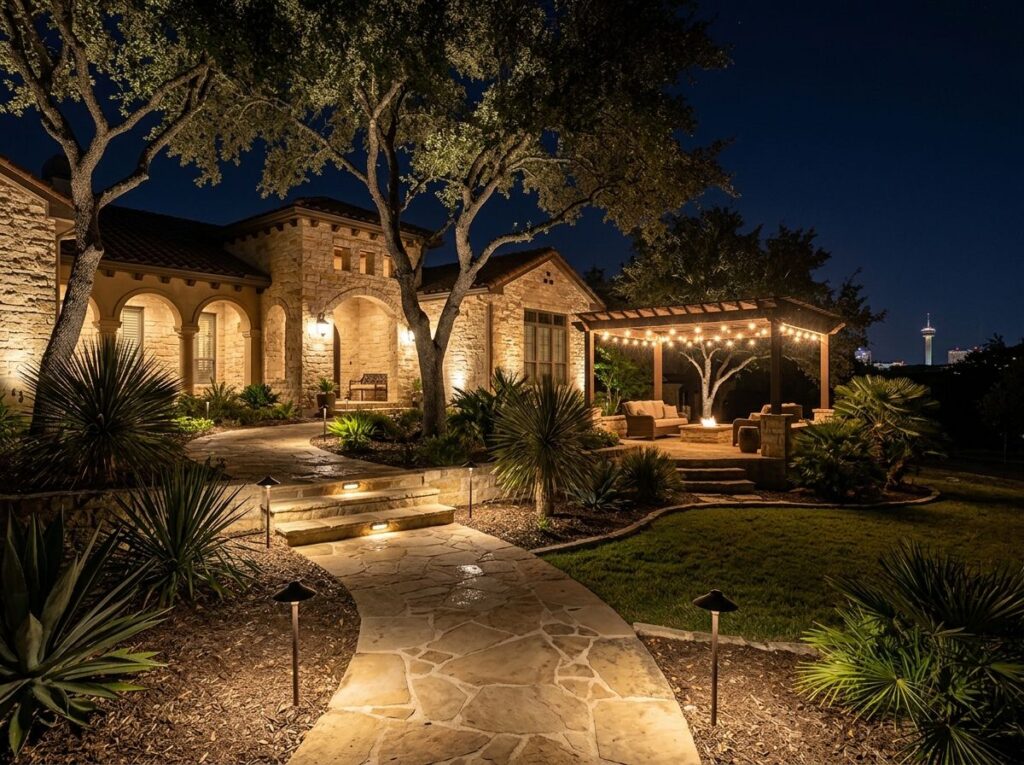
Our warm evenings are one of the biggest reasons people invest in patios, outdoor kitchens, and seating areas. Without lighting, those spaces can feel unusable as soon as the sun goes down.
- Patio and backyard lighting extends the comfortable hours you can spend outside, especially spring through fall.
- Layered lighting around seating, cooking, and play areas creates a more relaxed, inviting atmosphere.
- Balanced lighting lets you enjoy new turf, planting, and hardscape long after daytime temperatures drop.
If your patio or backyard is a primary gathering space for your family, landscape lighting usually becomes one of the last steps that makes the whole yard feel finished.
For a related next step, read Low Voltage Landscape Lighting Explained.
For a related next step, read How Long Does Outdoor Lighting Last?.
For a related next step, read Landscape Lighting Cost Guide.
4. When lighting should wait or be phased in
There are situations where lighting is important—but not the first priority.
- If you have known drainage problems or standing water, those issues should be solved before lighting goes in.
- If yard grading, Drainage Installation, or new planting is planned, it may be better to rough-in conduit or plan fixture locations, then install fixtures as a follow-up.
- If your budget is tight, you might start with a focused front entry or key path and add zones over time.
A good lighting plan can be phased. The design is done once, and fixtures are added in stages as other projects—such as new beds, retaining walls, or sod—are completed.
Here goes your text ... Select any part of your text to access the formatting toolbar.
No Lighting vs Solar Kits vs Professional Low-Voltage Systems
| Option | Upfront Cost | Lighting Quality | Reliability in San Antonio Climate | Best For |
|---|---|---|---|---|
| No Landscape Lighting | $0 | Dark walkways and facades; relies on porch and street lights. | N/A | Owners focused only on daytime curb appeal. |
| Basic Solar Path Lights | Low (typically bought as kits) | Inconsistent brightness; patchy light and short run times. | Can struggle with cloudy days and shaded locations. | Temporary solutions or very tight budgets. |
| Professional Low-Voltage LED System | Moderate to higher, depending on fixture count and design. | Even coverage, targeted highlights, warm color, and controllable zones. | Designed for long-term use in heat, irrigation, and outdoor conditions. | Homeowners who want lasting safety, curb appeal, and usable outdoor space. |
The right choice depends on how much you value nighttime safety, appearance, and outdoor living—not just the cost of fixtures.
Look at both the benefits and the tradeoffs
Pros and Cons of Investing in Landscape Lighting
PROS
- Improves safety on steps, paths, and grade changes so guests can move confidently after dark.
- Highlights architecture, trees, and landscape beds you have already invested in.
- Extends the usable hours of patios and backyards during warm San Antonio evenings.
- Can subtly deter unwanted activity by eliminating dark corners around the home.
- Professional low-voltage LED systems are efficient and can be expanded later as your landscape grows.
CONS
- Quality fixtures and professional installation require a meaningful upfront investment.
- Poorly designed systems can create glare, light pollution, or a “runway” look if overdone.
- Low-cost kits and shortcut installs often disappoint and may need to be replaced sooner.
- If other major exterior projects are unfinished, lighting may be better as a second phase.
Understand how value ties back to fixture count and scope
Here goes your text ... Select any part of your text to access the formatting toolbar.
How Cost Affects Whether Lighting Feels “Worth It”
Landscape lighting cost scales with how much of the property you want to cover and how many fixtures it takes to do it well. A focused front-entry system will cost less than a full-property design that includes trees, patios, and backyards—but both can be worthwhile if they solve real problems for your household. Before scheduling work, review our project guidelines so the project expectations are clear.
- Total lighting cost is driven more by the number and type of fixtures than by the size of the house on paper.
- Front-yard only systems cost less than full-property systems that include backyards, side yards, and trees.
- Bundling Landscape Lighting Installation with Landscape Bed Installation, Retaining Wall Installation, or drainage work can be more efficient than doing each project separately.
- Your written proposal should show fixture counts, layout, and phases so you can decide what level of investment feels worthwhile.
Answer the “Is it worth it?” questions clearly
Landscape Lighting Value FAQs
These questions focus on real-world value, not just fixture types and technical specs.
See All Frequently Asked QuestionsIt is usually best to address grading and drainage first, then install sod, beds, and lighting so you are not disturbing finished work to fix underlying issues.
In some cases, conduit and rough-in for lighting can be planned during earlier phases to make final installation cleaner.
Related: How to Prepare Your Yard for Sod Installation, Signs Your Yard Has Drainage Problems, When Is the Best Time to Install Sod?
Low-voltage LED systems are very efficient. Even with a reasonable number of fixtures, power use is typically modest compared to other household loads. A design visit can include a simple estimate of expected energy use based on your preferred schedule.
Related: Low Voltage Landscape Lighting Explained, LED vs Halogen Landscape Lighting, Landscape Lighting Installation
Yes. Many systems are designed with future expansion in mind. You might begin with a front entry and key paths, then add backyard or tree lighting later as budget and other projects allow.
Related: How Many Landscape Lights Do I Need?, Landscape Lighting Installation, Landscape Lighting Cost Guide
If a design is lighting every surface simply because it can, it may be more than you need.
A good proposal should clearly show fixture counts, locations, and the role each zone plays so you can decide which areas matter most and phase or reduce where appropriate.
Related: Landscape Lighting Installation, Landscape Lighting Cost Guide, LED vs Halogen Landscape Lighting
Solar kits can be useful as a temporary solution, but they usually provide uneven light, inconsistent run times, and limited control.
Professionally designed low-voltage systems with quality fixtures deliver consistent, warm light exactly where it is needed and are built to last.
Related: Low Voltage Landscape Lighting Explained, Faqs/#Is Professional Lighting Really Better Than Solar Kits From
Lighting can help your home present better in photos, evening showings, and day-to-day curb appeal. While there is no fixed percentage you can count on, a well-lit property often feels more finished and inviting to buyers, especially in established neighborhoods.
Related: Home, Landscape Lighting Installation, Landscape Lighting Cost Guide
Decide with a clear plan, not guesswork
Find Out If Landscape Lighting Makes Sense for Your Property
We will walk your property, review how you use it after dark, and outline one or more lighting options—including phased approaches—so you can decide if a low-voltage LED system is a smart next step.