
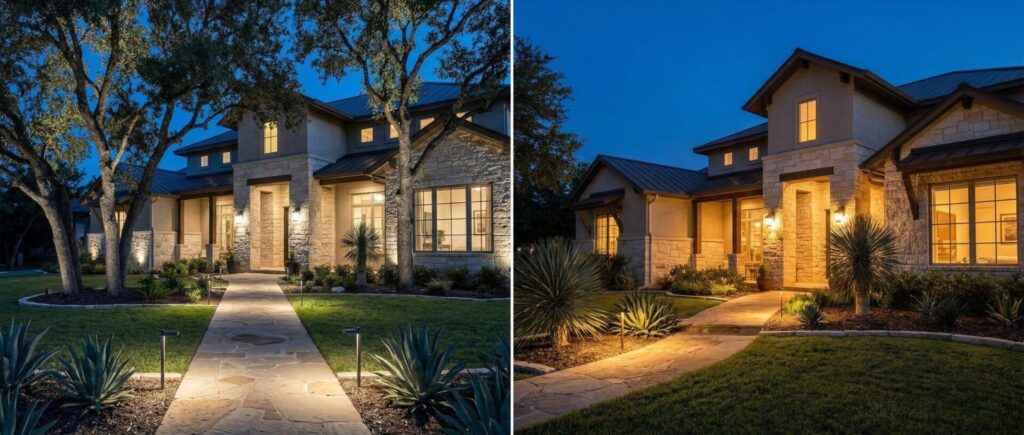
Choose a light source that fits Texas heat and real-world usage
LED vs Halogen Landscape Lighting: What’s Best for San Antonio Homes?
Both LED and halogen can light a home, but they do not perform the same over years of Texas heat, watering cycles, and everyday use. This guide compares energy use, light quality, lifespan, maintenance, and long-term cost so you can choose the right direction for your Landscape Lighting Installation.
Request Your Free EstimateModern LED has replaced halogen on most projects
Should I Choose LED or Halogen for My Landscape Lighting?
For most San Antonio homes, a well-designed LED system is the better long-term choice. It uses far less power, runs cooler in our summers, and drastically reduces the number of bulb changes and service visits required over the life of the system.Halogen still produces a classic warm light that many people like, but it does so with high energy use and relatively short lamp life. In real outdoor conditions—heat, irrigation, and dust—halogen lamps simply do not last as long as quality LED modules.If you are building a new Landscape Lighting Installation, LED is typically the smarter foundation. If you already have a halogen system, you may be able to upgrade portions of it to LED or plan a phased replacement. This guide walks through the tradeoffs so you can decide what makes sense for your property.
- LED typically cuts energy use by 70–80% compared to halogen
- LED lamps and modules last much longer than halogen in outdoor conditions
- Halogen has lower fixture cost up front but higher maintenance and operating cost
- New systems in San Antonio are usually designed around low-voltage LED fixtures
Look beyond the bulb and think about the next 5–10 years
Key Differences Between LED and Halogen for Outdoor Lighting
When you compare LED and halogen, you are really comparing two different ownership experiences. Both can create attractive light; the real differences show up in power use, lifespan, maintenance, and how the system behaves in San Antonio’s climate.
1. Energy use and transformer sizing
Halogen fixtures draw much more power to achieve the same light level as LED. A halogen system that needs a large transformer can often be reimagined as a smaller, more efficient LED system with plenty of room to grow.
- LED: Very low wattage per fixture, which helps keep wire runs, transformer size, and monthly power use in check.
- Halogen: Higher wattage per fixture; total load climbs quickly as more lights are added.
On properties where we have already invested in Landscape Bed Installation, Retaining Wall Installation, and Drainage Installation, LED makes it easier to expand lighting zones later without overloading the power side of the system.
2. Heat, weather, and lifespan in Texas conditions
Fixtures in San Antonio are exposed to summer heat, irrigation overspray, and seasonal dust. These conditions are tough on any light source.
- LED: Runs much cooler than halogen. Quality fixtures are built with heat sinks and sealed housings to protect electronics, which supports long service life.
- Halogen: Runs hot. Lamps heat up the fixture body, which can dry nearby mulch and plants and accelerate wear on sockets and gaskets.
Over time, this usually means LED systems require fewer service calls for burned-out lamps or overheated components, especially on fixtures located near irrigated beds or in tight niches.
For lighting component planning, compare classic path light with the areas you want to illuminate.
For lighting component planning, compare adjustable spot light with the areas you want to illuminate.
3. Light quality, color, and control
Halogen has a reputation for pleasant, warm light. Modern LED has closed that gap and now offers very similar warmth with more control options.
- LED: Available in multiple warm white color temperatures; many fixtures are designed to mimic halogen while offering consistent color across the whole system.
- Halogen: Naturally warm, but color can shift over time and between different lamp brands or wattages.
LED also pairs naturally with dimming, zoning, and smart controls, which makes it easier to fine-tune your Landscape Lighting Installation for different times of night or different events without having to change bulbs.
For a related next step, read Is Landscape Lighting Worth It?.
For a related next step, read Low Voltage Landscape Lighting Explained.
For a related next step, read How Long Does Outdoor Lighting Last?.
4. Maintenance and long-term ownership cost
When you factor in energy, bulbs, and service visits over several years, the picture becomes clearer.
- LED: Fewer lamp changes, fewer trips up ladders, and less disruption to freshly installed sod or beds during service.
- Halogen: Regular bulb replacements, more frequent troubleshooting, and higher energy bills.
For homeowners who have invested in new Sod Installation, planting, and hardscape, minimizing disturbance is a priority. LED’s longer service intervals help keep the rest of your landscape looking untouched while still enjoying consistent lighting.
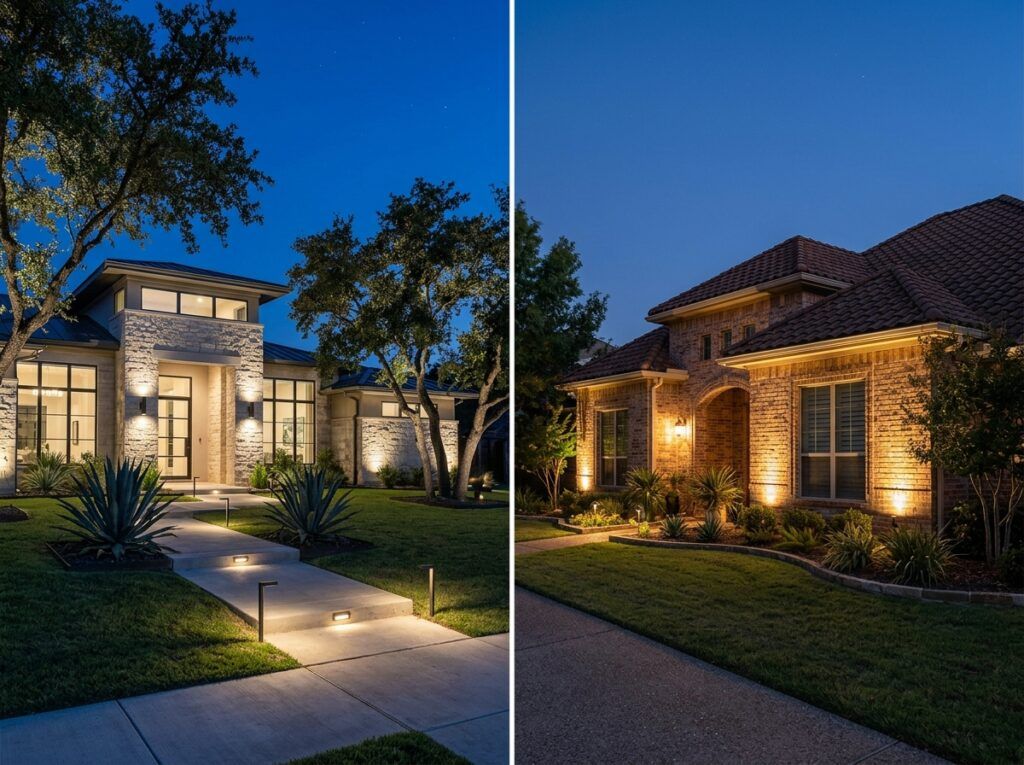
Here goes your text ... Select any part of your text to access the formatting toolbar.
LED vs Halogen: Side-by-Side Landscape Lighting Comparison
| Factor | LED Landscape Lighting | Halogen Landscape Lighting |
|---|---|---|
| Energy Use | Very low wattage; often 70–80% less power for the same light level. | High wattage; draws significantly more power per fixture. |
| Lamp Life | Typically 25,000–50,000+ hours when properly installed and cooled. | Often 2,000–4,000 hours; lamps need regular replacement. |
| Heat Output | Runs cool; safer around plants, mulch, pets, and kids. | Runs hot; can dry nearby foliage and heat up fixtures in Texas summers. |
| Color & Appearance | Available in warm white tones that mimic halogen, plus specialty options. | Classic warm light many people like, but limited control over exact color. |
| Control Options | Pairs easily with smart timers, dimmers, and zoning. | Basic timers and photocells; dimming is more limited. |
| Maintenance | Less frequent service; fewer lamp changes. | Ongoing bulb replacements and more frequent service calls. |
| Upfront Cost | Higher fixture cost but lower operating and maintenance cost. | Lower initial fixture cost but higher long-term operating and service cost. |
In most San Antonio projects, LED systems pay for themselves over time through reduced energy use and fewer service visits.
Both can work, but one is built for the long run
Pros and Cons of LED vs Halogen for San Antonio Yards
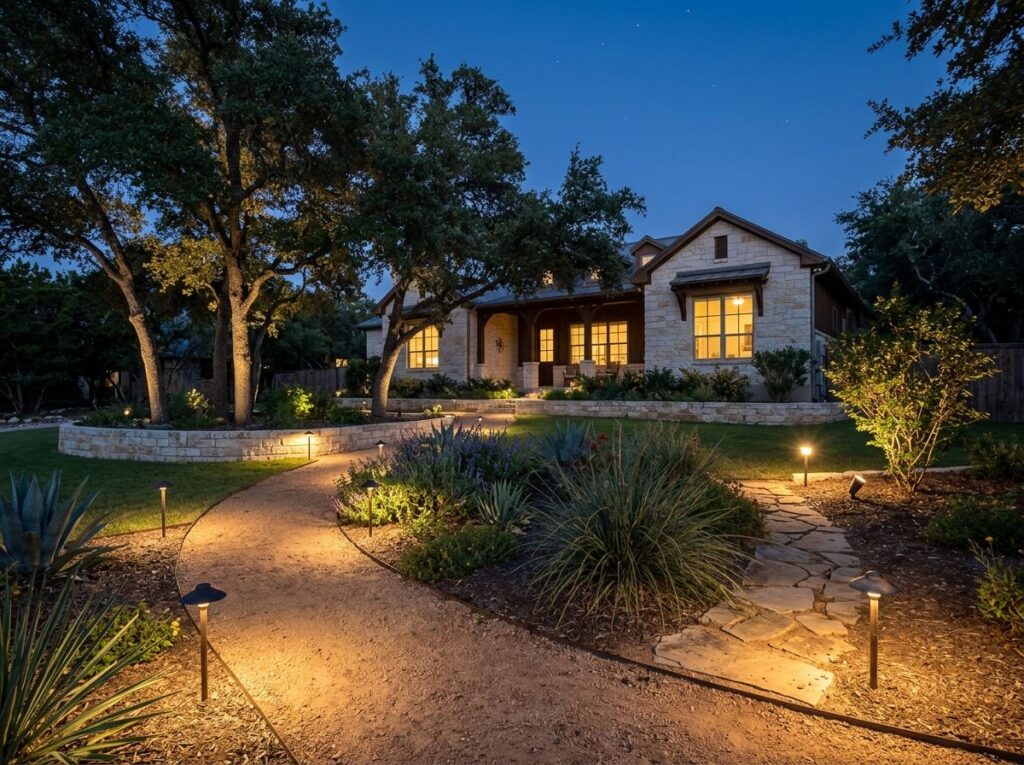
PROS
- LED systems use far less power than halogen, which helps keep operating costs in check over hot Texas summers.
- Longer lamp life means fewer service calls, fewer ladder trips, and more reliable performance.
- Modern LED fixtures offer warm color temperatures that closely match traditional halogen light.
- LED pairs naturally with low-voltage, smart controls, and future system expansions.
- Lower heat output is gentler on nearby mulch, plants, and hardscape materials.
CONS
- Upfront fixture cost for quality LED products is higher than basic halogen fixtures.
- Very low-cost LED fixtures and online kits can have poor color, weak output, or short life.
- Older halogen systems may require thoughtful retrofits rather than simple “lamp swaps.”
- If you like to frequently change color temperature or beam spread, fixture selection matters more with LED.
Consider total cost of ownership, not just the first invoice
Here goes your text ... Select any part of your text to access the formatting toolbar.
How Light Source Choice Affects Landscape Lighting Cost
LED fixtures usually cost more than basic halogen fixtures at the beginning, but they tend to reduce long-term costs through lower power use and fewer service visits. When we design a Landscape Lighting Installation, we look at total cost of ownership over several years, not just the fixture line on the proposal. Before scheduling work, review our project guidelines so the project expectations are clear.
- A professionally designed LED system often has a higher fixture cost but lower total cost of ownership over time.
- Halogen systems may appear more affordable up front but can cost more in energy and maintenance over the life of the system.
- For many San Antonio homes, the energy savings and reduced service visits of LED offset the initial price difference.
- Your Landscape Lighting Installation proposal can show LED-based options tailored to your home and budget.
Clear answers before you commit to a light source
LED vs Halogen Landscape Lighting FAQs
Answers to common questions about choosing and upgrading outdoor lighting systems in San Antonio.
See All Frequently Asked QuestionsHalogen may be considered for very small, temporary, or specialty applications where long-term energy use and maintenance are less important. For most permanent residential landscape lighting in San Antonio, LED is typically the better fit.
Related: Landscape Lighting Installation, How Long Does Outdoor Lighting Last?, Is Landscape Lighting Worth It?
Brightness is controlled more by design than by light source. With LED, we can select specific beam spreads and lumen outputs to highlight your home and landscape without creating glare or spill light onto neighboring properties.
Related: Home, How Many Landscape Lights Do I Need?, Faqs/#Will Led Lights Be Too Bright For My Neighbors Or Hoa
Most LED landscape lighting is designed for low-voltage systems, but the total load and transformer condition still need to be checked. We confirm compatibility and voltage balance as part of any upgrade or new Landscape Lighting Installation.
Related: Low Voltage Landscape Lighting Explained, Landscape Lighting Installation, How Many Landscape Lights Do I Need?
Fixture-for-fixture, quality LED is usually more expensive up front. However, when you factor in power savings and fewer service visits over time, LED often becomes the more economical option for San Antonio homeowners.
High-quality LED fixtures are available in warm white color temperatures specifically designed to mimic halogen. During a design visit, we can show sample fixtures so you can see the color and brightness on your own home before deciding.
Related: How Many Landscape Lights Do I Need?, Home, Faqs/#Will Led Landscape Lights Look As Warm As My Current Halogen
In many cases, yes.
Some systems can be upgraded by replacing halogen lamps with compatible LED lamps. Others benefit from a more complete retrofit using new LED fixtures while reusing wiring where possible. A site visit will determine the safest, most reliable approach.
Related: Landscape Lighting Installation, Is Landscape Lighting Worth It?, Faqs/#Convert My Existing Halogen Landscape Lighting System To Led
Choose a system designed for the long haul
Compare LED Options for Your San Antonio Landscape Lighting
Whether you are starting from scratch or upgrading an older halogen system, we can design a low-voltage LED layout that fits your home, your yard, and your long-term budget.