
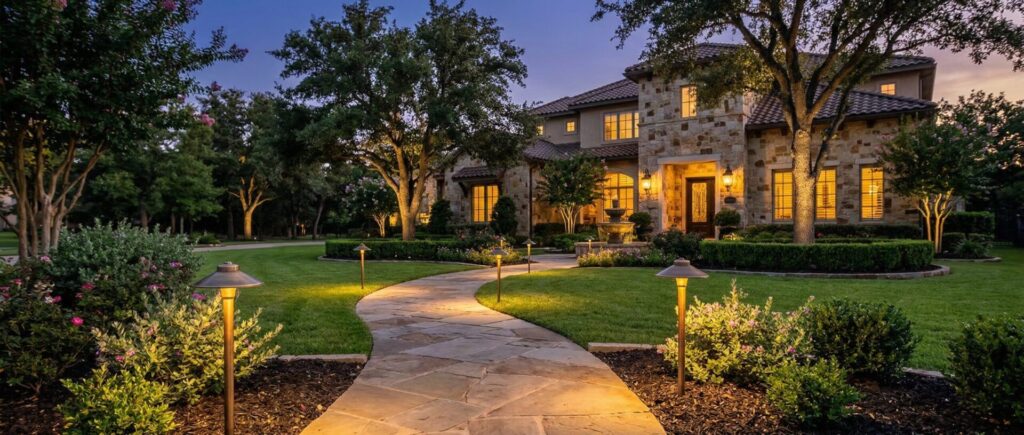
Plan your system with realistic lifespan expectations
How Long Does Outdoor Lighting Last in San Antonio?
Outdoor lighting is not a one-season purchase. In San Antonio’s heat, sun, and occasional storms, the lifespan of your fixtures, transformer, wiring, and lamps depends heavily on the materials used and how the system is installed. This guide explains typical lifespans, what usually fails first, and how to design a Landscape Lighting Installation that lasts.
Request Your Free EstimateMost pro systems are built for 10–20+ years with proper care
How Long Should a Quality Outdoor Lighting System Last?
A professionally installed low voltage LED lighting system in San Antonio is typically designed to last 10–20 years or more with basic care. The fixtures, transformer, and wiring are long-life components; what changes over time are small parts like timers, photocells, or individual LED engines.Inexpensive solar path lights and thin, big-box fixtures usually have much shorter lifespans—often just 1–3 years—especially under strong sun and heat. They can be fine for temporary use but should not be used as a benchmark for how long outdoor lighting should last.If you select solid fixtures, a properly sized transformer, and a thoughtful layout, your main investment should serve your home for many years with only minor adjustments and occasional part replacements.
- Pro-grade LED fixtures and transformers are often designed for 10–20+ years
- Cheap solar lights and thin fixtures may last only 1–3 years
- Heat, sun exposure, irrigation, and installation quality all affect lifespan
- Regular inspections and small adjustments help your system reach its full life
Think in terms of components and exposure, not just “years on the box”
What Actually Determines Outdoor Lighting Lifespan?
When homeowners ask how long their lighting will last, they are really asking about several different parts of the system. Each has a different job, different stresses, and a different expected life span in our climate.
1. Fixture materials and construction
The fixtures you choose drive most of the system’s visible lifespan. Key factors include:
- Material: Cast brass, copper, and quality aluminum typically outlast thin stamped metals and plastic.
- Seals and lenses: Well-sealed fixtures keep out moisture, dust, and insects, protecting internal components.
- Finish quality: Durable powder coats and coastal-rated finishes resist fading, peeling, and corrosion.
In San Antonio, where sun, heat, and irrigation can be harsh, better fixture construction usually translates to a system that continues to look good and function well long after a lower-cost option has started to fail.
2. LED technology, transformers, and wiring
Modern LED landscape lighting has changed the maintenance picture compared to older halogen systems:
- LED engines: Quality integrated LEDs are designed for long runtimes with very slow dimming over the years.
- Transformers: A correctly sized, protected transformer can run for a decade or more with minimal attention.
- Wiring and connections: When low voltage cable is buried at the right depth and connected with rated, weather-resistant connectors, it can last for decades.
Most long-term issues come from undersized wiring, poor connections, or transformers installed where they sit in standing water or constant overspray. Good installation practices during Landscape Lighting Installation are just as important as the hardware itself.
For lighting component planning, compare well light with the areas you want to illuminate.
3. Environment, use patterns, and maintenance
How and where the lights are installed affects how long they last:
- Moisture and irrigation: Fixtures near sprinklers, pools, or low spots need extra attention to sealing and placement.
- Traffic and yard work: Lights near mowing, edging, or pet paths are more likely to be bumped, tilted, or damaged.
- Run time: Systems that run all night every night naturally experience more wear than motion-triggered or timed setups.
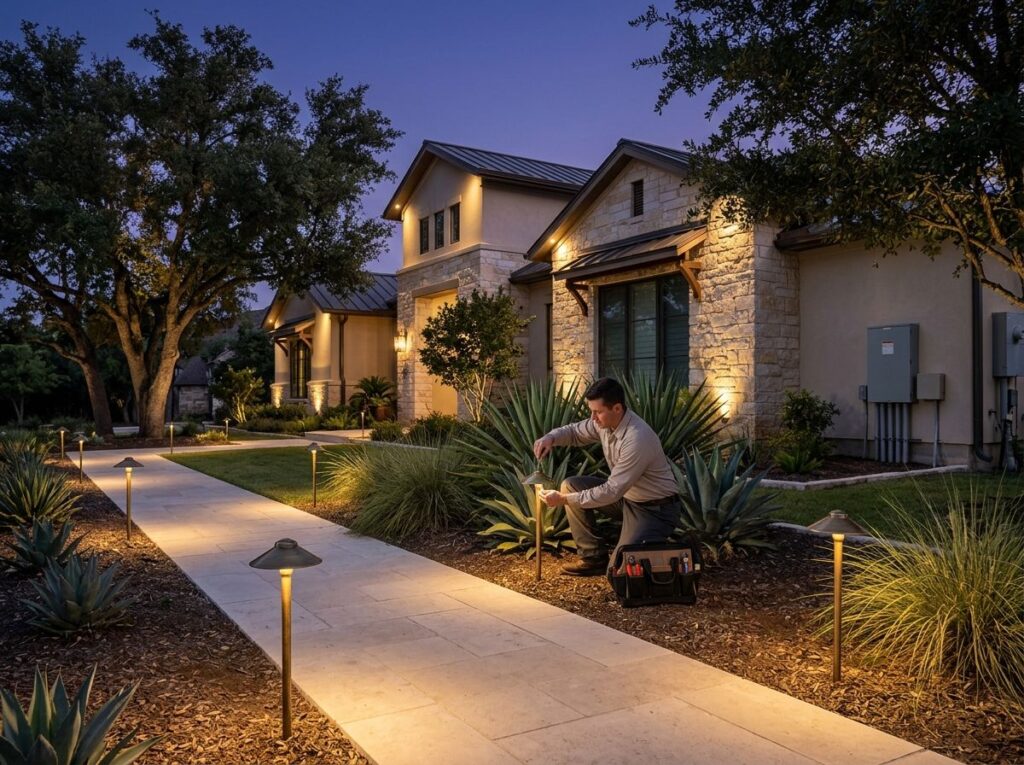
A simple annual check—often as part of Seasonal Yard Cleanups or routine landscape visits—can catch small issues early: leaning fixtures, loose connections, or debris covering lenses.
For a related next step, read Landscape Lighting Cost Guide.
For a related next step, read How Many Landscape Lights Do I Need?.
For a related next step, read LED vs Halogen Landscape Lighting.
4. When it makes sense to repair, upgrade, or start fresh
At some point, every system reaches a decision point. Common situations include:
- Older halogen systems where bulb replacement is constant and energy use is high.
- Mixed fixtures from different eras that create uneven color or brightness.
- Wiring and connections that are difficult to troubleshoot after years of patch repairs.
Sometimes the right move is to retrofit key fixtures with LED lamps. Other times, especially after major landscape changes or Drainage Installation or Retaining Wall Installation work, it makes more sense to redesign and install a new, efficient low voltage LED system.
Here goes your text ... Select any part of your text to access the formatting toolbar.
Typical Lifespans for Common Outdoor Lighting Components
| Component / System Type | Typical Lifespan Range* | What Usually Fails First | Maintenance Needed | Notes for San Antonio Climate |
|---|---|---|---|---|
| Professional LED Fixtures (cast metal) | 10–20+ years | Lens seals, finish, or LED engine after many years | Occasional cleaning and aim adjustments | Handles heat well when properly vented; choose coastal-rated finishes if near pools or irrigation overspray. |
| Professional Transformer | 10–20+ years | Timers, photocells, or internal electronics | Check settings, keep clear of standing water and debris | Mount above grade and out of direct sprinkler spray for longest life. |
| Low Voltage Cable & Connections | 20+ years when installed correctly | Improper or non-weatherproof connectors | Visual inspections and occasional troubleshooting | Stable soils and correct burial depth help protect wiring from damage. |
| Inexpensive Solar Path Lights | 1–3 years | Rechargeable batteries, solar panel clouding | Frequent replacement of fixtures or batteries | Intense sun and heat accelerate plastic fading and battery failure. |
| Halogen Bulbs in Older Systems | 1–3 years per lamp | Lamp burnout | Regular bulb replacement and wattage checks | Heat and long run times shorten bulb life compared to LED retrofits. |
*Actual lifespan depends on product quality, installation, and maintenance.
Set expectations before you invest
Pros and Cons of Investing in Longer-Lasting Outdoor Lighting
PROS
- Gives you a realistic expectation for how long fixtures, transformers, and wiring should last.
- Helps you decide when it makes sense to invest in higher-quality fixtures versus entry-level options.
- Shows where LED systems save money over time compared to halogen or disposable solar lights.
- Supports planning for phased upgrades instead of replacing the entire system at once.
- Makes it easier to evaluate warranty terms from Landscape Lighting Installation contractors.
CONS
- Lifespan estimates are ranges, not promises; individual products still vary in quality.
- Exposure to irrigation, pets, and yard work can shorten the life of fixtures and connections if not protected.
- Cheaper components may look similar at first glance but fail much sooner than pro-grade materials.
- Upgrading older halogen systems to LED can require new fixtures, not just bulb swaps, depending on the design.
- Ignoring small issues—like a leaning fixture or loose connection—can lead to premature failures.
Look at lifetime cost, not just fixture price
Here goes your text ... Select any part of your text to access the formatting toolbar.
How Lifespan Affects the True Cost of Outdoor Lighting
Two lighting quotes can look very different on day one but much closer over ten years. Longer-lasting fixtures, LED technology, and solid installation practices reduce replacements, service calls, and wasted energy over time. Before scheduling work, review our project guidelines so the project expectations are clear.
- Higher-quality fixtures and transformers cost more upfront but are intended to last a decade or longer.
- Cheaper plastic or thin-metal fixtures can require frequent replacement, increasing long-term cost.
- LED systems reduce lamp replacement costs and energy use compared to older halogen designs.
- Bundling lighting work with Landscape Bed Installation, Retaining Wall Installation, or Drainage Installation can reduce labor for running new wire.
- Your written quote should outline fixture types, finish quality, lamp technology, and warranty terms so you can compare lifespan expectations.
Answer lifespan questions before the install, not after
Outdoor Lighting Lifespan FAQs
These questions focus on how long different systems last and what you can do to extend their life in San Antonio.
See All Frequently Asked QuestionsIf your system has frequent failures, mismatched fixtures, or outdated halogen lamps, it may be more cost-effective to design a new LED system. A fresh layout often reduces energy use, improves light quality, and simplifies future maintenance.
Related: LED vs Halogen Landscape Lighting, Faqs/#When Is It Better To Replace An Old System Instead Of Repair
Choose quality fixtures and transformers, keep wiring protected, avoid continuous sprinkler overspray on fixtures, and schedule simple inspections as part of Seasonal Yard Cleanups. Small adjustments and cleaning go a long way.
Related: Seasonal Yard Clean-Ups, Seasonal Yard Clean-Up Cost Guide, Faqs/#How Help My Outdoor Lighting Last Longer In San Antonio
No. Most inexpensive solar fixtures are closer to disposable products, with batteries and plastic housings that typically last 1–3 years. They can be useful in specific spots but are not a substitute for a well-built low voltage system.
Related: Low Voltage Landscape Lighting Explained, How Many Landscape Lights Do I Need?, Faqs/#Expect Cheap Solar Lights To Last As Long As Wired Low Volta
In many systems, small parts like halogen bulbs, photocells, timers, or poor-quality connectors fail before the fixtures or transformer. Regular checkups can catch these issues early before they affect the entire system.
Related: LED vs Halogen Landscape Lighting, Faqs/#What Usually Fails First In An Outdoor Lighting System
Yes. LEDs draw less power, run cooler, and have much longer rated lifespans than halogen bulbs. That means fewer lamp changes, lower energy use, and more consistent light output over the years when using quality components.
Related: LED vs Halogen Landscape Lighting, How Many Landscape Lights Do I Need?, Faqs/#Do Led Outdoor Lights Really Last Longer Than Halogen
Most pro-grade fixtures are designed to last 10–20 years or more, especially when made from cast metal with quality seals and finishes. Their actual lifespan depends on where they are placed and how they are cared for over time.
Related: Signs Your Yard Has Drainage Problems, Landscape Lighting Installation, Is Landscape Lighting Worth It?
Match your lighting plan to how long you expect it to serve you
Find Out What a Long-Lasting Lighting Plan Looks Like for Your Home
We can walk your property, review your existing lighting, and recommend whether to repair, upgrade, or design a new system so you know what to expect over the next decade—not just this season.