
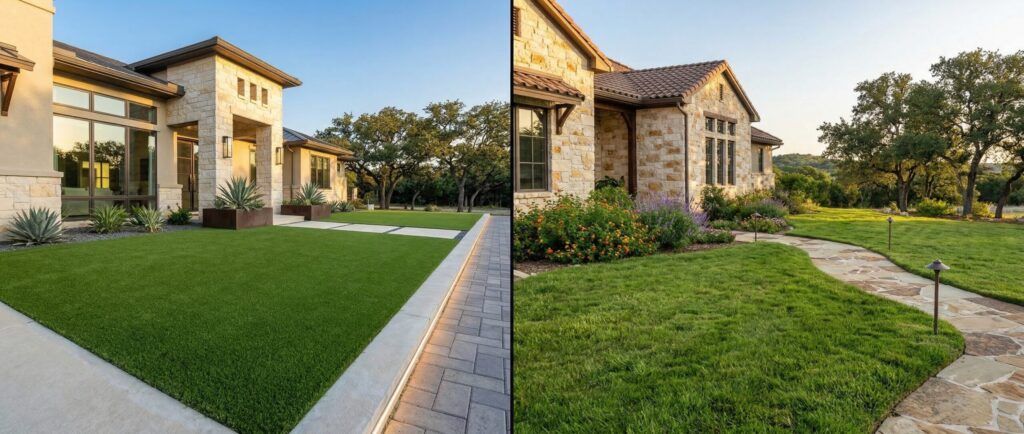
Real Comparison
Artificial Turf vs Sod in San Antonio
Compare cost, maintenance, lifespan, heat, pets, drainage, and long-term value before choosing between synthetic turf and natural grass in South Texas.
Request Your Free EstimateQuick Decision Guide
Is Artificial Turf or Sod Better in San Antonio?
Artificial turf offers low maintenance and predictable long-term costs. Sod offers lower upfront cost and natural cooling. The right choice depends on water use, pets, maintenance tolerance, and budget.For high water bills, heavy pets, or low-maintenance goals, turf may win. For lower upfront investment and cooler surfaces, sod may be better.
- Artificial turf = higher upfront, lower maintenance
- Sod = lower upfront, ongoing care
- Turf lasts 10–20+ years
- Sod may need renovation every few years
- Heat is higher on turf unless cooling infill is used
- Sod requires watering, fertilizing, mowing
Full Breakdown
Complete Artificial Turf vs Sod Comparison
Both systems can work in San Antonio. The decision comes down to climate stress, water cost, lifestyle, and long-term expectations. For help turning the advice into a real project, review our artificial turf installation service page. For help turning the advice into a real project, review our sod installation service page.
Upfront Cost: Sod generally costs less upfront per square foot than turf. Turf ranges higher but includes base prep and long-term durability.Maintenance: Sod requires mowing, irrigation, fertilizer, weed control, and seasonal care. Turf requires brushing, rinsing, and light maintenance.
Lifespan: Quality artificial turf can last 10–20+ years depending on product tier. Sod may need reseeding, patching, or full replacement over time depending on stress and care.Drainage & Pets: Turf with proper base and fast-drain backing performs well for pets. Sod can struggle with heavy urine spots and compaction. For turf selection, compare K9 Comfort Turf with the use case described above. For grass selection, compare TifTuf Bermuda sod with the lawn conditions discussed above. For turf selection, compare Elite Lawn Pro Turf with the use case described above.
Heat & Comfort: Natural grass stays cooler in peak summer heat. Turf can run hotter unless cooling infill or heat-resistant fibers are selected. For a related next step, read Best Artificial Turf for Dogs. For a related next step, read Does Artificial Turf Get Hot in Texas?. For a related next step, read How Long Does Artificial Turf Last?.
Water Use: Turf eliminates irrigation needs (except cleaning). Sod requires consistent watering, especially in Texas summers.
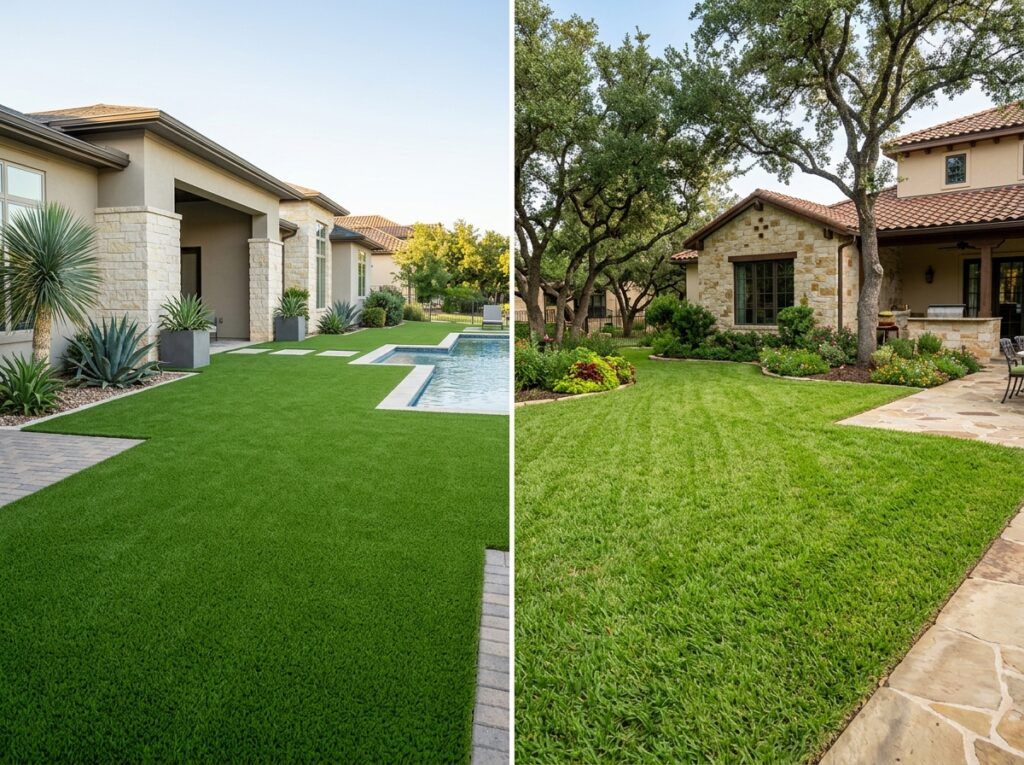
Here goes your text ... Select any part of your text to access the formatting toolbar.
Turf vs Sod Feature Comparison
Feature,Artificial Turf,Sod
Upfront Cost,Higher,Lower
Maintenance,Low,Ongoing
Water Use,None (except rinse),High
Lifespan,10–20+ yrs,Varies (renovation possible)
Heat in Summer,Higher (cooling options available),Cooler
Pet Durability,Excellent with pet turf,Can burn/spot
Appearance Consistency,Always green,Seasonal variation
Pros & Cons Overview
Pros & Cons of Turf vs Sod
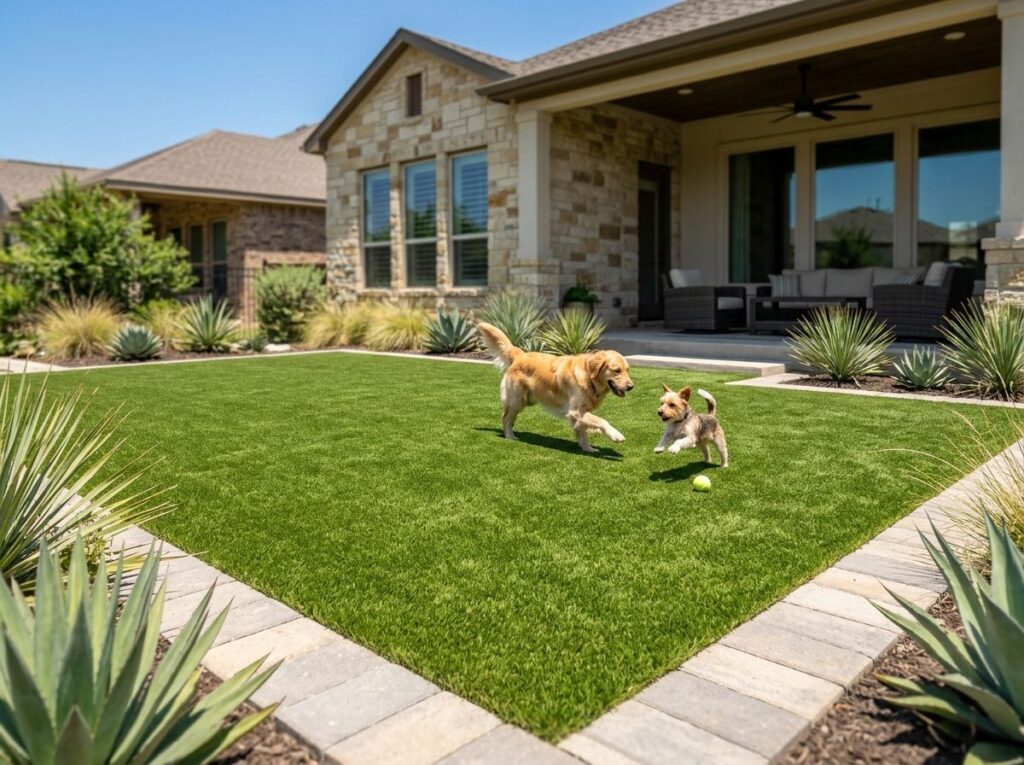
PROS
- Low maintenance
- No mowing
- Predictable appearance
- Water savings
- Strong pet durability
- Long lifespan options
CONS
- Higher upfront cost
- Can run hotter in full sun
- Requires proper base installation
- May require cooling infill upgrade
- Natural grass requires ongoing effort
- Sod susceptible to drought stress
Cost Considerations
Here goes your text ... Select any part of your text to access the formatting toolbar.
Long-Term Cost Comparison
While sod costs less initially, ongoing watering, fertilizer, and maintenance accumulate over time. Turf requires a higher upfront investment but reduces recurring expenses.
- Sod: lower initial cost
- Turf: higher install investment
- Water bills affect sod ROI
- Maintenance labor impacts total cost
- Turf reduces long-term upkeep expenses
Common Questions
Artificial Turf vs Sod FAQs
Answers specific to San Antonio climate and usage.
See All Frequently Asked QuestionsArtificial turf requires significantly less ongoing maintenance than natural grass.
If you share a few details about your yard, we can give you a clearer recommendation.
Related: Best Artificial Turf for Dogs, Low-Maintenance Landscape Bed Ideas, Artificial Turf Installation
Yes. Existing sod must be removed and proper base installed before turf installation.
Related: Best Artificial Turf for Dogs, How to Prepare Your Yard for Sod Installation, Artificial Turf Installation
Pet turf systems with fast-drain backing perform better for heavy pet use. Sod can develop brown spots from urine.
Related: Best Artificial Turf for Dogs, How to Prepare Your Yard for Sod Installation, Sod vs Artificial Turf: Which Is Better?
It can run warmer than grass. Heat-resistant products and cooling infill options help reduce surface temperature.
Related: Best Artificial Turf for Dogs, Does Artificial Turf Get Hot in Texas?, Faqs/#Does Turf Get Too Hot In Texas
Both can improve curb appeal. Premium turf offers consistent appearance; healthy sod appeals to buyers who prefer natural grass.
Related: Best Artificial Turf for Dogs, How to Prepare Your Yard for Sod Installation, Sod vs Artificial Turf: Which Is Better?
It can, especially in high-water-use homes. Reduced irrigation and maintenance offset higher installation costs over time.
Related: Best Artificial Turf for Dogs, How Long Does Artificial Turf Last?, How Long Does Outdoor Lighting Last?
Ready to Decide?
Get a Custom Lawn Recommendation
We’ll evaluate your yard, usage needs, drainage, and budget to recommend the right solution.