
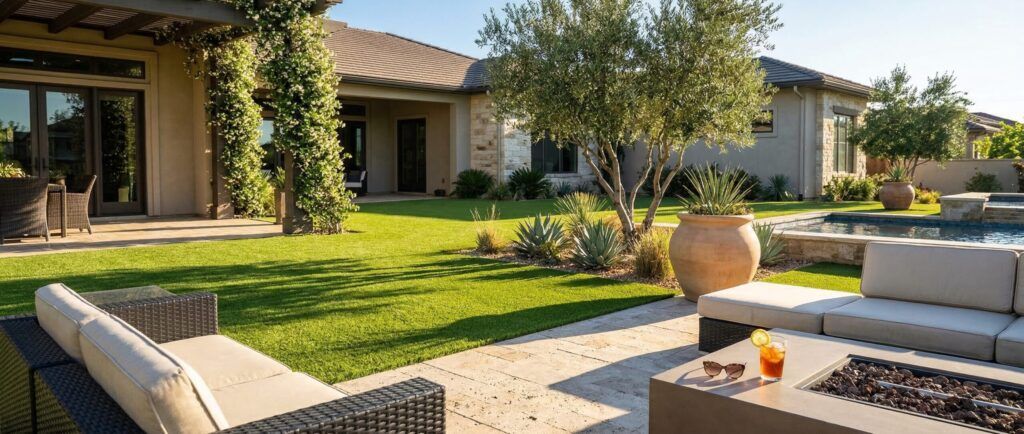
Texas heat explained
Does Artificial Turf Get Hot in Texas?
Yes — artificial turf can get significantly hotter than natural grass in full Texas sun. But the full answer depends on turf type, infill, color, and how the yard is designed.
Request Your Free EstimateQuick answer
How hot does artificial turf get in San Antonio?
In peak summer, standard artificial turf can reach 120–160°F in direct sunlight. That’s hotter than natural grass. However, heat-resistant fibers, cooling infill, shade, and proper yard design can significantly reduce surface temperatures.The key is choosing the right system for full-sun Texas exposure.
- Artificial turf gets hotter than natural grass in full sun.
- Surface temps can exceed 140°F during peak heat.
- Heat-resistant turf reduces heat load.
- Cooling infill provides temporary reduction.
- Shade structures dramatically improve comfort.
Heat management
Why artificial turf gets hot — and how to manage it
Turf absorbs and holds heat differently than living grass. In San Antonio, where summer air temps exceed 100°F, surface temperature becomes a real consideration for pets and children. For help turning the advice into a real project, review our artificial turf installation service page.
Why turf gets hotter than grass
Natural grass cools itself through evapotranspiration. Synthetic turf does not.
- Plastic fibers absorb radiant heat.
- Infill stores and radiates warmth.
- No biological cooling process exists.
What reduces turf temperature
- Heat-resistant fibers: Reflect more sunlight.
- Cooling infill: Lowers temp temporarily after watering.
- Lighter blade colors: Absorb less heat.
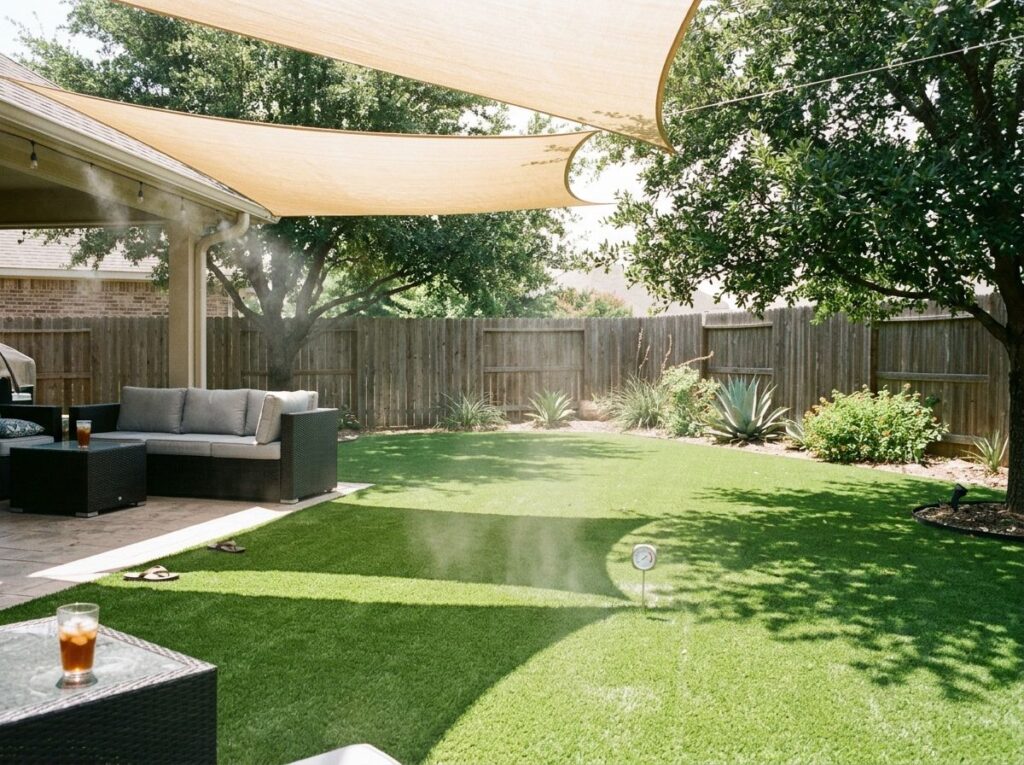
- Shade structures: Pergolas, trees, or sails.
Shade is the most effective long-term temperature solution.
For turf selection, compare Elite Lawn Pro Turf with the use case described above.
For turf selection, compare Multi-Use Flex Turf with the use case described above.
Design matters more than product alone
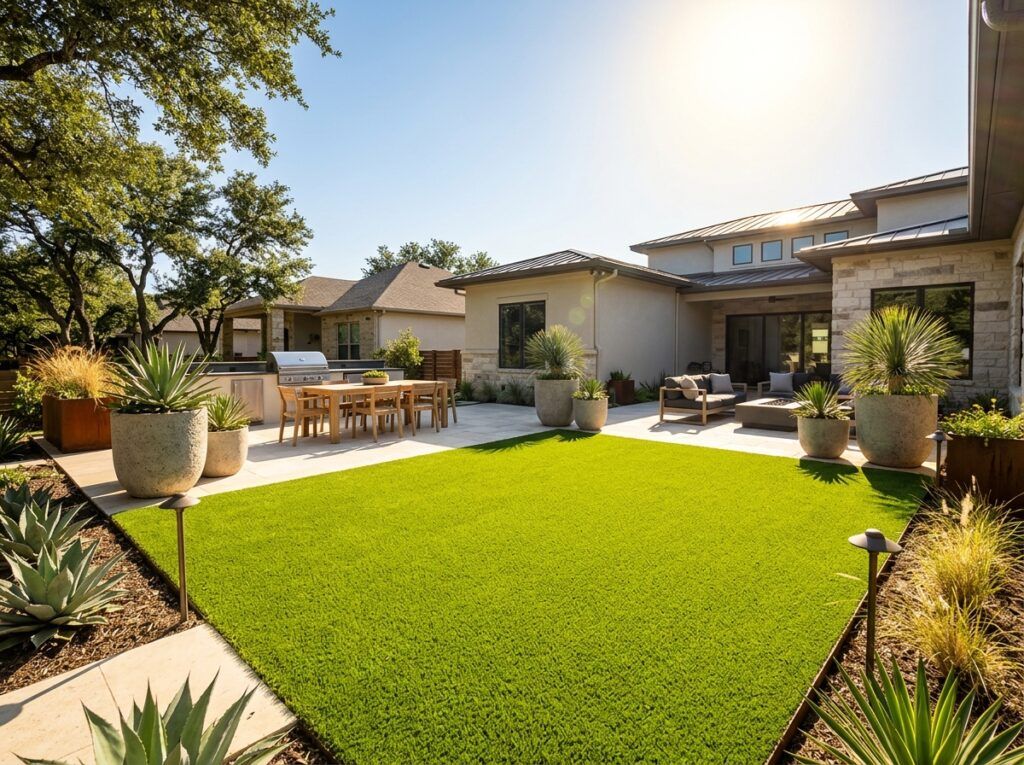
A south-facing yard with no shade will feel hotter regardless of turf selection.
- Consider partial tree placement.
- Plan patio shade structures.
- Avoid placing turf directly against heat-reflective stone walls.
For a related next step, read How Long Does Artificial Turf Last?.
For a related next step, read Artificial Turf Installation Process Explained.
For a related next step, read Is Artificial Turf Worth It?.
Is turf too hot for pets and kids?
It depends on timing and exposure. In peak afternoon sun, any hard surface in Texas gets hot.
Morning and evening use is typically comfortable. For mid-day use, shade or cooling design is important.
Here goes your text ... Select any part of your text to access the formatting toolbar.
Grass vs Turf Surface Temperatures
| Surface | Typical Summer Surface Temp (Full Sun) | Notes |
|---|---|---|
| Natural Grass | 85–105°F | Cools through evapotranspiration if well watered |
| Standard Artificial Turf | 120–160°F | Depends on air temp, fiber color, and sun exposure |
| Heat-Resistant Turf | 10–20°F cooler than standard turf | Cooling fibers and reflective technology help reduce heat load |
| Turf + Cooling Infill | Additional 10–20°F reduction (temporary) | Cooling effect strongest after watering |
Reality check
Heat pros and cons
PROS
- No mowing in extreme heat.
- No drought stress browning.
- Cooling infill and shade reduce heat load.
CONS
- Can become very hot in full direct sun.
- Requires design considerations for comfort.
- Cooling infill effect is temporary.
Heat upgrades
Here goes your text ... Select any part of your text to access the formatting toolbar.
Cost considerations for cooler turf systems
Heat-resistant turf and cooling infill add to the overall per-square-foot installed cost. Shade structures and pergolas are separate investments but are the most effective temperature control strategy. Before scheduling work, review our artificial turf care policy so the project expectations are clear.
- Heat-resistant turf typically starts slightly above general-purpose pricing.
- Cooling infill: +$0.75–$1.50 per sq ft.
- Shade structures quoted separately.
- Tree planting or landscape design changes quoted separately.
Heat questions
Artificial turf heat FAQs
What homeowners in San Antonio usually ask.
See All Frequently Asked QuestionsIf well irrigated, yes. Drought-stressed grass can also become hot and dry.
If you share a few details about your yard, we can give you a clearer recommendation.
Related: Faqs/#Is Natural Grass Always Cooler
It cools after sunset but may retain warmth longer than grass.
If you share a few details about your yard, we can give you a clearer recommendation.
Related: Best Artificial Turf for Dogs, How Long Does Artificial Turf Last?, Does Yard Grading Fix Drainage?
During peak afternoon heat, any exposed surface can be uncomfortable. Shade reduces this risk significantly.
Related: Best Artificial Turf for Dogs, How Long Does Artificial Turf Last?, Damage, Risk & Liability Policy
In full sun yards, yes. It helps reduce heat load compared to standard turf.
Related: Best Artificial Turf for Dogs, Is Artificial Turf Worth It?, Best Sod for Full Sun Lawns
Yes temporarily. Watering can reduce surface temperature for a short time.
If you share a few details about your yard, we can give you a clearer recommendation.
Related: Best Artificial Turf for Dogs, Sod Watering Schedule (First 30 Days), When Is the Best Time for a Yard Reset?
It can be similar depending on conditions. Concrete also retains significant heat in Texas sun.
Related: Best Artificial Turf for Dogs, Concrete Block vs Limestone Retaining Walls, Best Sod for Full Sun Lawns
Design for comfort
Let’s design a turf system that works in Texas heat
We evaluate sun exposure, yard orientation, and use patterns to recommend the right turf category and cooling options.