
Built the right way
Artificial Turf Installation Process Explained (Step‑by‑Step)
A long‑lasting artificial lawn in San Antonio depends on excavation depth, base compaction, drainage planning, and precise seaming—not just the turf product itself.
Request Your Free EstimateQuick overview
What does professional turf installation include?
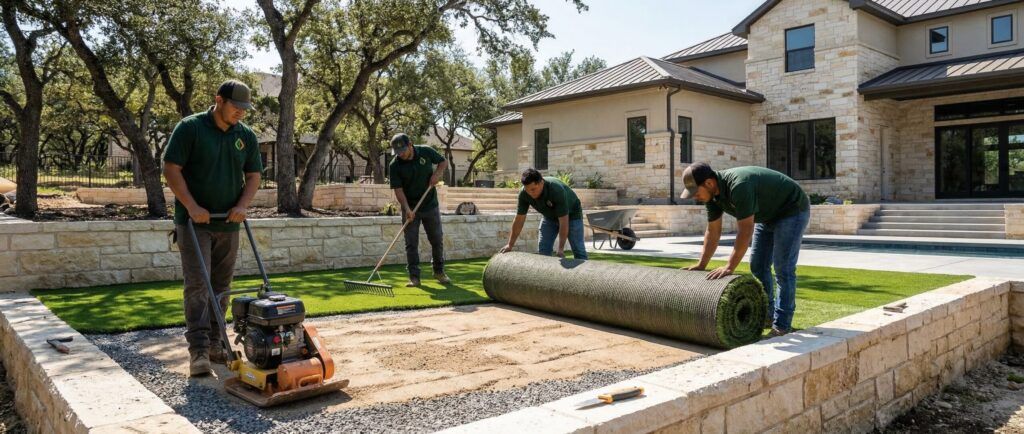
A proper artificial turf installation includes vegetation suppression, removal and excavation, compacted base installation, fine grading, edging detail, drainage setup, turf layout and seaming, infill application, power brushing, and final inspection.Skipping base prep is the most common reason turf systems fail early in Texas conditions.
- Vegetation removal and proper excavation.
- Compacted base installed in lifts.
- Fine grading for smooth finish.
- Precision seaming and securement.
- Infill and power broom finishing.
Professional sequence
Step‑by‑Step Artificial Turf Installation
In San Antonio’s clay soils and heat, installation quality determines performance more than product label. Each step serves a structural purpose.
1–3: Site prep and base foundation
- Vegetation suppression 3–5 days before install.
- Removal of existing grass and debris.
- Excavation to proper depth based on soil conditions.
- Install compactable road base in lifts and compact thoroughly.
This foundation prevents settling, rippling, and drainage problems.
4–6: Fine grading, edging, and drainage
- Fine grading layer for smooth surface.
- Edging installation (steel, composite, or paver borders).
- Drainage slope planning to prevent pooling.
Proper slope ensures water flows away from foundations.
For turf selection, compare Multi-Use Flex Turf with the use case described above.
For turf selection, compare K9 Comfort Turf with the use case described above.
7–8: Turf layout and professional seaming
- Align blade direction consistently.
- Precision trimming around curves and hardscape.
- Seam rolls using professional tape and adhesive.
Incorrect seaming leads to visible lines and premature separation.
For a related next step, read Is Artificial Turf Worth It?.
For a related next step, read Artificial Turf Cost Guide.
For a related next step, read Artificial Turf vs Sod.
9–10: Infill, brushing, and final walkthrough
- Apply selected infill (silica, antimicrobial, cooling).
- Power broom to lift fibers.
- Roll surface and conduct final inspection.
- Provide care instructions.
The finishing phase determines comfort and realism.
Process impacts price
Here goes your text ... Select any part of your text to access the formatting toolbar.
How installation steps affect cost
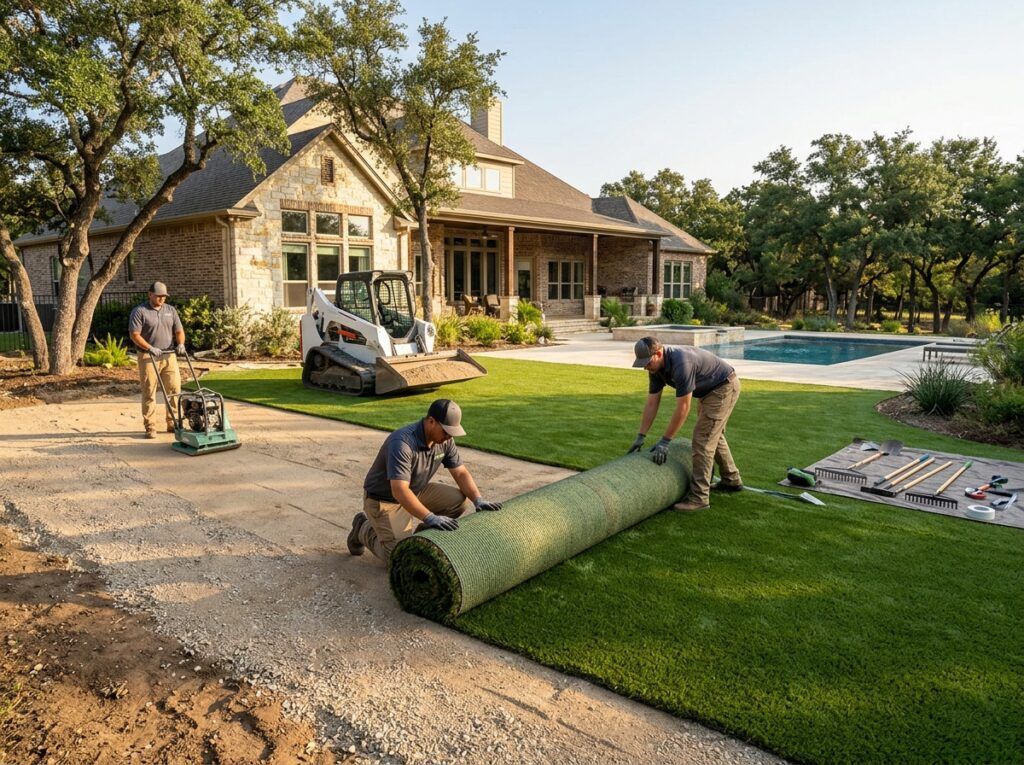
Deeper excavation, heavy clay soils, drainage tie‑ins, and specialty infill increase per‑square‑foot cost. Install shortcuts reduce price temporarily but increase long‑term failure risk. Before scheduling work, review our artificial turf care policy so the project expectations are clear.
- Base depth depends on soil and use conditions.
- Edging and border details add linear‑foot cost.
- Drainage work quoted separately if needed.
- Shock pads increase cost for play areas.
Installation FAQs
Artificial turf installation questions
Common homeowner questions about turf installation.
See All Frequently Asked QuestionsLarge residential installs benefit from professional equipment and compaction tools.
If you share a few details about your yard, we can give you a clearer recommendation.
Related: How to Prepare Your Yard for Sod Installation, Sod Installation, Artificial Turf Installation
Poor base compaction or improper seam tension.
If you share a few details about your yard, we can give you a clearer recommendation.
Related: Best Artificial Turf for Dogs, Artificial Turf Installation, Is Artificial Turf Worth It?
Only if the yard has existing pooling issues. Proper slope often suffices.
If you share a few details about your yard, we can give you a clearer recommendation.
Related: Best Artificial Turf for Dogs, Signs Your Yard Has Drainage Problems, Does Yard Grading Fix Drainage?
Depth varies by soil type and intended use, typically several inches of compacted material.
Related: Faqs/#How Deep Is The Base Layer
No. Existing vegetation must be removed to prevent failure.
If you share a few details about your yard, we can give you a clearer recommendation.
Related: Best Artificial Turf for Dogs, Faqs/#Can Turf Be Installed Over Existing Grass
Most residential projects take 2–5 days depending on size and site conditions.
If you share a few details about your yard, we can give you a clearer recommendation.
Related: Best Artificial Turf for Dogs, How Long Does Artificial Turf Last?, Artificial Turf Installation
Built for longevity
Install turf the right way the first time
We follow a proven installation sequence designed for Texas soil and heat conditions.