
Trees Bur Oak
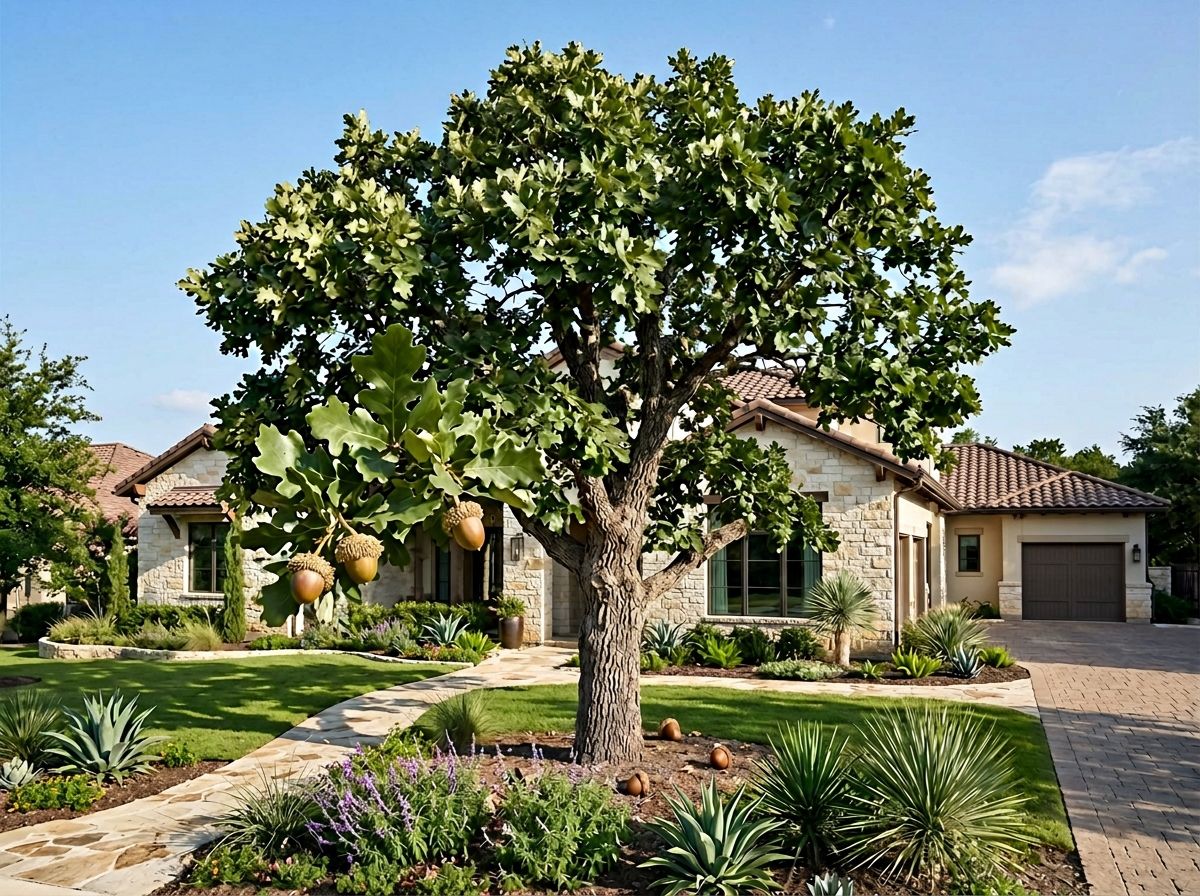
(Quercus macrocarpa)
Other Common Names: Mossycup Oak, Burr Oak
Birds
Butterflies
Deciduous
Freeze Hardy
Full Sun
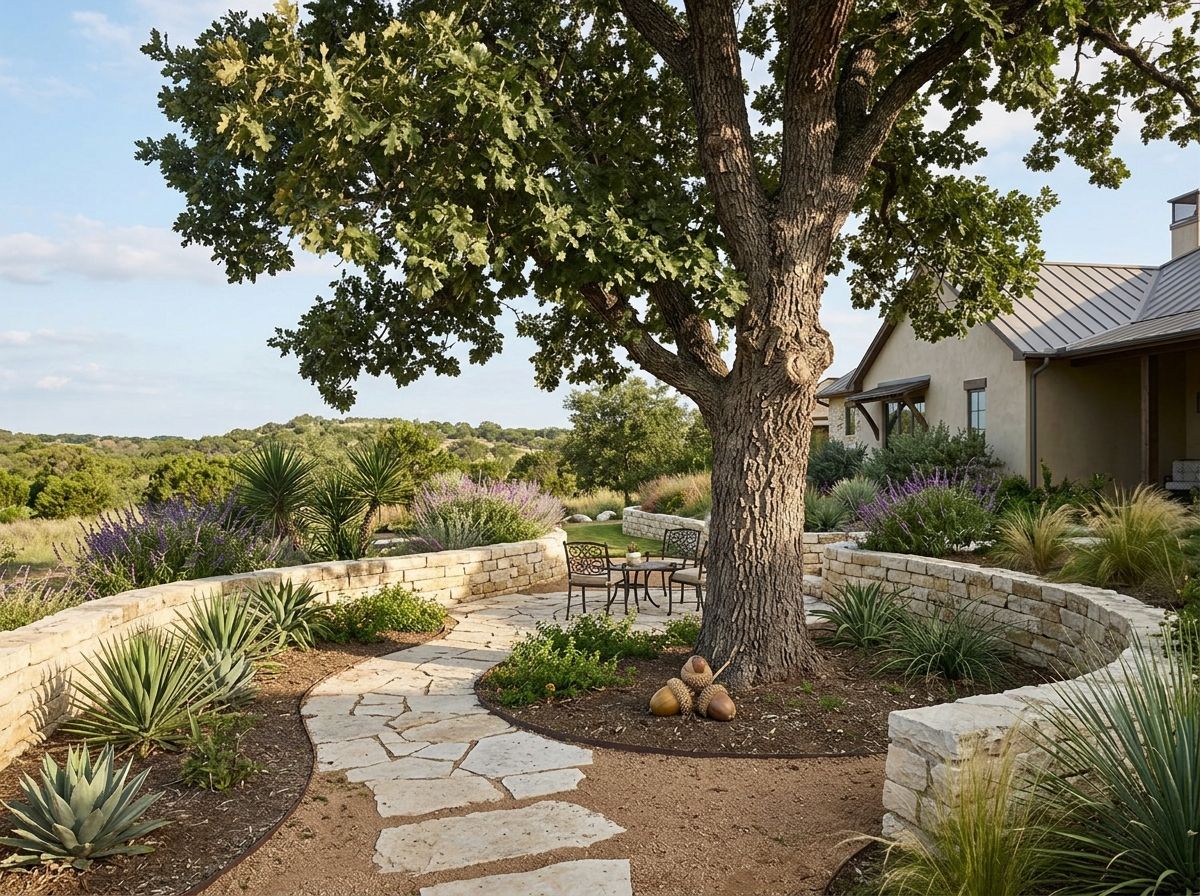
Recommended Use: Ideal for wide-open landscapes needing a massive, long-lived shade tree with minimal watering.
Introduction
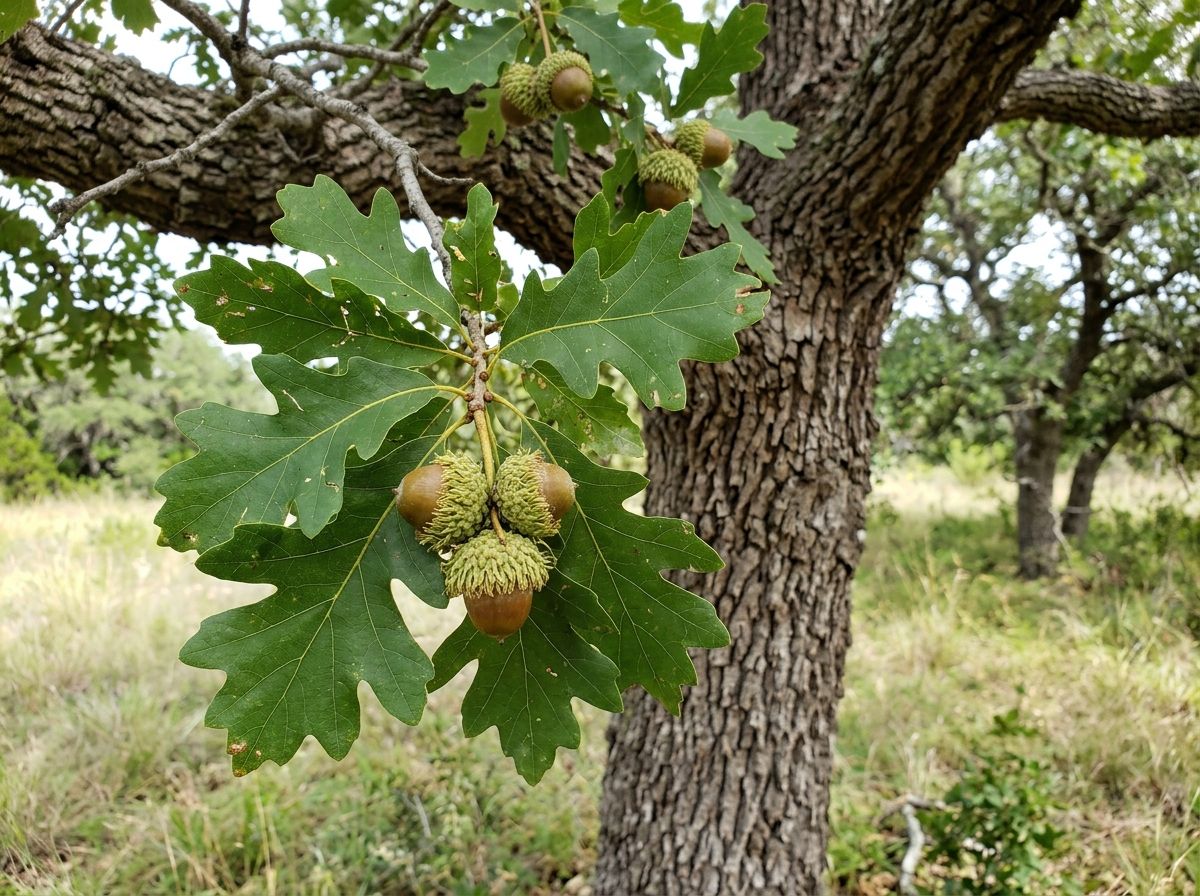
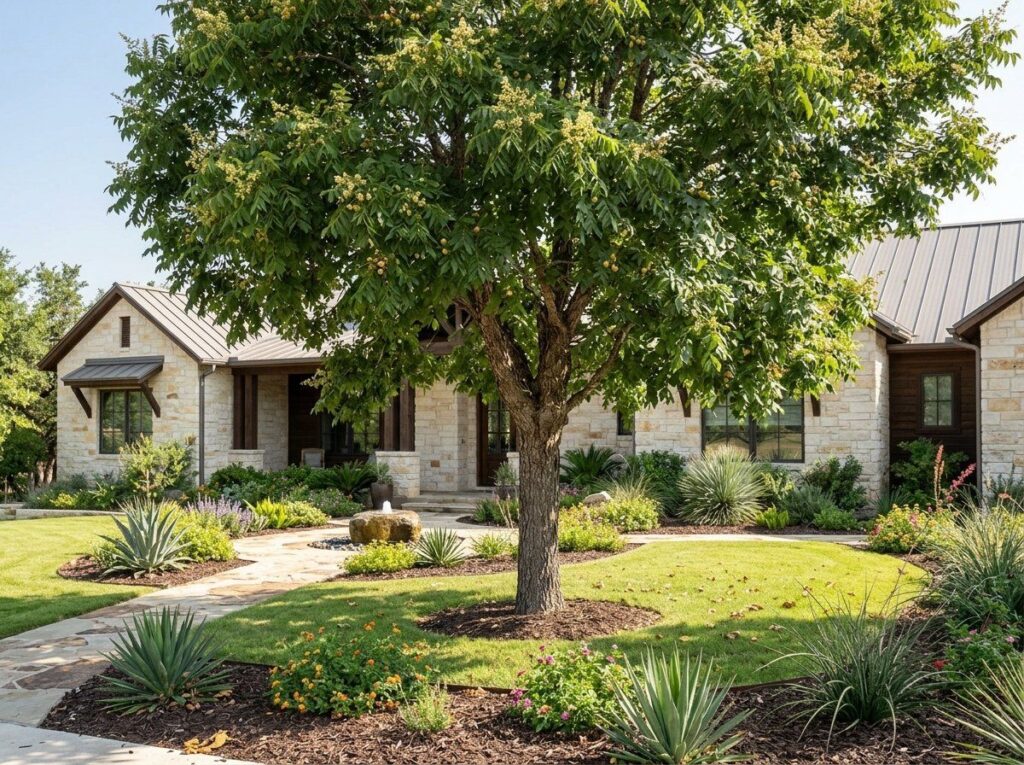
The Bur Oak, scientifically known as Quercus macrocarpa, is a majestic, deciduous tree recognized for its unique appearance and robust stature. It boasts large, lobed leaves and produces distinctive, oversized acorns that are a signature feature of this species. The tree is especially valued in landscaping for its ability to provide ample shade due to its expansive crown and can grow up to 70 to 80 feet tall, with an even broader spread. Its thick, corky, fire-resistant bark adds to its rugged charm and durability, making it a favored choice for parks and large properties. Bur Oak’s deep root system makes it incredibly resilient, thus it is commonly used in urban environments as well as naturalized areas to enhance and sustain landscapes.
Maintenance
To keep a Bur Oak healthy and thriving, it requires minimal care once established. This tree prefers full sunlight, making it ideal for open spaces where it can receive at least six hours of direct sunlight daily. While adaptable to various soil conditions, Bur Oak thrives best in well-drained, fertile soil. It has moderate watering requirements, needing regular watering during its first few years to establish a strong root system; afterwards, it is quite drought-tolerant. Pruning is not typically necessary, but if desired for shaping or health reasons, it should be done in late winter or early spring. The Bur Oak is quite resistant to pests and diseases, with occasional attention needed to ward off oak wilt and other common oak afflictions.
San Antonio Metro Area Tips
- Soil Adaptability: Performs well in local alkaline, rocky, or clay soils.
- Drought Tolerance: Excellent choice for hot, dry summers once established.
- Acorn Drop: Large acorns can be heavy and messy—plant away from patios, walkways, and driveways.
- Space Requirements: Allow 30–40 feet from buildings and overhead wires due to mature size.
- Wildlife Value: Acorns attract birds and squirrels, supporting local wildlife.
- Oak Wilt Precaution: Do not prune between February and June to help prevent oak wilt.
Quick Facts
– Hardiness Zones: 3 to 8
– Growth Rate: Slow to moderate
– Special Characteristics: Offers excellent shade; tolerant of drought once established; attracts wildlife (especially birds, mammals)
– Key Remarks: Deciduous; large acorns and leaves; good shade tree
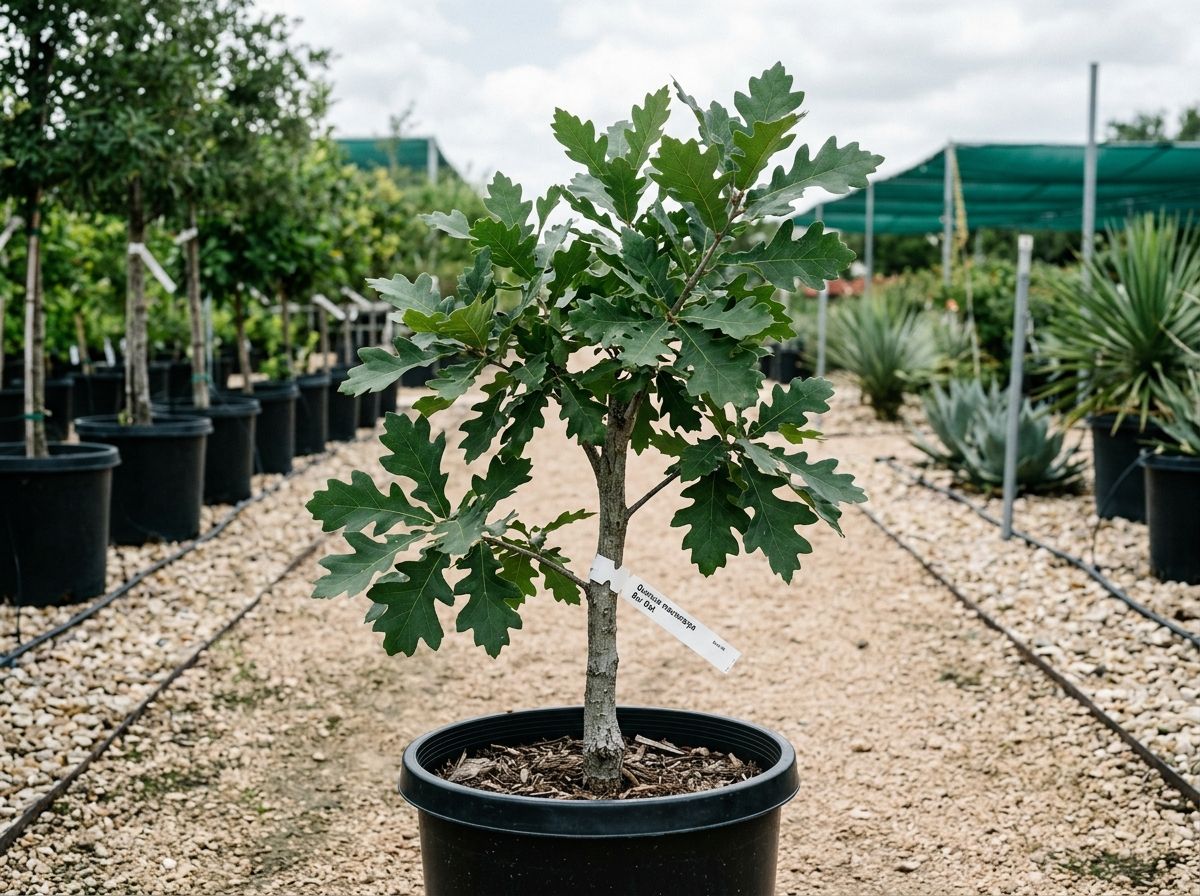
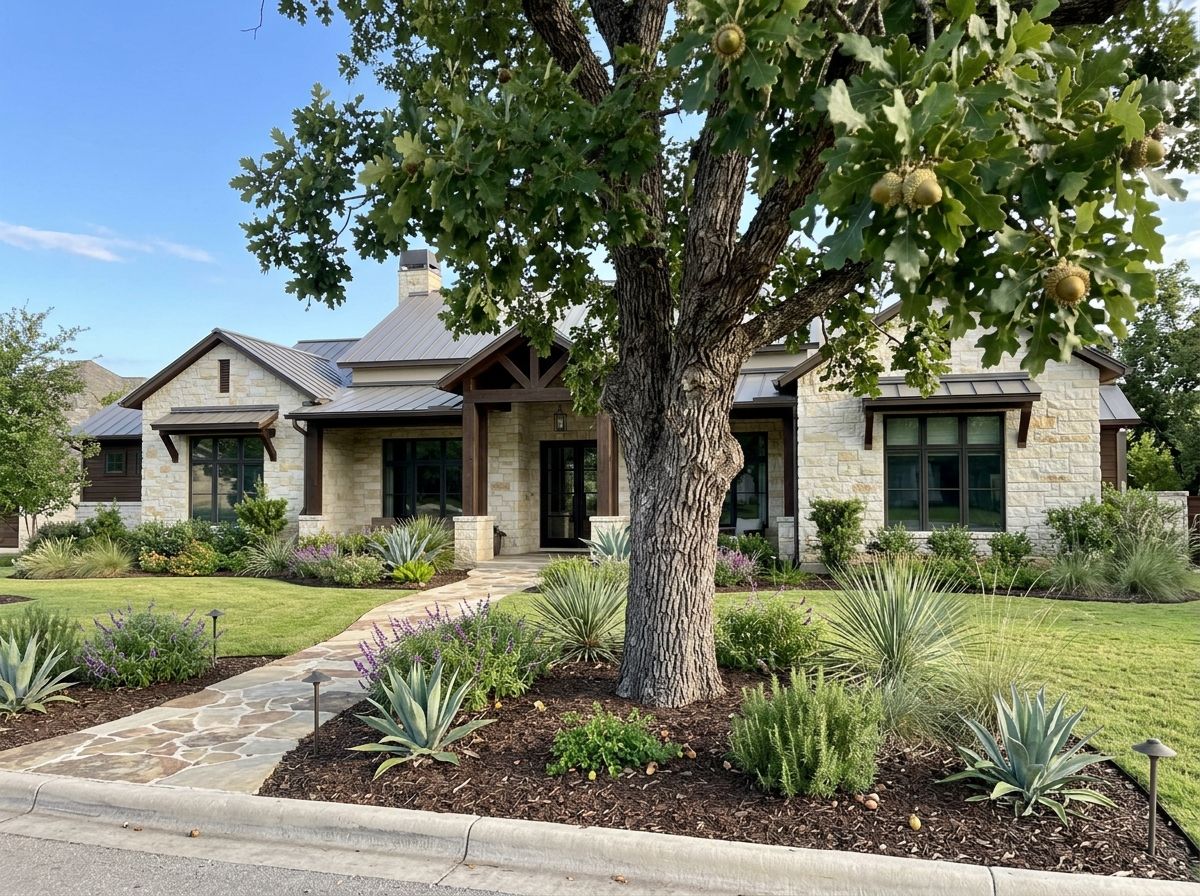
Want this product installed? Check out our page to view pricing and other details.
Related Products
Planting Role / Visual Structure > Evergreen Backbone
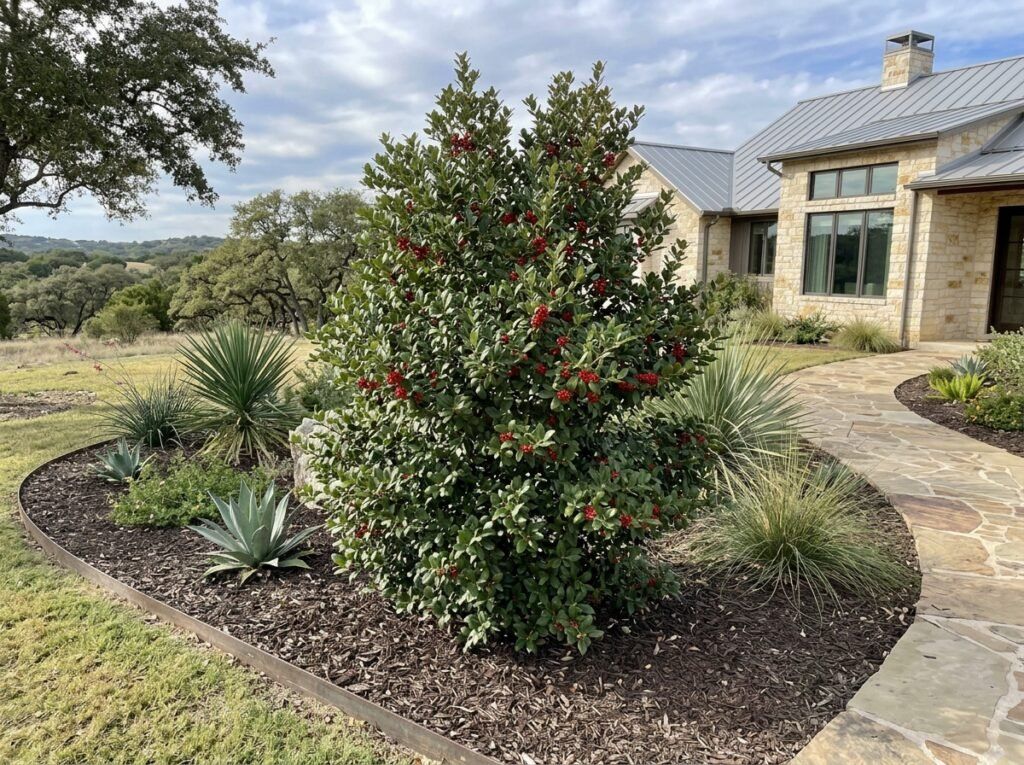
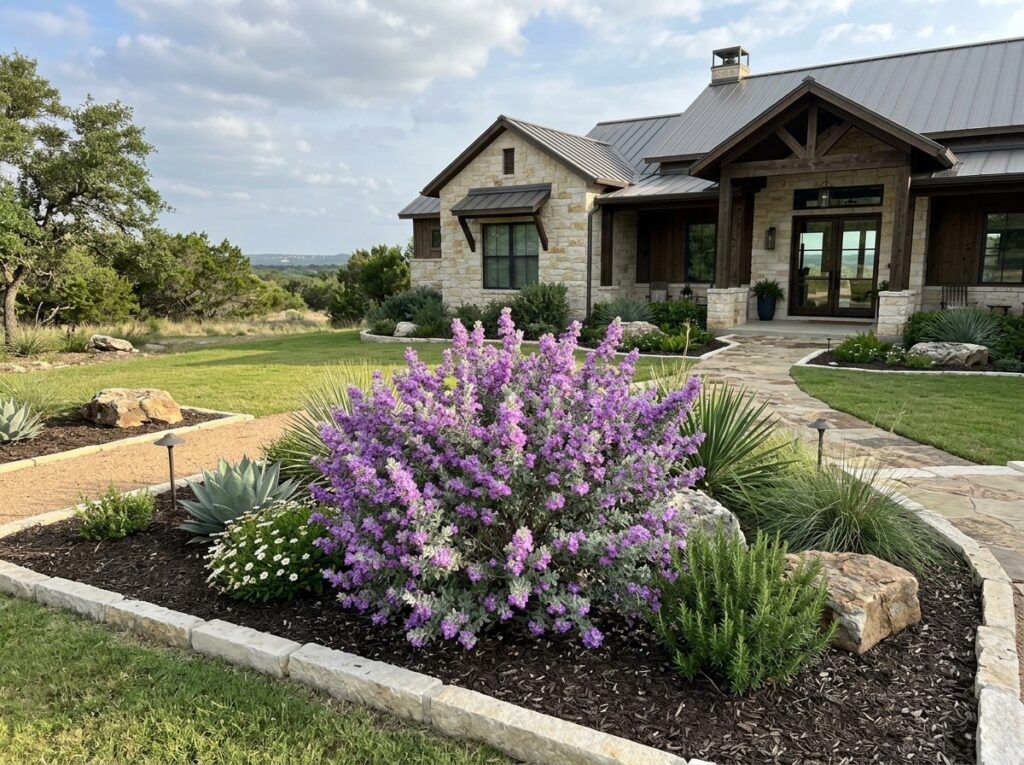
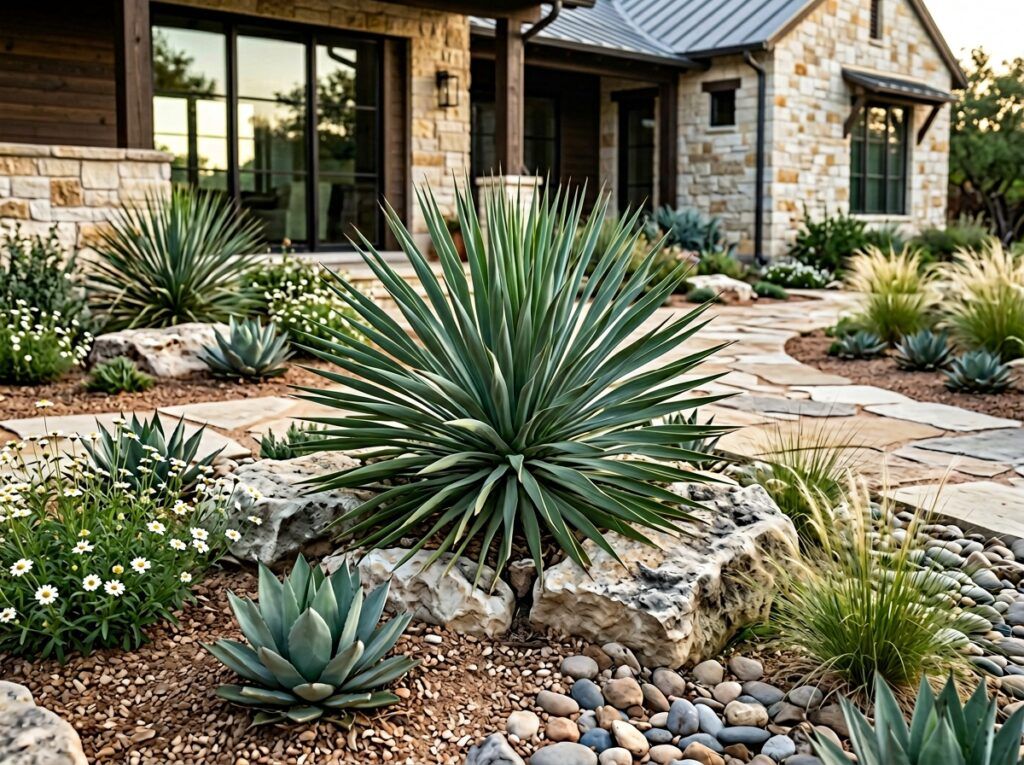
Wildlife Garden Blend
Ready When You Are
Get a Clear Plan for Your Yard
Tell us what you’d like to improve. We’ll ask a few questions, review your project, and let you know the best next step — no pressure and no guesswork. Fill out the form for a free quote.