
Shrubs Button Bush
(Cephalanthus occidentalis)
Other Common Names: Common Buttonbush, Honey-bells, Button Willow, Globeflower
Bees
Butterflies
Deciduous
Flowering
Full Sun
Hummingbirds
Recommended Use: Perfect for pond margins, rain gardens, and wetland restoration projects.
Introduction
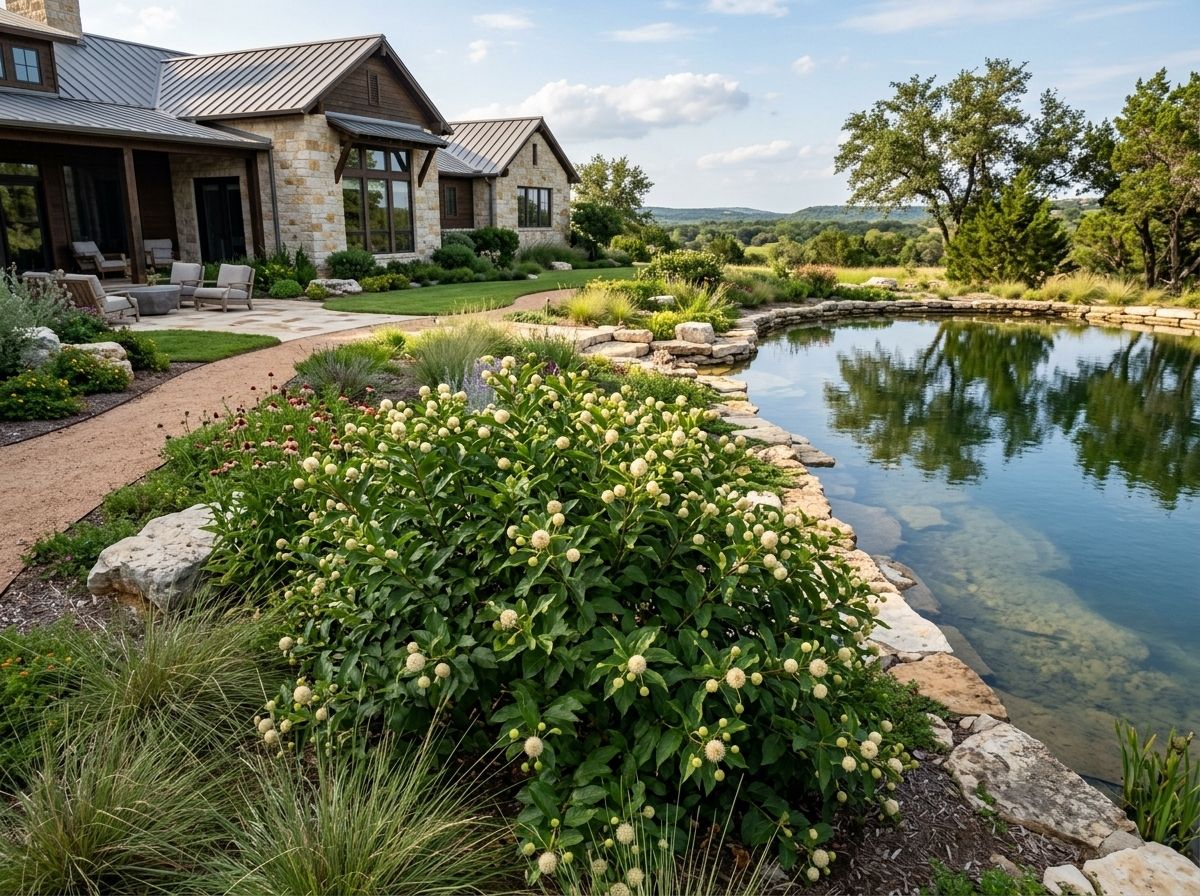
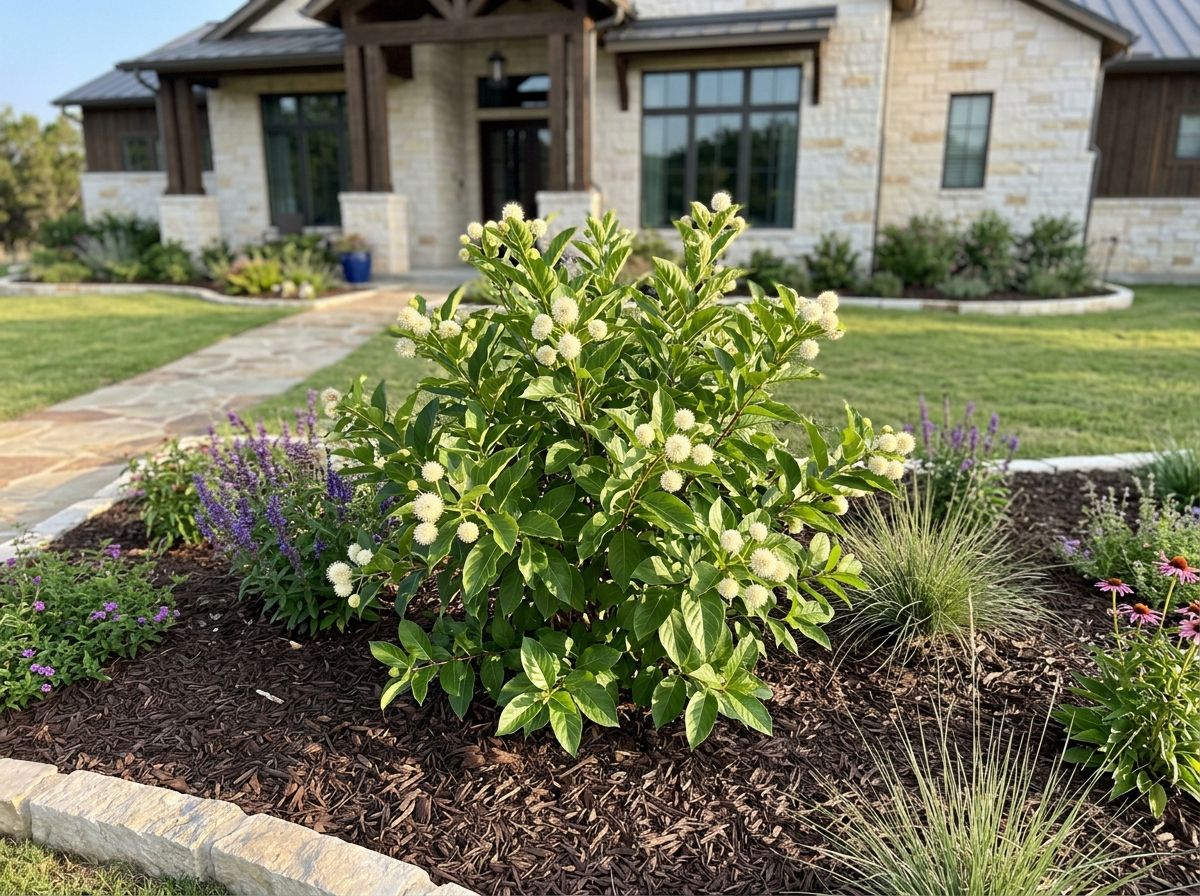
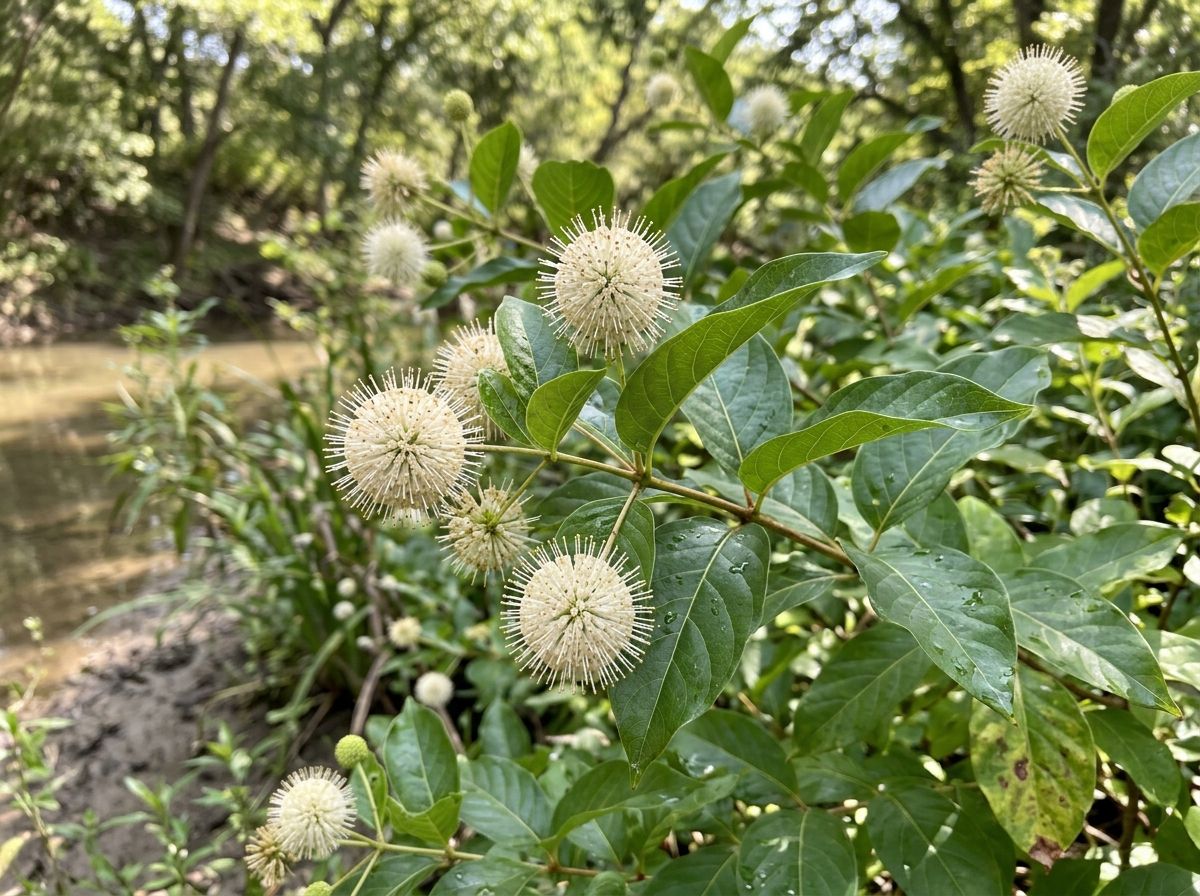
Button Bush, scientifically known as Cephalanthus occidentalis, is a large, deciduous shrub known for its unique, spherical white flowers that bloom in clusters. These distinctive flowers resemble buttons, giving the plant its common name. Typically reaching heights of 6 to 12 feet with an equal spread, the plant’s glossy green leaves and striking floral display make it a standout choice for landscaping projects. It’s often used near water features or as a natural hedge due to its tolerance for wet conditions, providing an attractive habitat for birds and butterflies.
Maintenance
Button Bush thrives best in full sun but can tolerate partial shade. It requires regular watering, especially during dry spells, as it prefers consistently moist soil. Ideally, the soil should be rich and well-drained, though the plant can adapt to various soil types, including clay and sandy soils. Pruning is best done in late winter or early spring to maintain shape and encourage healthy growth. Button Bush is relatively resistant to pests and diseases, making it a low-maintenance addition to any garden.
Quick Facts
– Hardiness Zones: 5 to 9
– Growth Rate: Moderate to fast
– Special Characteristics: Attracts pollinators such as bees and butterflies; deer resistant
– Key Features: Large, deciduous shrub with white, ball-shaped flowers
– Sunlight Preference: Full sun to partial shade
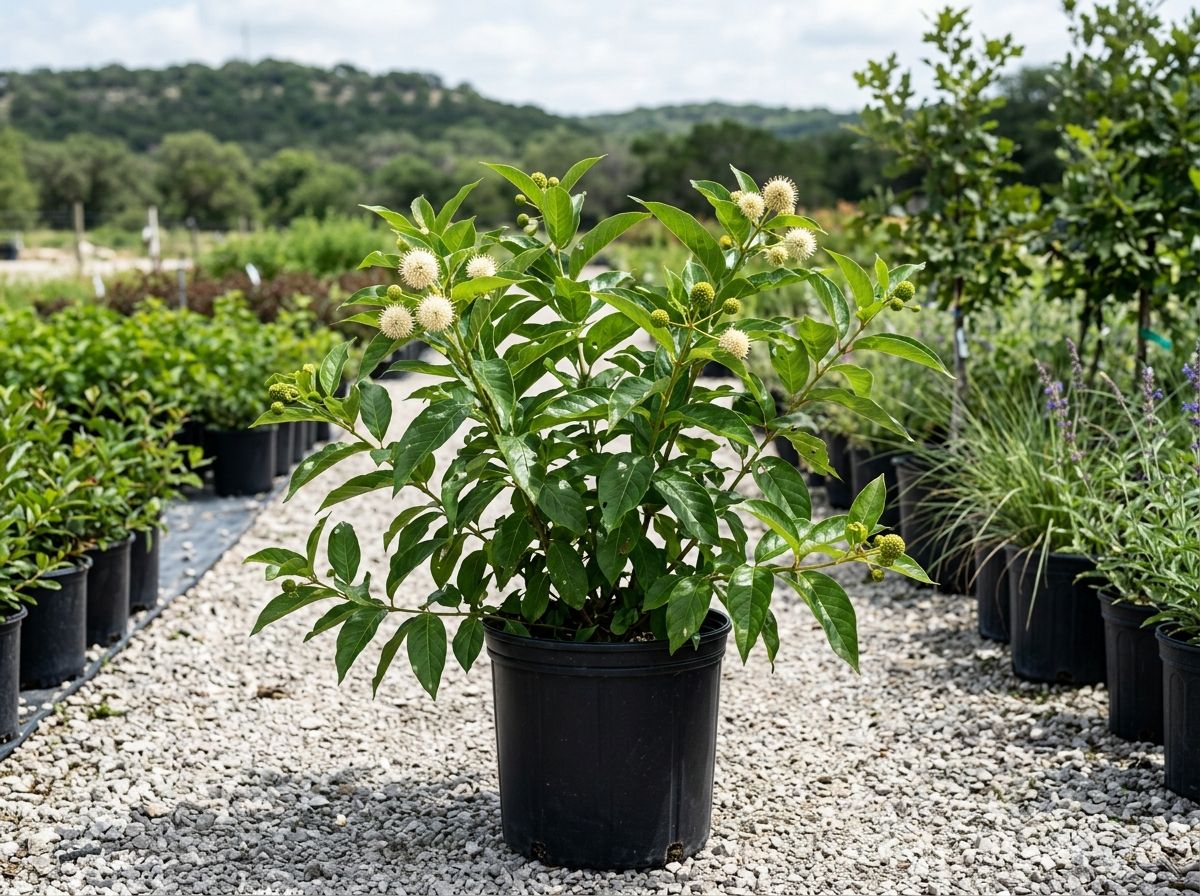
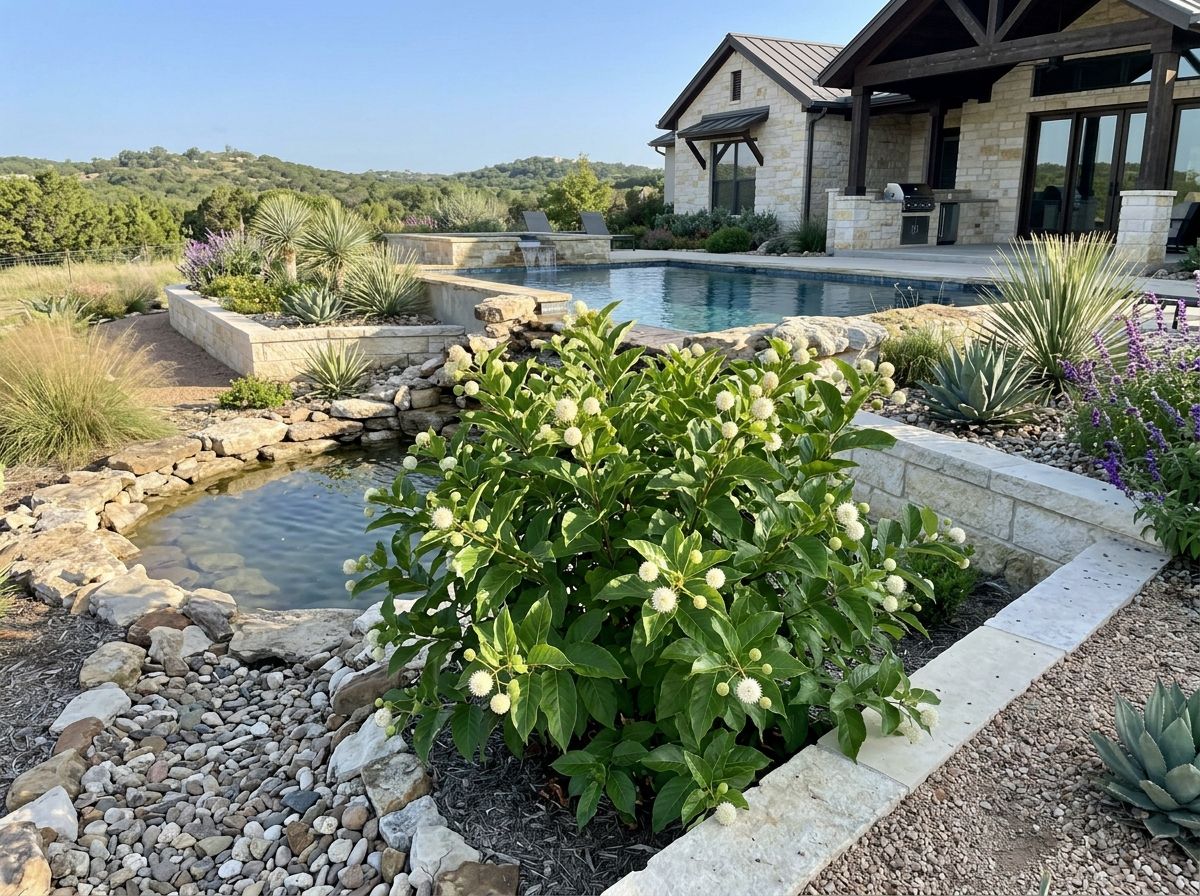
Want this product installed? Check out our page to view pricing and other details.
Related Products
Planting Role / Visual Structure > Focal Plant Palette
Wildlife Garden Blend
Ready When You Are
Get a Clear Plan for Your Yard
Tell us what you’d like to improve. We’ll ask a few questions, review your project, and let you know the best next step — no pressure and no guesswork. Fill out the form for a free quote.