
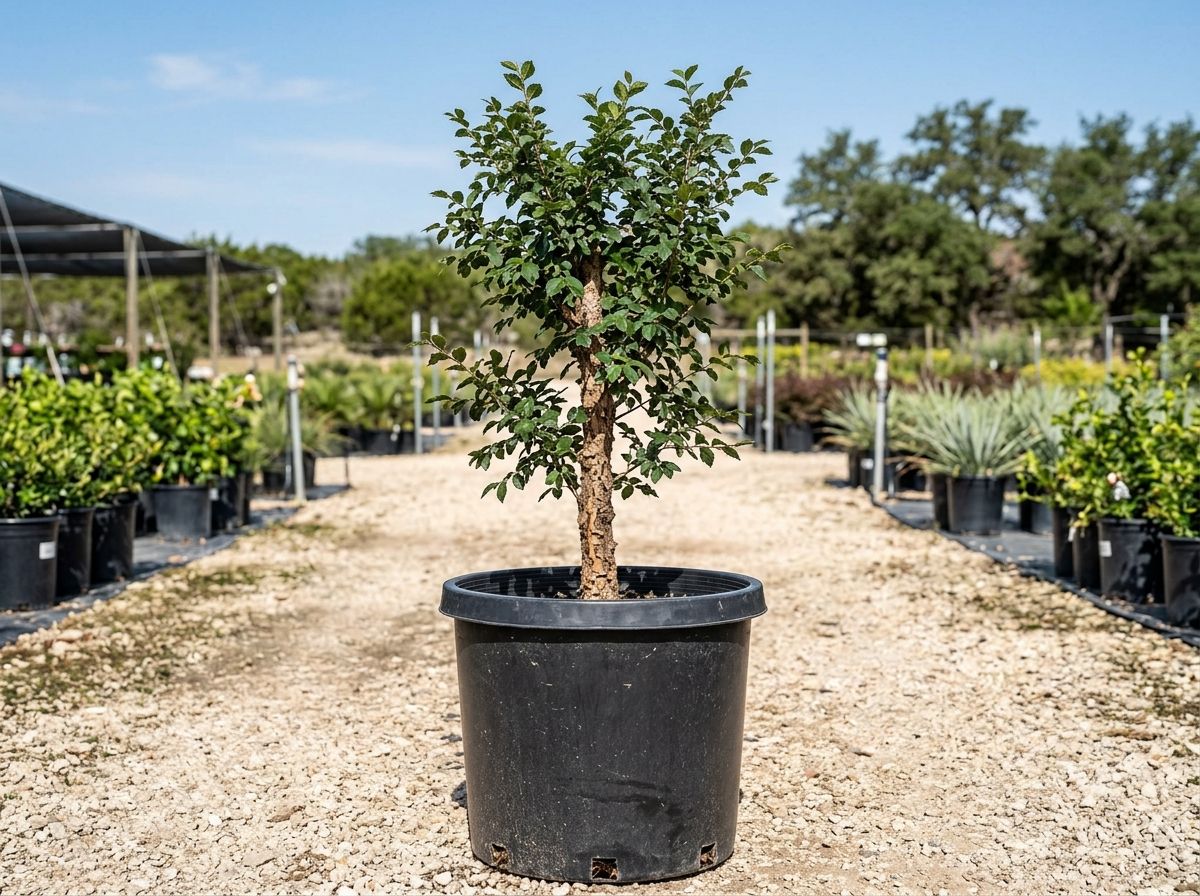
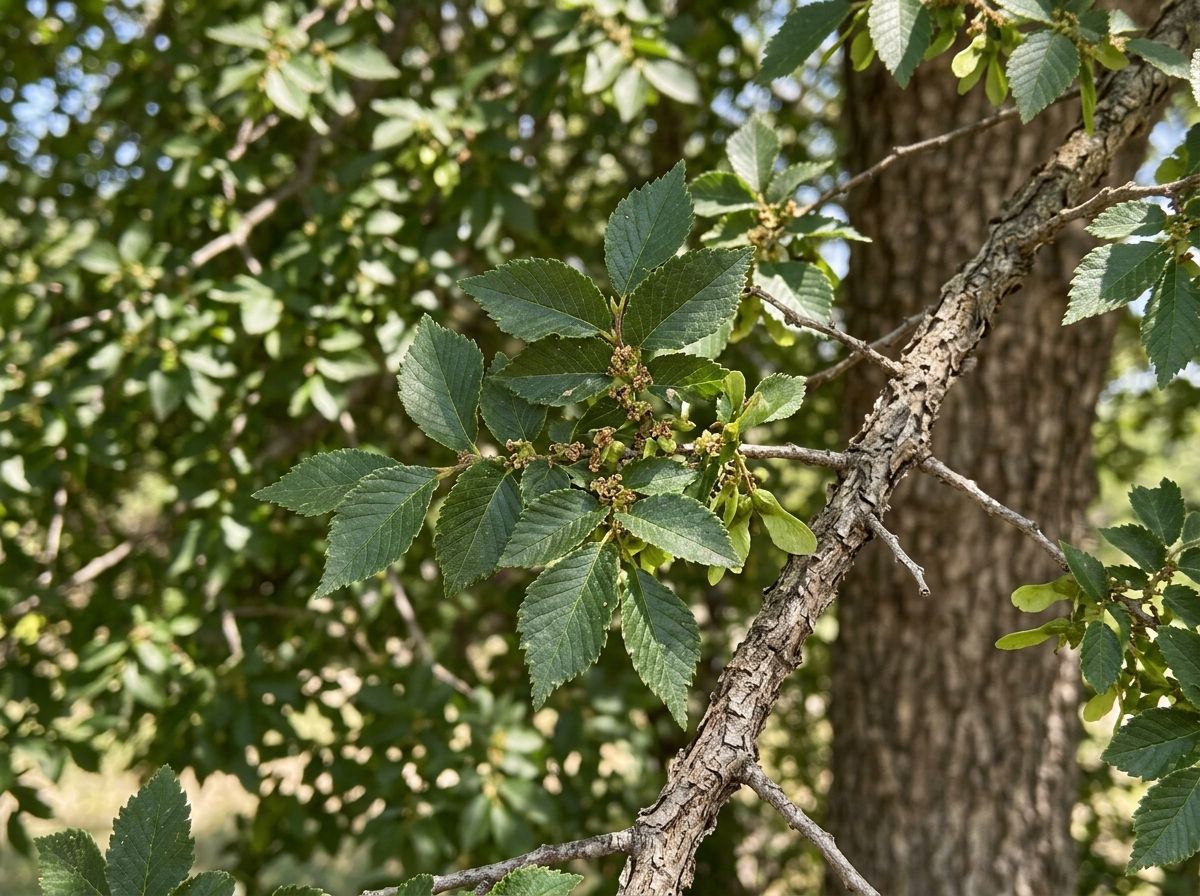
Trees Cedar Elm
(Ulmus crassifolia)
Other Common Names: Basket Elm

Birds
Butterflies
Deciduous
Drought-Tolerant
Freeze Hardy
Full Sun
Recommended Use: Best for medium to large landscapes needing a tough, drought-tolerant shade tree.
Introduction to Ulmus crassifolia
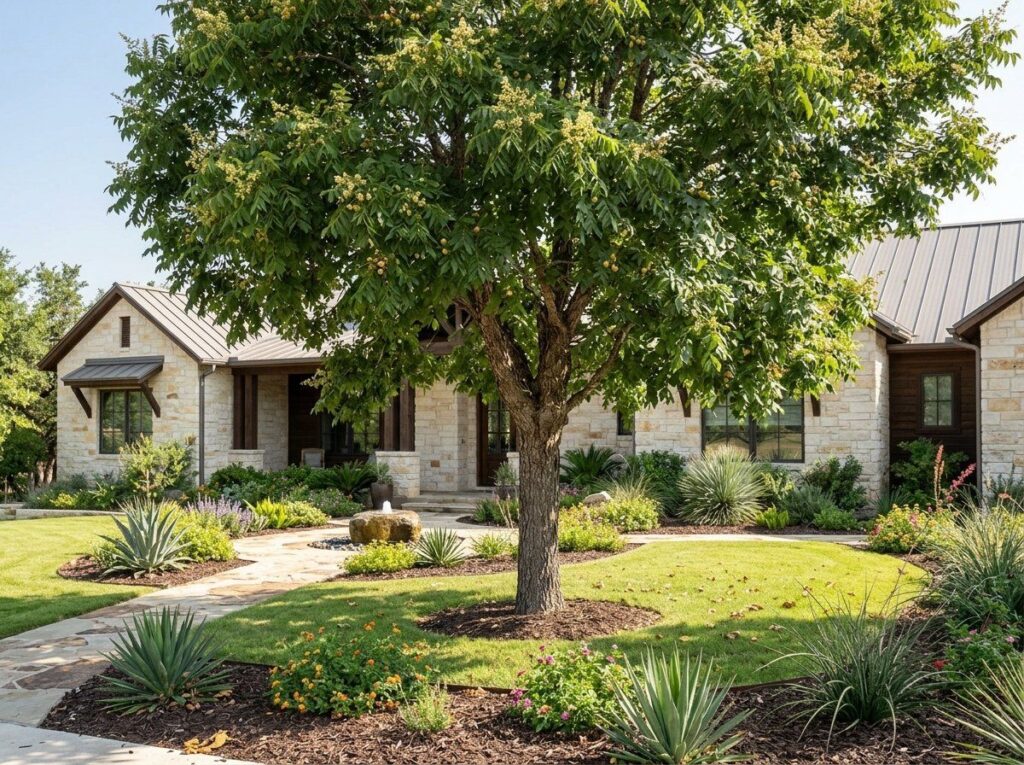
Ulmus crassifolia, commonly known as Cedar Elm, is a deciduous tree with a distinctive upright growth habit, impressive size, and attractive foliage. It can grow up to 50 feet tall and 35 feet wide, providing a broad canopy that serves as a great shade tree, especially for right-of-way (R.O.W.) landscapes. The tree features a narrow canopy over time, making it a versatile choice for urban environments due to its ability to thrive in tight spaces and tolerate various soil conditions. Its leaves are initially rich green and transition to a vibrant yellow during the fall season. Cedar Elm is often selected for landscaping projects due to its hardiness, drought tolerance, and adaptability to a wide range of environmental conditions.
Maintenance Considerations
Maintaining Ulmus crassifolia is relatively straightforward. It prefers full sun conditions and can thrive in a variety of soil types, including heavy clay, compacted soils, and alkaline or salty conditions, although well-draining loamy soil is ideal. Watering should be regular, especially during dry periods, but care must be taken to avoid overwatering, which can lead to root rot. Pruning is essential to maintain its shape and promote healthy growth; it is recommended annually to control any excessive branch growth and remove diseased or dead limbs. Cedar Elm is susceptible to Dutch Elm disease and can cause allergy reactions. While it is not entirely immune to pests, its resistance is somewhat better than that of other elm species.
Quick Facts
– **Hardiness Zones**: Typically hardy in zones 6 through 9, although specific tolerance can vary.
– **Growth Rate**: The Cedar Elm grows at an average rate of about 2.5 feet per year.
– **Special Characteristics**: It is deciduous, providing vibrant yellow foliage in the fall. Cedar Elm is attractive to pollinators and wildlife; it serves as a larval food source for butterflies like the Mourning Cloak and Question Mark.
– **Pest/Disease Resistance**: Susceptible to Dutch Elm disease but less so than other elm species.
– **Soil Adaptability**: Adaptable to clay, sandy, and compacted soils.
– **Deer Resistance**: Information on deer resistance is limited, but its utility in urban settings suggests it is not significantly problematic.


Want this product installed? Check out our page to view pricing and other details.
Related Products
Wildlife Garden Blend
Ready When You Are
Get a Clear Plan for Your Yard
Tell us what you’d like to improve. We’ll ask a few questions, review your project, and let you know the best next step — no pressure and no guesswork. Fill out the form for a free quote.