
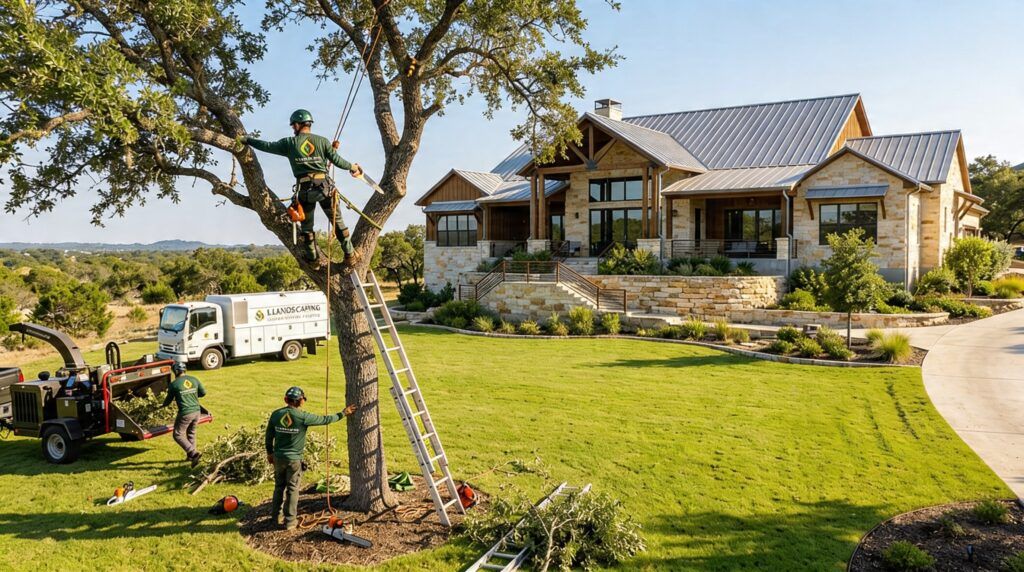
Understand the pricing logic before you ask for a quote.
Tree Trimming Cost Guide
Tree and shrub trimming prices can vary widely because the work itself varies widely. A light shape-up on a shrub is not the same as detailed hedge trimming or selective pruning on a small-to-medium tree. This guide explains how trimming is usually priced so you can understand what affects cost without getting hung up on rigid price lists.
Request Your Free EstimateThink scope first, then price.
How Much Does Tree Trimming Usually Cost?
Tree trimming is usually priced by the size of the plant, how difficult it is to access, how much detail is required, and how much debris has to be cleaned up and hauled away. That means shrub shaping, hedge trimming, and small-to-medium tree trimming each tend to fall into different pricing ranges.Broadly speaking, light shrub work usually sits at the low end, detailed hedges and overgrown shrubs fall in the middle, and selective trimming on small-to-medium trees usually costs more because it involves ladders, controlled cuts, and heavier debris.Pricing can change at any time, so this guide is meant to explain the structure behind the quote—not promise exact numbers. The useful question is not “what’s the one price?” It is “what kind of trimming project is this?”
Small shrubs, hedges, and trees are priced differently because the labor is different.
Access, cleanup detail, and debris volume often affect pricing as much as plant size.
Overgrown, dense, or neglected plants usually cost more than regular maintenance trims.
Pricing can change at any time; written estimates confirm current scope and price.
A smarter way to think about trimming cost.
What Drives Tree and Shrub Trimming Prices?
Homeowners often expect trimming to be priced like a flat menu item, but that usually leads to confusion. The better way to understand cost is to break the work into categories: what kind of plant is being trimmed, how much labor it takes, and how much cleanup follows.
1. Plant type matters more than people expect
One of the biggest pricing differences is simply what you are trimming.
- Light shrub trimming: Usually the simplest category when the plant only needs basic shaping.
- Large or overgrown shrubs: More time is needed when shrubs are dense, neglected, or badly oversized for the space.
- Hedge trimming: Often priced differently because the goal is consistency across a longer line, not just shaping one plant.
- Small-to-medium tree trimming: Typically priced higher because the cuts are more selective, the material is heavier, and the work is less forgiving.
That is why two jobs that look similar from the street can price very differently once the actual scope is reviewed.
2. Size, density, and overgrowth change labor time
A tidy shrub that has been maintained regularly is a different job from a plant that has been left alone for years. The same logic applies to trees: a light clearance trim costs less than a dense canopy that needs careful balance and cleanup.
- Height: Taller plants take more time and often need more setup.
- Canopy or mass: Dense growth means more cuts, more handling, and more debris.
- Neglect: Plants that have not been touched in a long time often need more corrective work.
- Finish expectations: A basic cutback is not priced the same as a detail-oriented trim with a clean visual finish.
In other words, cost is not just about how tall the plant is. It is also about how much controlled labor is required to leave it looking right.
For plant planning, compare live oak with the site conditions discussed above.
For plant planning, compare Texas mountain laurel with the site conditions discussed above.
3. Access and cleanup have a real price impact
Access is one of the most overlooked cost factors. A front-yard shrub line with open access is usually straightforward. A tree in a tight backyard corner near fences, landscaping, or other obstacles usually takes more time and caution.
- Easy access: Open yard, direct tool access, easy debris movement.
- Tight access: Narrow side yards, fenced backyards, patios, beds, or decorative hardscape nearby.
- Cleanup detail: Jobs with heavy raking, blowing, or debris haul-off naturally take longer.
Good cleanup is a major reason professional trimming costs more than a quick cut-and-go job. The work should leave the yard looking improved, not just cut up.
For a related next step, read Best Time to Trim Trees and Shrubs.
For a related next step, read Stump Grinding vs Stump Removal.
For a related next step, read What to Expect After Tree Removal and Stump Grinding.
4. Broad pricing categories are more useful than fake precision
Because pricing can change at any time, the most honest way to explain trimming cost is by using broad bands, not overpromised fixed numbers.
- Light shrub trims: Usually the most affordable category when plants are already in decent shape.
- Overgrown shrubs or hedge lines: Usually mid-range because they require more time and more cleanup.
- Small-to-medium tree trimming: Usually the highest trimming category because the work is more selective and the debris is heavier.
Once removal, stump grinding, or restoration enters the conversation, the scope changes and pricing should be treated as a separate category altogether.

Here goes your text ... Select any part of your text to access the formatting toolbar.
Typical Tree and Shrub Trimming Price Categories
| Service Type | Typical Pricing Position | What Usually Increases Cost |
|---|---|---|
| Light shrub trimming | Lowest range | Extra density, difficult access, or cleanup-heavy detail work |
| Large or overgrown shrub trimming | Low-to-mid range | Correction work, thick growth, and larger debris volume |
| Hedge trimming | Mid range | Long runs, height, detailed line work, and haul-off |
| Small tree trimming | Mid-to-upper range | Canopy density, clearance work, awkward access, heavier limbs |
| Medium tree trimming | Upper trimming range | Selective pruning, heavier cleanup, more controlled labor |
Broad ranges help, but only if you use them correctly.
Pros and Limits of Using a Tree Trimming Cost Guide
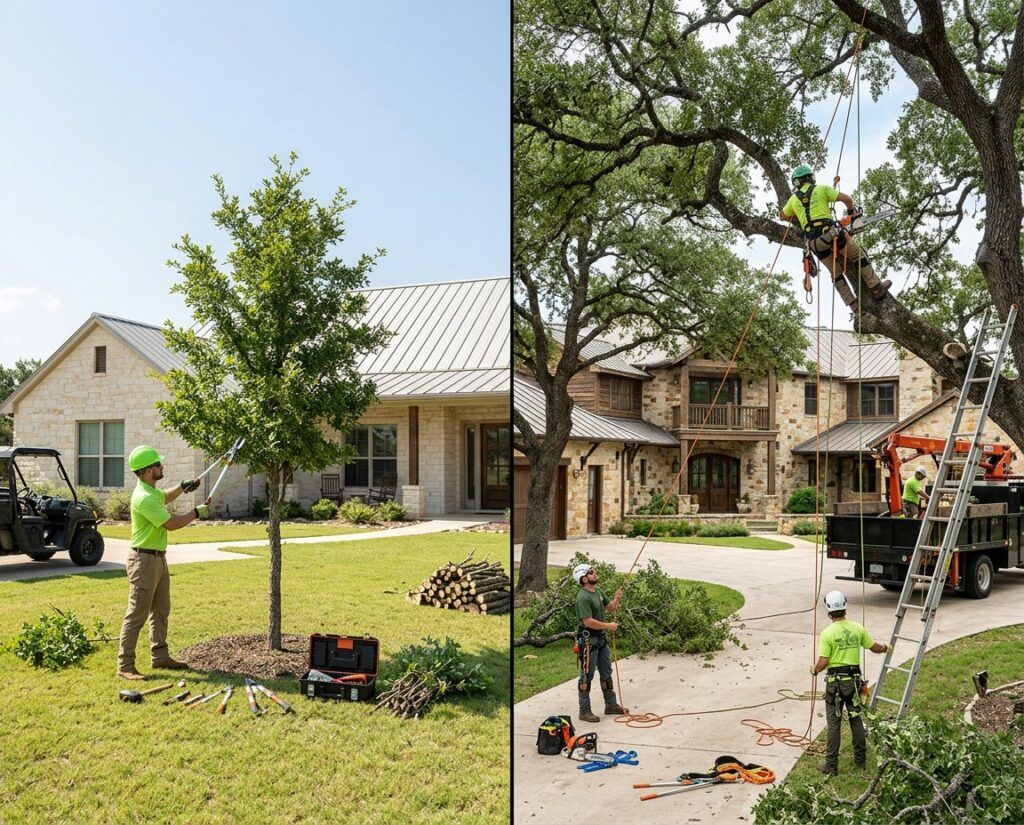
PROS
Helps homeowners understand why different trimming jobs are priced differently.
Makes it easier to compare shrubs, hedges, and tree trimming as separate service categories.
Shows that cleanup, access, and overgrowth are real labor factors—not “hidden fees.”
Sets more realistic expectations before the site visit.CONS
No online guide can price a tree perfectly without seeing access, density, and condition in person.
Overgrown plants can move a job into a higher labor category fast.
Removal, stump grinding, and restoration are separate scopes and should not be folded into trimming assumptions.
Pricing can change at any time based on labor, disposal, and equipment costs.
The quote reflects labor reality.
Here goes your text ... Select any part of your text to access the formatting toolbar.
How to Read a Tree Trimming Quote More Intelligently
A useful tree trimming quote should tell you what is being trimmed, how much detail is included, how cleanup is being handled, and whether the scope stays within normal trimming or drifts toward corrective work.For example, a light shrub trim, a long hedge line, and a medium tree trim should not all read like the same service. If they do, the quote is probably oversimplified. Broad ranges help you understand categories, but the written quote is where the actual service definition becomes clear. Before scheduling work, review our project guidelines so the project expectations are clear.
Ask whether cleanup and haul-away are included.
Ask whether the quote is for light shaping or more corrective work.
Ask whether the tree still qualifies as trimming or if removal is being recommended instead.
Expect separate pricing for stump grinding, site restoration, or replanting.
Use the guide for context; use the quote for actual decisions.
Practical pricing questions homeowners ask first.
Tree Trimming Cost FAQs
These answers help explain why trimming prices vary and what to look for before comparing quotes.
See All Frequently Asked QuestionsNot by itself. Plant count matters, but so do size, density, access, and how much cleanup each plant creates. Ten simple shrubs are not the same as ten large overgrown shrubs or a row of hedges.
Often yes, but not always in the same way. Some jobs include full haul-away by default, while others may offer curb placement or an on-site debris option. That is why cleanup details should be clear in the written quote.
Common drivers are overgrowth, thick canopy density, tight access, heavier cleanup, and situations where the finish needs to be more detailed. A neglected plant usually costs more to correct than one that has been maintained regularly.
Not necessarily. Standard removal usually leaves the area clean and rake-ready, but if the stump remains or the area was disturbed, it may still need grinding and restoration work to look fully finished.
It can help, but only to a point. If a tree needs repeated trimming for the same problem, removal may be the better long-term investment. The cost guide explains categories; the site visit helps decide the smarter solution.
Yes, it usually is. Hedge trimming often focuses on maintaining a long, even line at a consistent height and width, which is different from shaping one individual shrub.
Get a quote that matches the real scope.
Need a Tree or Shrub Trimming Estimate?
We can look at the actual plants, explain what category the work falls into, and provide a clear written quote that separates trimming from removal, stump grinding, and any follow-up restoration.