
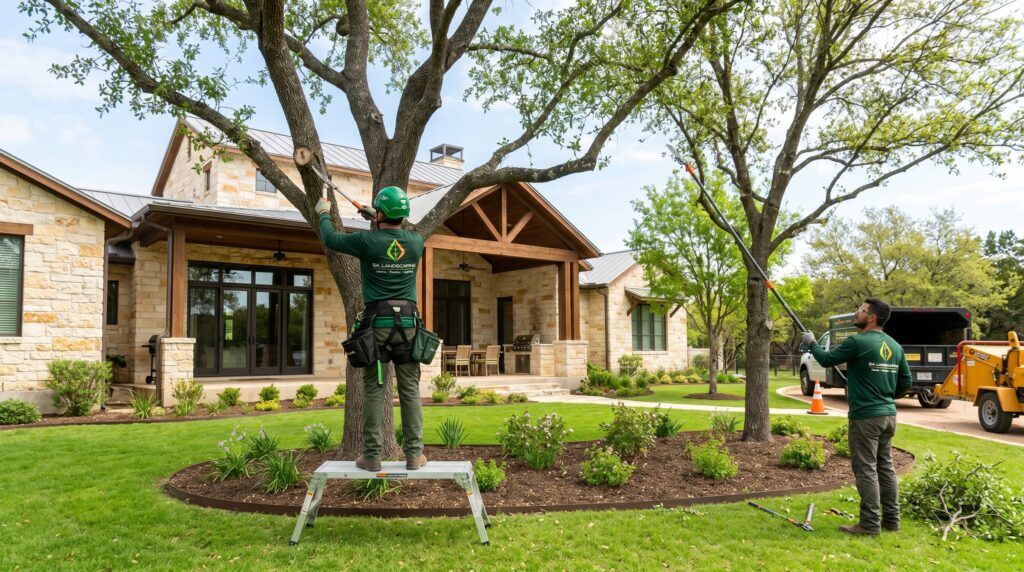
Timing matters more than most homeowners realize.
Best Time to Trim Trees and Shrubs
The best time to trim depends on what you are trimming. Oaks follow strict oak wilt rules, flowering plants follow bloom cycles, and most shade trees respond best to structural work during dormancy. This guide explains the safest, smartest timing for trimming in South Texas so you can avoid mistakes that create stress, disease risk, or poor flowering.
Request Your Free EstimateTrim by plant type, not by guesswork.
When Is the Best Time to Trim Trees and Shrubs?
In South Texas, the best trimming season depends on the plant and the purpose of the cut. For most shade trees, major structural pruning is best in late winter while the tree is dormant. For spring-blooming plants, pruning is usually best right after the flowers fade so next year’s buds are not removed.Oaks follow a much stricter rule. To reduce oak wilt risk, pruning of oak species should be avoided from February 1 through June 30 whenever possible, and all oak cuts should be sealed immediately regardless of season.Light touch-up pruning can often be done year-round, but aggressive pruning during peak summer heat is usually avoided because it can increase stress and sunscald risk.
Late winter is usually best for major structural pruning on general shade trees.
Avoid pruning oaks from February 1 through June 30 whenever possible.
All oak cuts should be sealed immediately, no matter the season.
Spring-blooming plants are usually pruned right after flowering.
Avoid aggressive pruning in peak summer heat unless safety makes it necessary.
A practical South Texas pruning calendar.
How to Time Tree and Shrub Trimming the Right Way
Many homeowners think trimming is just about when the yard looks overgrown. In reality, timing affects plant health, flowering, disease risk, and how well the plant recovers. The safest schedule is based on species, season, and the type of pruning needed—not just curb appeal. For help turning the advice into a real project, review our tree and shrub trimming service page.
1. The oak rule matters most
In South Texas, oak timing is the first rule to get right. Oaks should generally not be pruned from February 1 through June 30 because that is the period when oak wilt risk is taken most seriously. If an oak absolutely must be cut for safety or clearance during that period, every cut should still be sealed immediately.
This is one of the biggest seasonal pruning mistakes homeowners make. A tree may look like it needs trimming in spring, but with oaks, the calendar matters as much as the canopy.
Bottom line: avoid elective oak pruning in the no-prune window, and seal all oak cuts immediately no matter when they happen.
2. General shade trees usually respond best in late winter
For many non-oak shade trees, the main window for structural pruning is late winter—typically January into early February—while the plant is still relatively dormant. This is a good time to address light structural issues, crossing branches, small deadwood, and clearance work before heavy spring growth begins.
- Best for: shape correction, light structure improvement, and planned clearance work.
- Why it works: the branch structure is easier to read, and the tree is not pushing heavy new growth yet.
- What to avoid: over-pruning just because the tree is bare or sparse in dormancy.
That late-winter window is often the cleanest, most predictable time to do planned pruning on general shade trees.
For plant planning, compare crape myrtle with the site conditions discussed above.
3. Flowering plants follow their own schedule
Flowering shrubs and small ornamental trees should usually be pruned based on bloom timing, not just on size. For spring bloomers such as Texas Mountain Laurel, pruning is usually best immediately after flowering. That protects next year’s buds instead of cutting them off by mistake.
For shrubs grown mainly for shape—not blooms—light trimming can often be more flexible. But if the plant’s main value is its flowers, pruning at the wrong time can ruin the display for the following season.
This is why a general “trim everything in spring” approach often creates disappointing results. Shrubs should be timed by purpose, not just convenience.
For a related next step, read Stump Grinding vs Stump Removal.
For a related next step, read What to Expect After Tree Removal and Stump Grinding.
For a related next step, read When Does a Tree Need Trimming vs Removal?.
4. Summer caution and year-round touch-up pruning
Not all pruning needs to wait for the perfect season. Small touch-up work—such as removing minor deadwood, low-hanging twigs, or nuisance growth—can often be done year-round as long as oak wilt and heat-stress rules are respected.
What is usually avoided is aggressive pruning during peak summer heat, especially in July and August. Heavy cuts at that time can increase plant stress, expose limbs to sunscald, and make recovery harder during drought and heat pressure.
There is one clear exception: safety. Hazardous branches, broken limbs, or growth interfering with structures should be addressed when needed, regardless of season. The timing rule should never override a legitimate safety issue.
Here goes your text ... Select any part of your text to access the formatting toolbar.
Best Pruning Windows by Plant Type
| Plant Type | Best Timing | What to Avoid | Special Rule |
|---|---|---|---|
| Oak trees | Outside Feb 1–Jun 30 whenever possible | Elective pruning during oak wilt risk window | Seal all cuts immediately |
| General shade trees | Late winter (Jan–early Feb) | Heavy corrective pruning in peak summer heat | Use dormant structure to guide cuts |
| Spring-blooming shrubs / ornamentals | Right after flowering | Pruning before bloom or long after bloom | Protect next season’s buds |
| Non-flowering shrubs / hedge lines | More flexible; light shaping as needed | Aggressive cuts during heat stress | Use restraint in July–August |
| Hazard branches / broken limbs | Any time safety requires it | Waiting too long because of the calendar | Safety overrides timing rules |
Better timing usually means better results.
Pros and Limits of Seasonal Pruning Timing
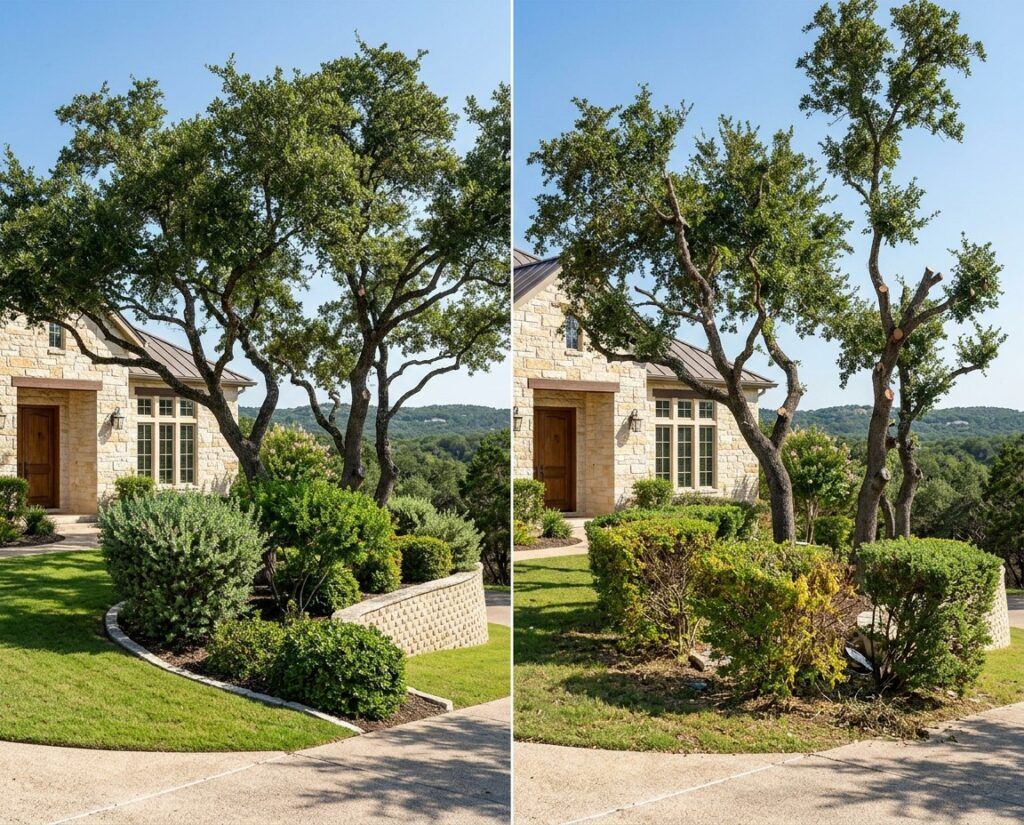
PROS
Improves recovery and reduces unnecessary stress on the plant.
Helps preserve flowering on bloom-driven shrubs and ornamentals.
Reduces the chance of pruning at the worst possible time for oaks.
Makes structural pruning cleaner and more intentional on dormant shade trees.CONS
The “best time” is not the same for every plant, which can confuse homeowners.
Waiting for the ideal window can be frustrating if the yard already looks overgrown.
Emergency or safety pruning may need to happen outside ideal timing windows.
Heat, drought, and storm damage can change the normal pruning plan.
The timing questions homeowners ask most.
Best Time to Trim Trees and Shrubs FAQs
These answers focus on timing rules, seasonal caution, and how to think about trimming in South Texas.
See All Frequently Asked QuestionsNot the full root system. Stump grinding removes the visible stump below grade, but most deeper roots remain in place. For most landscape situations, that is completely acceptable and avoids unnecessary excavation.
No. Late winter is a strong general window for many shade trees, but it is not a blanket rule for every species. Oaks follow their own stricter calendar, and flowering plants should be timed around bloom cycles.
Yes. In this service approach, all oak cuts are sealed immediately regardless of season. That keeps the rule simple, cautious, and consistent.
Yes. Safety always comes first. If a branch is broken, hazardous, or interfering with structures, it should be addressed when needed rather than left in place because the calendar is not ideal.
It depends on when they bloom. Spring-blooming plants are usually pruned right after flowering so next year’s buds are not removed. If you prune too late, you may sacrifice the next bloom cycle.
Light touch-up work may be possible, but aggressive pruning in peak summer heat is usually avoided because it can add stress, increase sunscald risk, and slow recovery. July and August are generally not the preferred time for heavy corrective trimming.
Use timing to protect the plant, not just control the shape.
Need Help Scheduling Tree or Shrub Trimming the Right Way?
We can look at your trees and shrubs by species, season, and purpose, then recommend the right trimming window so you avoid unnecessary stress, poor flowering, or timing mistakes.