
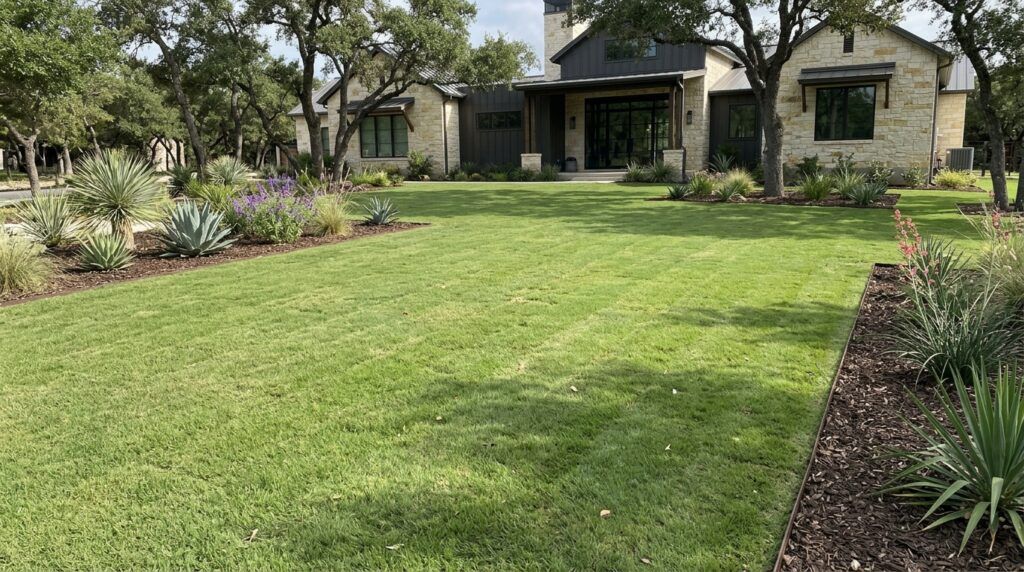
Buffalo Grass Varieties We Install
- 609: Fine-textured, dense, and forms a soft, plush lawn.
- Prairie: Adapted for residential and commercial use; durable and attractive.
- Stampede: Improved color and density, with good drought resistance.
- Habiturf & Thunderturf: Native grass blends with Buffalo, Blue Grama, and Curly Mesquite for added durability and weed resistance.
Watering New Buffalo Sod
Water immediately after installation to thoroughly moisten the soil. For the first 2-3 weeks, keep the soil consistently moist but not soggy, watering lightly once or twice daily as needed. As the sod begins to root and resists a gentle tug, reduce watering frequency.
After establishment, water deeply but infrequently. During the active growing season, aim for about 1 inch of water per week, including rainfall. Buffalo grass is highly drought-tolerant and can survive on less than 1.5 inches of water per month once established; if in doubt, do not overwater. During winter dormancy or drought dormancy, minimal to no supplemental irrigation is needed.
Fertilizing Buffalo Grass
Apply starter fertilizer at installation only if the soil is poor or lacking nutrients. After establishment, Buffalo grass requires very little fertilizer.
- Fertilize once in late spring or early summer with a slow-release, low-nitrogen fertilizer.
- A second light application in late summer is optional for improved color.
- Avoid over-fertilizing because it can weaken Buffalo grass and encourage weeds.
- For optimal growth, soil pH should be between 6.0 and 7.0.
Weed Control Timing
Buffalo grass is slow-growing, so bare or thin areas are vulnerable to weed invasion, especially from Bermuda and other aggressive grasses. Wind, birds, and pets can also introduce weed seeds.
For new Buffalo lawns, hand-pulling weeds is the safest early option, especially during the first few months. Mow at the recommended height, water properly, and fertilize lightly to encourage dense turf.
Wait until the Buffalo lawn is well-established and has been mowed 3-4 times, usually 60-90 days, before applying any herbicide. Avoid pre-emergent herbicides during the first growing season.
Use only herbicides labeled safe for Buffalo grass. Products containing 2,4-D are generally safe for established Buffalo lawns, but always check the label for specific instructions. Avoid non-selective herbicides, such as glyphosate or Roundup, and avoid products containing Dicamba unless they are explicitly labeled for use on Buffalo grass. For persistent weed problems, consult a local lawn care professional or extension agent for product recommendations.
Mowing Buffalo Sod
Wait at least 21 days after installation, or until the grass is well-rooted, before mowing. Test by gently tugging the sod. For the first mow, use a high mower setting of 3-4 inches and remove only the top portion.
Maintain Buffalo grass at 3-4 inches for optimal results, especially during drought and heat. Limit mowing to twice a year, or as needed, to maintain a natural, meadow-like texture. If you prefer a more manicured look, mow when the grass reaches 4-6 inches, but never lower than 3 inches. Over-mowing or mowing too short weakens Buffalo grass and encourages weeds. Use sharp mower blades and avoid mowing wet grass.
Seasonal Buffalo Care
- Spring, March to May: Install new sod or seed in late spring for best results. Water regularly to establish new turf. Apply a light fertilizer if needed. Begin mowing once the grass is established and growing vigorously.
- Summer, June to August: Water deeply but infrequently. Fertilize lightly if desired. Mow only as needed, keep mowing heights higher to conserve moisture, and hand-pull weeds as needed.
- Fall, September to November: Reduce watering as temperatures cool. Avoid fertilizing late in the season. Mow to maintain height, but do not scalp before winter.
- Winter, December to February: Buffalo grass goes dormant and turns brown. Minimal to no watering is needed. Mowing is not required during dormancy. Avoid heavy foot traffic on dormant grass.
Year-Round Buffalo Tips
- Soil testing: Test soil every 2-3 years to monitor pH and nutrient needs.
- Aeration: Aerate compacted soil in late spring if necessary.
- Dethatching: Dethatching is rarely needed because Buffalo grass produces little thatch.
- Pest and disease: Buffalo grass is naturally resistant to pests and diseases.
Recommended Weed Control Products for Buffalo Lawns
- 2,4-D-based selective herbicides: Safe for established Buffalo grass when the product label confirms compatibility.
- Hand-pulling: Most effective for removing isolated weeds, especially in newly established lawns.
Always avoid non-selective herbicides, such as glyphosate or Roundup, and products containing Dicamba unless explicitly labeled for use on Buffalo grass. Always follow product label directions. If unsure, consult a local extension agent or lawn care professional.
Product Disclaimer
Product formulations and labels may change. Always confirm compatibility with your grass type. San Antonio Landscaping Services is not responsible for any damage, injury, or loss resulting from the use or misuse of any product mentioned. Use at your own risk.
Questions? Contact San Antonio Landscaping Services for expert advice and assistance with your Buffalo grass lawn care.