
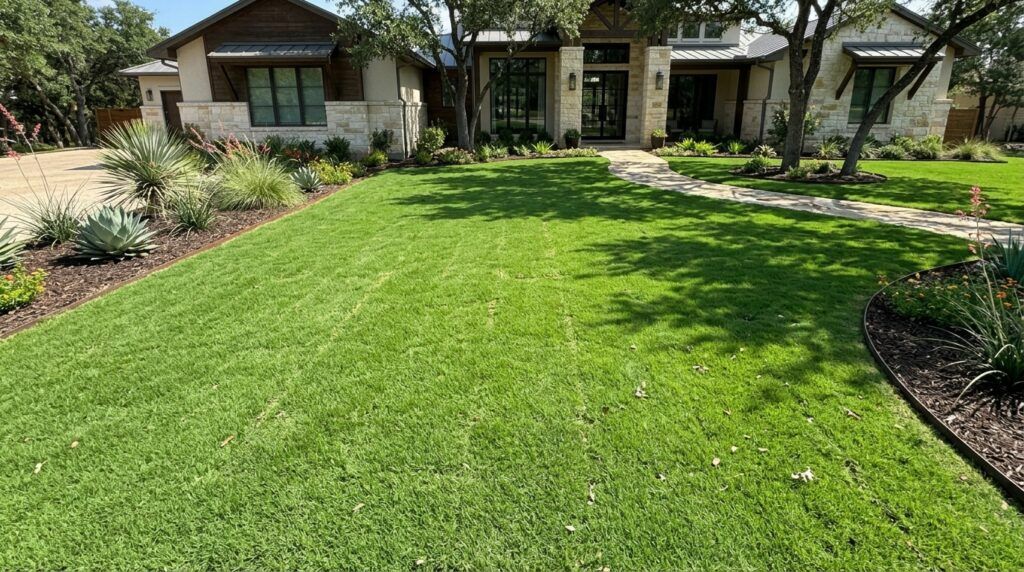
Watering New Bermuda Sod
During the first 2-3 weeks after installation, water Bermuda sod daily, or more often during hot, dry weather, to keep the sod moist but not soggy. Early morning watering is best because it helps reduce evaporation and disease risk. In peak heat of 100°F or higher, watering twice daily may be needed.
After Bermuda is established, water deeply and less frequently. Aim for about 1 inch of water per week, including rainfall. Monitor the lawn for drought stress, such as wilting or a blue-gray color, and adjust as needed. Water early in the morning or late in the evening for best results.
Fertilizing Schedule
Wait 4-6 weeks after installation, or until the lawn has been mowed 2-3 times, before applying fertilizer. Fertilizing too early can damage young roots and slow establishment.
- Spring, mid-April to mid-May: Apply a balanced fertilizer, such as 19-5-9, after the second mowing of the season.
- Summer, mid-May to early August: Use a slow-release fertilizer with a 3-1-2 or 3-0-2 ratio every 4-6 weeks as needed.
- Iron supplement, June to September: Apply iron only if the grass looks yellow from iron chlorosis.
- Fall, October to November: Apply a winterizing formula, such as 18-6-12, to support winter hardiness.
- Winter: Do not fertilize during winter dormancy.
Always sweep fertilizer off hard surfaces and avoid applying fertilizer before heavy rain.
Weed Control Timing
Weeds can appear in new Bermuda lawns because pre-installation herbicide may reduce existing weeds, but seeds can remain in the soil. Wind, birds, pets, and neighboring areas can also introduce new seeds. Weeds are more common in thin or bare spots while the lawn establishes.
During early establishment, hand-pull large or isolated weeds where practical. Mow regularly at the recommended height, water correctly, and fertilize properly to help Bermuda thicken and outcompete weeds.
Wait until the lawn is well-established and has been mowed 3-4 times, usually about 60-90 days, before applying any herbicide. Avoid pre-emergent herbicides during the first growing season because they can inhibit root growth.
For established Bermuda lawns only, use selective post-emergent herbicides labeled safe for Bermuda. Options listed in the care instructions include Celsius WG for broadleaf and grassy weeds, Certainty for grassy weeds, Quinclorac for crabgrass, products containing 2,4-D, MCPP, or Dicamba, and Prodiamine for pre-emergent use in established lawns only. Never use non-selective herbicides, such as glyphosate or Roundup, on your lawn.
To help prevent future weeds, maintain a dense, healthy lawn through proper watering, mowing, and fertilization. Patch bare spots promptly.
Mowing Height and First Cut
Wait 14-21 days after installation, or until the sod is well-rooted, before the first mow. Test the sod by gently tugging; if it resists, roots are establishing. For the first mow, do not remove more than one-third of the blade length.
Maintain Bermuda at 1.5-2 inches for most of the season. During extreme heat of 100°F or higher, raise the mowing height to 2-2.5 inches to reduce stress and conserve moisture. First mow height should be around 2.5-3 inches. Mow weekly or as needed, use sharp blades, mow when the grass is dry, and return clippings to the lawn to recycle nutrients.
Seasonal Bermuda Care
- Spring, March to May: Begin mowing as the grass starts to green up. Fertilize after the second mowing. Aerate if the soil is compacted. Overseed or patch bare spots as needed.
- Summer, June to August: Water deeply, especially during hot, dry spells. Fertilize every 4-6 weeks if needed. Mow frequently, raise the mowing height during heat waves, and watch for signs of drought stress.
- Fall, September to November: Reduce watering as temperatures cool. Apply fall fertilizer for winter hardiness. Continue mowing until dormancy.
- Winter, December to February: Water only during extended dry periods. Do not fertilize. Mowing is usually not required. Avoid heavy traffic on dormant grass.
Year-Round Bermuda Tips
- Aeration: Aerate in spring or early summer to relieve compaction.
- Dethatching: Remove thatch if the thatch layer exceeds 1/2 inch.
- Pest and disease monitoring: Inspect regularly and treat as needed.
- Edging: Bermuda can invade beds and walkways, so keep edges trimmed or install barriers.
Recommended Weed Control Products for Bermuda Lawns
- Celsius WG: Excellent for broadleaf and grassy weeds.
- Certainty: For grassy weeds.
- Quinclorac: For crabgrass and some broadleaf weeds.
- Prodiamine: For pre-emergent control in established lawns.
- BioAdvanced All-in-One Lawn Weed & Crabgrass Killer: Contains 2,4-D, MCPP, and Dicamba; safe for established Bermuda.
- Spectracide Weed Stop for Lawns: Labeled safe for Bermuda.
Always read and follow all label directions. Never use non-selective herbicides, such as Roundup or glyphosate, on your lawn.
Product Disclaimer
Product formulations and labels are subject to change. Always confirm compatibility with your grass type. San Antonio Landscaping Services is not responsible for any damage, injury, or loss resulting from the use or misuse of any product mentioned. Use at your own risk.
Questions? Contact San Antonio Landscaping Services for expert advice and assistance with your Bermuda sod care.